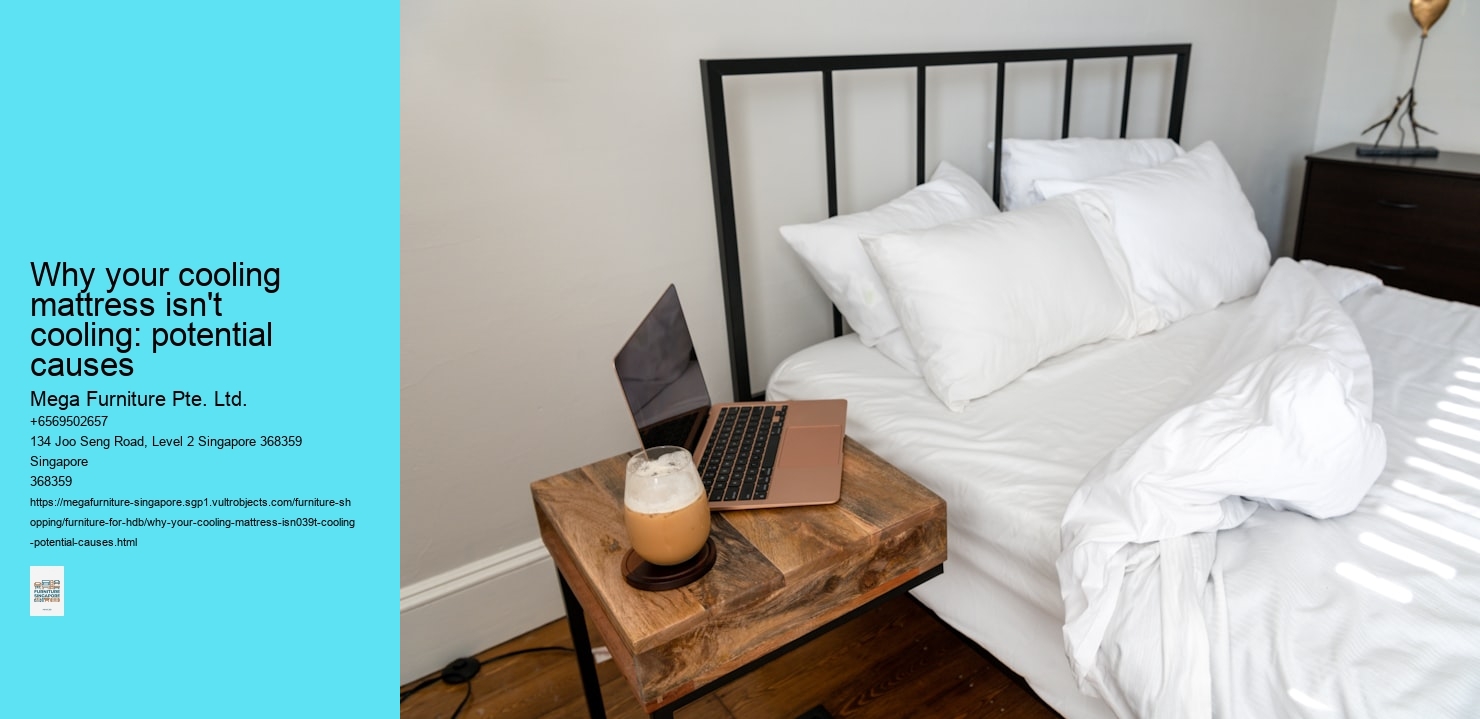
That moment, when you jolt awake at three in the morning with your back slick against the sheet, is the real test no showroom can simulate. You chose the mattress with the cooling gel layer, the breathable Tencel cover—everything promised a cool night. But in your actual 4-room BTO, with the windows shut against the neighbourhood noise and the ceiling fan just stirring the warm air, the story changes. Heat builds up from below, trapped between your body and the mattress core, and all that fancy tech feels like it's working in reverse.
Here's the thing they don't tell you while you're lying down for two minutes in an air-conditioned showroom: a mattress doesn't cool you. It can only help dissipate the heat you produce. If the ambient air in your bedroom is already 28 degrees and humid, there's nowhere for that heat to go. The phase-change materials might absorb the initial warmth, but they saturate. The ventilated coils need airflow underneath the bed, which you often lose when you place it on a solid platform frame for storage. You're essentially sleeping on a heat sink with no way to vent.
The first night you wake up sweating is a brutal but honest diagnostic. It tells you that the mattress's cooling properties, while real, are being overwhelmed by your sleeping environment. For hot sleepers or anyone going through hormonal changes, that initial chill you felt in the store is just a prelude. The true performance kicks in during the third hour of sleep, when your body's thermal output hits its peak and the room's still air offers no relief. That's when a mattress that merely *feels* cool fails, and one that's genuinely engineered for heat transfer needs to prove its worth.
So what's the fix? You can't change the Singapore climate, but you can rig the system in your favour. Ensure there's a clear air gap under the mattress—slatted bases beat solid storage platforms for breathability. Pair that cooling cover with moisture-wicking bamboo sheets and keep the fan oscillating right over the bed. Even then, some nights, the combination of a west-facing room and no air-con means you're fighting a losing battle. In those conditions, even the best cooling mattress becomes a damage-limitation exercise, not a miracle cure.
That little blue gel layer in your mattress isn't a magic portal to a cooler climate. It’s a heat sink, designed to pull warmth from your body and slowly dissipate it into the air around the mattress. The whole system banks on the idea that the room air is cooler than you are—a fair assumption in an air-conditioned space. But in a non-air-conditioned HDB bedroom, especially one that’s been soaking up the afternoon sun or holding onto the day’s warmth, the maths falls apart. When your room temperature hits 28°C or climbs past it, that gel material simply saturates. It can’t release heat into air that’s already as warm as it is.
You’ll feel it most on still, humid nights. The gel does its initial job, drawing your body heat away, but then it’s just holding onto that warmth like a thermal sponge. Without any air movement to carry the heat away, the cooling effect plateaus and then reverses. You start sleeping on a warm pad instead of a cool one. That’s why a fan isn’t just a comfort item here—it’s a necessary component to make the mattress technology actually work. Cross-ventilation from an open window can help too, if there’s a decent breeze, but during our calm, sticky periods, a fan is non-negotiable.
Think of it like this: the gel is the worker, but the air is the delivery truck. No truck, the work just piles up at the warehouse. For sleepers in older flats with smaller windows or rooms that trap heat, this saturation happens faster. The material’s capacity isn’t infinite.
So if your bedroom is one of those that stays stubbornly warm into the night, a cooling gel foam mattress on its own might leave you disappointed. The one real exception is if you’re a very light sleeper who barely moves and generates minimal body heat—then the gel might keep up. For most of us, pairing it with moving air is the only way to get the cool sleep we paid for. Without that airflow, you’ve just got a fancy, slightly warmer foam.
Phase-change materials absorb your body heat to keep you cool, but they have a finite capacity. In our typical 80% plus humidity, that capacity fills up much faster than the marketing claims suggest. The air is already heavy with moisture, which hampers the material's ability to release the stored heat effectively. You'll feel that initial chill when you first lie down, a welcome relief in a non-air-conditioned room. The problem comes a few hours later, when the material can't take on any more heat and the cooling effect simply stops. That's when you wake up feeling warm and sticky, wondering why the mattress didn't last the night.
The science behind these materials relies on latent heat transfer, a process that gets bogged down in our climate. For the phase change to work continuously, the absorbed heat must be dissipated away from the sleeping surface. High humidity acts like a blanket, trapping that heat and preventing it from escaping into the room's air. The transfer stalls, leaving the thermal energy trapped right where you don't want it. So the material isn't failing; it's the environment defeating the core mechanism. This is a classic case of a good technology meeting a condition it wasn't fully tested for.
A crucial, often overlooked point is that these materials need a proper reset period to work again the next night. In a cooler, drier climate, the overnight drop in temperature allows the material to release its stored heat fully. In a typical HDB bedroom where the ambient temperature stays above 28°C, that release is incomplete. The material starts your next sleep session already partially charged, so its effective cooling duration gets shorter each night. By the end of the week, you might only get an hour or two of relief before it feels like a normal mattress. Without air-conditioning to lower the room temperature significantly, that reset never properly happens.
This leads to a common and frustrating experience for buyers. The initial feel is fantastic—cool and dry to the touch, which is exactly what a hot sleeper wants after a long day. That first impression in a showroom, or even during the first thirty minutes in bed, creates a strong positive bias. You think you've finally found the solution to Singapore's relentless night-time heat. The deception is that this sensation isn't sustainable under real local conditions over eight hours. It's a short-term performance that doesn't translate to the long-term, consistent cooling needed for a full night's rest.
For phase-change materials to be genuinely effective here, they cannot work alone. They need to be part of a system that actively manages humidity and promotes air circulation around the body. This means pairing them with highly breathable covers like Tencel or bamboo, which wick moisture away efficiently. It also means ensuring the mattress core has a ventilated coil system or aerated latex to allow heat to dissipate downwards, not just sideways. The one real exception is if your bedroom is air-conditioned throughout the night, which lowers both temperature and humidity enough for the material to function as intended. Otherwise, a material that only works for part of the night isn't a solution—it's just a delayed disappointment.
You see it all the time in showrooms: a hand running over a smooth, cool-feeling bamboo cover, and you can almost hear the buyer thinking this is the one. That initial touch is misleading. What you're feeling is the surface layer doing its job—wicking away a bit of moisture from your skin. But the real heat battle happens a few centimetres down, where your body weight meets the mattress core. If that base is a dense memory foam, it doesn't matter how breathable the top fabric is. The foam itself acts like an insulator, trapping the heat your body radiates right at the point of contact.
The only time a great cover on a standard foam base might *almost* suffice is if you're an exceptionally light sleeper who barely moves and doesn't generate much body heat. For everyone else, especially in a non-air-conditioned room during our year-end monsoon season when the air is still and heavy, that combo is a recipe for a restless night. You need a core that breathes—like aerated latex or a ventilated coil system—to let that trapped heat actually escape.
Think of it like wearing a cotton shirt in our humidity—it feels okay until you start moving and the sweat has nowhere to go. The bamboo or Tencel cover is that shirt. It's a start, but the supportive foam underneath is the thick winter jacket you're still wearing in 30-degree heat. The air can't circulate through that dense material, so the warmth just pools between you and the bed. You'll wake up feeling that familiar, uncomfortable warmth, wondering why the 'cooling' promise didn't deliver.
There's a simple test for this. Press your hand firmly into a mattress display for thirty seconds. The surface might stay cool, but lift your hand and feel the spot you were pressing. If it's noticeably warmer, that's the heat retention in action—the core material is holding the warmth instead of letting it dissipate. A truly cooling mattress needs the entire stack to work together, not just a fancy top layer.
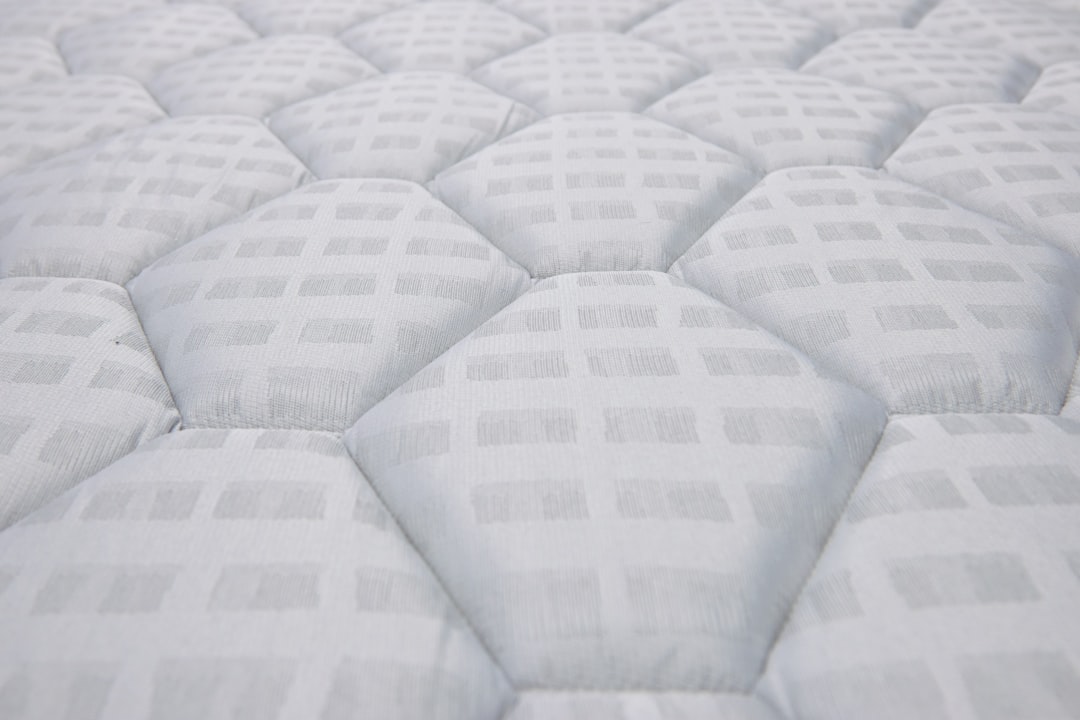
A cooling mattress relies on specific materials to regulate temperature effectively. High-density foam infused with cooling gel or phase-change materials actively draws heat away from the body. The cover fabric is equally critical—breathable bamboo or Tencel promotes airflow far better than standard polyester. Without this layered engineering, even a mattress marketed as 'cooling' can trap heat in Singapore's 80%+ humidity.
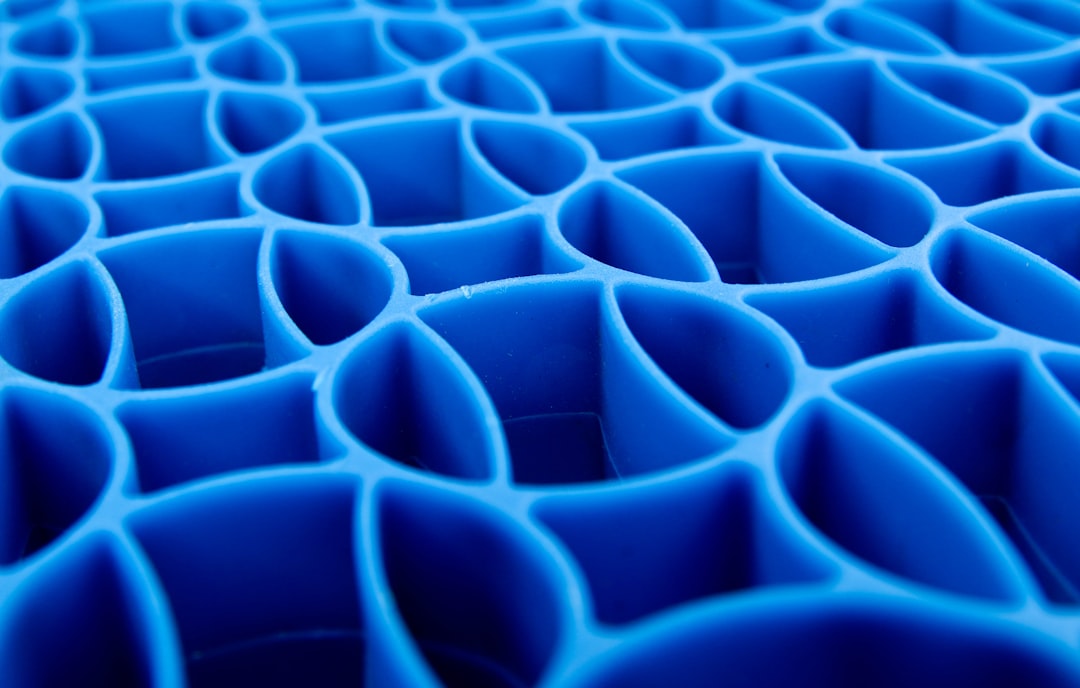

There's a persistent belief that a monolithic latex slab sleeps cooler than a pocketed coil system because it's "aerated." That's only half the picture. The truth lies in how each material handles the physics of airflow—and that's where the cooling promise either holds up or collapses under your own body weight.
Picture a pocketed coil unit. Each spring is individually wrapped in fabric, creating thousands of tiny channels between them. This isn't just about the coils themselves; it's the empty space around them. When you lie down, your body heat gets a clear path to travel down and sideways, dispersing into the room's ambient air. It’s a ventilation system built into the mattress core, working passively all night long. For a typical HDB master bedroom where the air can feel still even with a fan, this internal airflow is a genuine advantage.
Now, monolithic latex. Yes, the material is perforated with pinholes during the manufacturing process, which does allow for some breathability across its surface. The problem comes with thickness. A thick, dense slab of latex—say, 15cm or more—acts like an insulator. Your body heat warms the top few centimetres, but that warmth gets trapped within the core’s mass, with nowhere efficient to go. It’s like wearing a perforated wool sweater; the holes are there, but the material itself retains heat. You’ll feel the initial cool-to-touch surface, but after a few hours, the retained warmth radiates back.
So, which one wins the airflow test? For the majority of hot sleepers in our climate, the pocketed coil system is the more reliably cool foundation. Its structure is fundamentally designed for air movement, not just material breathability. The only time I’d pick a thick monolithic latex core is if you absolutely need its particular pressure-relief qualities and you’re committed to pairing it with a highly active cooling topper—like a phase-change layer—to manage the heat retention at the surface. Otherwise, for a core that breathes on its own, the coils have it.
" width="100%" height="480">Why your cooling mattress isn't cooling: potential causes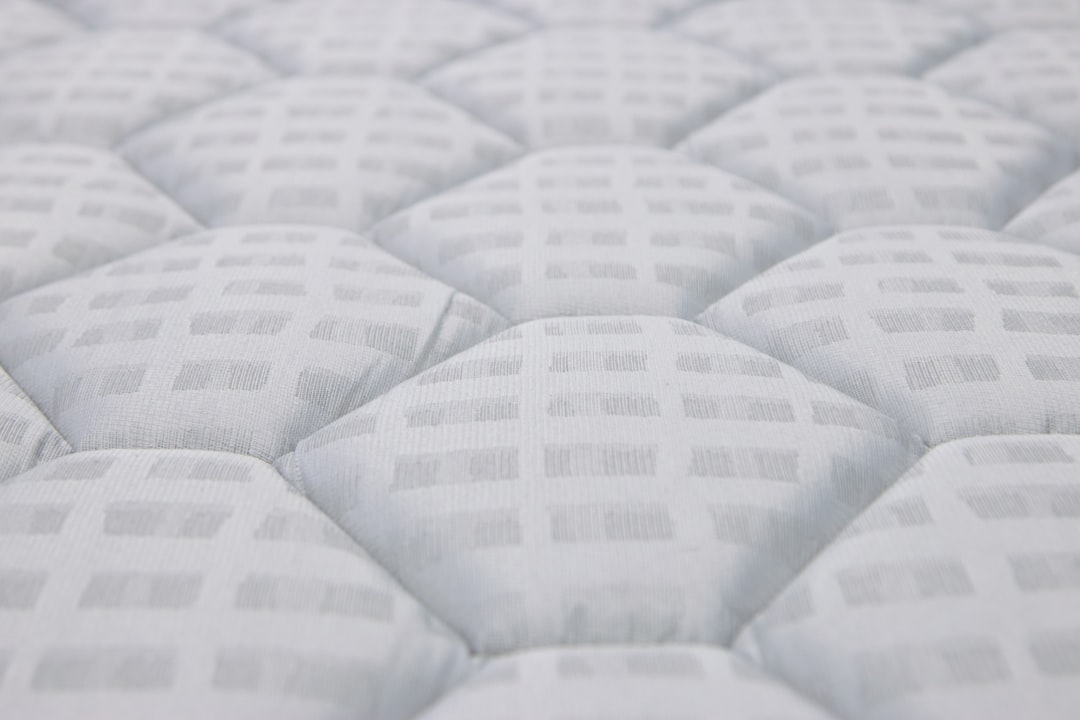
Walk into a showroom and you’ll see people doing the mattress poke—a quick press with the hand before moving on. That’s useless for gauging heat. Your hand isn’t a 70-kilogram body radiating warmth for eight hours. The only way to know if a cooling mattress actually works is to give it a proper test drive.
That’s why you need to head down to one of the showrooms and commit to a proper lie-down. Pick a Somnuz model that matches your firmness preference—plush, medium, or firm—and just stretch out. Set a timer on your phone for fifteen minutes. Don’t just hover; settle in. Let your body heat build up against the surface. In our climate, the first ten minutes are the real tell. A mattress that feels cool at first touch can trap heat after a few minutes, leaving you feeling warm and sticky.
Pay attention to where your shoulders and hips sink in. If you’re a side sleeper, that’s where you’ll feel the heat build first. A good cooling layer should dissipate that warmth, not just absorb it. Notice if there’s a distinct, consistent coolness or if it just feels like regular foam that gets warmer. The difference between a mattress that breathes and one that doesn’t is subtle, but you’ll feel it if you stay put long enough.
Testing in the air-conditioned showroom is a good start, but remember your own bedroom’s reality. If you sleep with the windows open, the ambient heat and 80-plus percent humidity will challenge any mattress. So while you’re lying there, imagine that same feeling in a non-air-conditioned room at two in the morning. Does it still feel like it would work? That’s the question to answer.
The whole exercise is a bit awkward, sure. But it beats buying a mattress that promises a cool sleep and delivers a warm disappointment. Take your time, try a few, and only get off when you’re convinced. Your future, cooler self will thank you for it.
'Cooling mattress still hot after one year?'
That one's a classic. A mattress doesn't just stop cooling on its own. The usual suspect is the cover—if you’re using a thick fitted sheet or a non-breathable mattress protector, you’re trapping all that heat right back in. A bamboo or Tencel cover needs air to work. Another possibility is the room itself; if your bedroom’s a west-facing sun trap or you’ve got no air circulation, even the best cooling tech is fighting a losing battle. Give the surface a good vacuum, strip off those heavy layers, and see if a fan makes a difference. If it’s still warm to the touch, the core materials might have degraded, which isn't typical but can happen with lower-quality foams.
'Best mattress for menopause hot flushes Singapore?'
You need a mattress that pulls heat away fast and doesn’t store it. Memory foam, even with cooling gel, tends to absorb and radiate warmth back—not ideal for sudden temperature spikes. Look for a hybrid with aerated latex or a ventilated coil system; these materials are naturally breathable and promote airflow. A phase-change material cover can help too, as it actively works to regulate surface temperature. The goal is to feel cool the moment you lie down, not after you've already started sweating.
'Memory foam too warm for Tampines condo?'
Almost certainly, yes. Standard memory foam is notorious for heat retention, and in a Tampines flat where the humidity sits around 80% plus, it’s a recipe for a sticky night. The newer cooling gel foams are an improvement, but they’re still foam—they can only do so much in a non-air-con room. If you’re set on the pressure relief of foam, go for a hybrid design where the foam layer is thin and sits on top of a spring unit that lets air move. But honestly, for a truly cool sleep without air-con, you’re better off with a different material base altogether.
'Cooling gel vs latex for no air-con room?'
Latex wins this one, hands down. Cooling gel is a treatment added to foam; it helps dissipate heat initially but doesn’t breathe like a porous material. Natural or aerated latex is full of tiny air channels—it sleeps cooler because air can actually flow through it. In a room where the ambient temperature is your main enemy, that continuous ventilation is what you need. Gel foam might feel cool for the first twenty minutes; latex stays consistently neutral. The only time I’d pick gel is if you absolutely need the slow-sink feel of memory foam and are willing to compromise on temperature for it.
You’ve done the research on gel foams and phase-change covers, but the coolest tech can still leave you sweating if your bedroom’s own climate fights it. That final once-over is about making the mattress work in your actual space, not just on paper.
Start with the air in the room itself. Even a mattress with perfect airflow needs a fighting chance. If your HDB bedroom is one of those classic 3.5 by 3 metre boxes with a single window facing the corridor, natural cross-ventilation is usually a no-go. A ceiling fan or standing fan isn't just a nice-to-have; it’s the essential partner that moves the heat your mattress pulls away. Without it, that dissipated warmth just hangs around you like a blanket. Check that layout—if the bed is going to block what little breeze you get, you’re starting with a handicap.
Then, think about what you’ll put on top of it. A mattress protector is non-negotiable in our humidity, but the wrong one is a heat trap. That cheap, plasticky waterproof layer you might grab for spills? It’s a vapour barrier that will undo all the breathability you just paid for. Look for one specifically labelled as cooling or breathable, made from Tencel or bamboo, or at least with a moisture-wicking top layer. It’s a small add-on that makes a huge difference to the system’s performance.
Finally, don’t let the pursuit of coolness override support. Your sleeping position dictates the firmness you need, and a too-soft mattress will sink you into the material, reducing airflow regardless of its cooling claims. Side sleepers generally need more contouring, back sleepers more even support, and stomach sleepers a firmer surface to keep the spine aligned. Get the support wrong and you’ll be tossing and turning—which generates more heat anyway. The one time you might compromise slightly? If you’re a strict back sleeper who rarely moves, you can sometimes prioritise a cooler, slightly firmer feel over plush pressure relief.
So, take a last look around your room. Got airflow moving? Got a protector that breathes? And does the firmness actually suit how you sleep? Tick those three boxes, and you’re not just buying a cooling mattress—you’re building a cooler sleep setup that can handle a Singapore night.