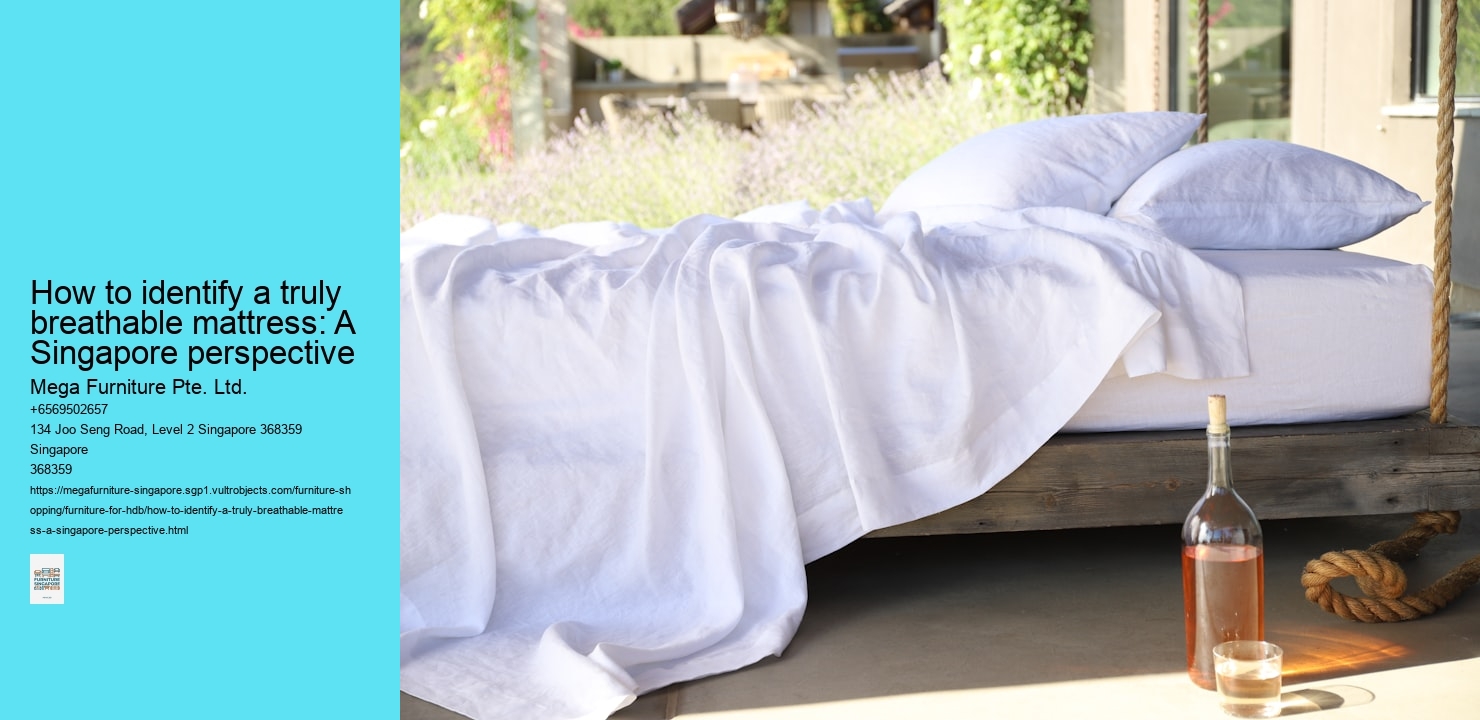
It’s 2 a.m. and you’re awake again, peeling a damp sheet from your back. That’s the real Singapore alarm clock—not your phone, but the clammy heat pooling under you. You can set the air-con to arctic, but if the mattress itself is a heat trap, you’re just cooling the room while you bake on a slab of foam. The problem isn’t the air temperature; it’s the material right beneath you holding every joule of body heat like a thermal blanket.
So you start asking about ‘cooling’ features, and suddenly every mattress claims it. Gel-infused memory foam, phase-change covers, bamboo this, Tencel that. It’s a minefield of marketing where the truth gets buried under a pile of buzzwords. What you need to understand is the core principle: heat has to go somewhere. A truly breathable mattress doesn’t just reflect heat or absorb it temporarily; it provides a clear escape route for that warmth to dissipate away from your body. If the core is a solid, dense block, no fancy cover in the world will save you by 3 a.m.
That’s why you look past the top layer. For our climate, the real heroes are ventilated support layers—think aerated natural latex or pocketed coil systems with ample air channels. These materials have a built-in structure that allows air to circulate through them, not just around them. They work with convection, pulling heat down and away. A high-quality latex core, for instance, is naturally full of tiny air pockets; it sleeps cooler than any solid foam, gel-infused or not. Pocketed springs do the same job, creating a network of air corridors throughout the mattress. The cover still matters—a breathable, moisture-wicking fabric is essential—but it’s the secondary player. It’s the facilitator, not the main event.
There is one exception to this ‘core-first’ rule, and it’s the phase-change material. These advanced fabrics or layers aren’t about breathability; they’re about absorption. They work by actually storing excess heat until you cool down, then releasing it back. It’s a different engineering approach—a thermal battery, not a vent. They can be remarkably effective for that initial temperature spike, like when you first get into bed or experience a hot flush. But even then, they perform best when paired with a breathable base. Otherwise, once their capacity is ‘full’, you’re back to sweating into a non-breathable slab.
So when you’re in a showroom, don’t just feel the surface. Ask to see a cut-away sample. Look for the open structure inside. Press down and imagine if air could actually travel through that material on a humid Tuesday night in your non-air-conditioned 4-room BTO bedroom. That’s the test the marketing claims can’t pass for you.
Lay your hand on a cooling gel foam mattress in a showroom and it feels instantly, wonderfully cold. That initial touch sensation is its entire selling point—a surface-level chill that can trick you into thinking you’ve solved the heat problem. But spend a full night on it in a non-air-conditioned room, and you might find that promise fading faster than the evening breeze. The gel, usually infused into memory foam, works by absorbing heat from your body on contact, but its capacity to store that heat is limited. Once it saturates, and it will on a humid Singapore night, the heat has nowhere to go but back into the foam and then to you. You’re essentially sleeping on a heat sink that’s already full.
Phase-change materials, or PCMs, operate on a different principle entirely. They’re engineered to actively regulate temperature, not just feel cool to the touch. These microscopic capsules are embedded in fabric or foam and are designed to melt when they absorb your excess body heat, keeping your skin at a stable, neutral temperature. When you cool down, they solidify again, releasing that stored heat. The effect is less about a dramatic initial chill and more about preventing you from overheating in the first place. It’s actual climate control for your sleep surface, which is what matters when your bedroom’s ambient temperature is pushing 30 degrees.
The trade-off, naturally, comes in cost and feel. Gel foam mattresses dominate the budget to mid-range, offering that attractive entry price and a familiar, pressure-relieving memory foam hug. PCM technology, being more complex, pushes a mattress firmly into the higher tier. You’re paying for performance over plush sensation. For the hot sleeper who truly needs it—someone in a west-facing flat or experiencing night sweats—that investment in genuine temperature regulation is justified. The one time I’d steer you towards gel foam is if your room is air-conditioned consistently; that initial cool touch is a nice bonus, and the material’s thermal limitations won’t be tested.
Ultimately, your choice hinges on whether you’re buying a feeling or a function. If you want a mattress that *feels* cool when you first lie down, gel foam does that job well enough at a friendlier price. But if you need a mattress that *stays* cool because your environment won’t let up, the phase-change material’s steady, active regulation is the more reliable solution for our relentless climate. Don’t let a showroom gimmick dictate a purchase you’ll regret at 2 a.m.
" width="100%" height="480">How to identify a truly breathable mattress: A Singapore perspectiveThat marketing tag shouting 'bamboo' or 'Tencel' can be misleading. The real hero is how tightly those fibres are woven together per square centimetre. A loose weave with big gaps, even in a so-called cooling fabric, won't do much against our 80%-plus humidity. Air moves through too easily, but so does moisture, leaving you feeling clammy. A denser weave creates a more effective barrier that manages vapour without trapping heat. It's the difference between a sieve and a finely meshed net.
Your body isn't floating above the mattress; it's pressing down. A thin, flimsy cover will collapse under your weight, letting you sink into the warmer foam layers below almost immediately. A cover with more substantial depth and a tighter weave provides a supportive micro-layer. This slight separation is critical for maintaining a buffer zone where air can still circulate. You get the comfort of the core materials without their insulating properties dominating. It's a subtle lift that makes a tangible difference throughout the night.
Breathability isn't just about air flow; it's about liquid movement. A good cover needs to pull sweat away from your skin swiftly. The fabric name might promise this, but the weave depth determines how effectively it happens. A shallow, sparse weave lacks the capillary structure to draw moisture along its threads for evaporation. You end up with a damp patch right where you're lying. A denser, deeper weave has more pathways to pull moisture sideways and disperse it, keeping the sleeping surface drier.
That delicate, loosely woven cover won't last. After a dozen washes, it'll likely pill or lose its shape, and its already modest cooling properties will degrade fast. A denser weave is inherently more durable because the threads support each other. It withstands regular washing—which you'll need in our climate—without breaking down. This means the cooling performance you paid for remains consistent for years, not just months. Investing in depth is investing in a cover that won't quit on you.
Forget the label; use your senses. Hold the fabric up to a light source—if you see clear pinpricks shining through, the weave is probably too open. Then, pinch and pull the material gently. A quality, dense weave will have a slight heft and resistance, not feeling tissue-paper thin. Try to blow air through it; you should feel noticeable resistance against your cheek. In the showroom, press your palm firmly down for thirty seconds and note if heat builds up quickly. This simple check tells you more than any fancy name ever will.
Coils are about airflow, plain and simple. Picture a Queen-sized mattress with a dense, continuous foam core—it’s a heat trap waiting to happen. An open coil system, by contrast, creates a network of vertical channels through the mattress, allowing that warm, humid air your body generates to move down and away. In a climate where humidity rarely dips below 80%, that passive ventilation is a non-negotiable advantage for anyone who’s ever woken up stuck to their sheet.
For the true hot sleeper, though, coils have the edge. They don’t just allow air movement; the space between the springs acts as a buffer zone, preventing heat from building up in the first place. A foam mattress, no matter how many cooling gels are infused, is still an insulator at its base. It can only delay the heat, not expel it. Coils work with the natural convection in your room—warm air rises, cooler air is drawn in—creating a subtle but constant exchange that’s missing in a solid slab.
Now, foam isn’t all bad; modern aerated latex is the exception that proves the rule. It’s processed with thousands of tiny pinholes, creating a springy, breathable structure that doesn’t cling to heat like traditional memory foam. The difference is in the material’s very nature—latex is inherently more responsive and less heat-retentive. But you’ve got to check the core. A solid block of even the best latex won’t breathe as well as one that’s been properly aerated.
The only time I’d steer you toward a premium aerated latex over coils is if you need absolute motion isolation or have a specific preference for that buoyant, cloud-like feel. For battling Singapore’s relentless mugginess, the architectural advantage of an open coil system is hard to beat. It’s a cooler sleep, guaranteed.


The afternoon glare in a west-facing bedroom isn’t just a light problem—it’s a heat problem. By three or four o’clock, that sun has been baking the exterior walls for hours, turning a compact 4-room HDB master bedroom into a heat sink. The air gets still, the walls radiate warmth, and any mattress lying in that path becomes part of the thermal equation. You’re not just sleeping on it; you’re sleeping inside an oven it helped preheat.
This is where generic “cooling” claims get exposed. A thin gel-infused topper on a dense memory foam core won’t cut it. The heat load from the room itself overwhelms those surface tricks. What you need is a mattress built to shed heat from within, using materials that pull warmth away from your body and vent it out. Think aerated latex, which has a naturally open structure, or a hybrid with a ventilated coil system that creates actual airflow underneath you. Phase-change material in the cover can help, but only if the core isn’t a heat trap.
The real test comes around 2 AM. The sun’s long gone, but the stored thermal energy in the walls and furniture is still releasing. A poorly chosen mattress will have absorbed that ambient heat all afternoon and will now be radiating it back at you, just when you’re trying to reach deep sleep. A truly breathable design, however, will have dissipated that energy continuously, so the sleeping surface stays closer to neutral. It’s the difference between lying on a warm rock and a cool, porous stone.
If your bedroom layout traps air—maybe the window is small or it’s one of those long, narrow BTO designs—prioritise mattresses with perimeter ventilation channels or gusseted edges that allow air to circulate around the sides. A tight-fitting bed frame with a solid base kills this airflow; an open slat foundation is non-negotiable. In these conditions, even a “cool” mattress can fail if it’s suffocated.
There’s honestly one scenario where you might compromise: if you run the air-con from dusk till dawn and the room never gets a chance to heat up. But for the majority in non-air-conditioned or part-time-cooled west-facing rooms, the afternoon sun dictates the rules. Skip the marginal performers and go straight for the designs engineered for high thermal load—your sleep quality depends on it.
A cooling mattress relies on specific materials to combat Singapore's heat. Breathable bamboo or Tencel covers promote airflow, while cooling gel foam or aerated latex layers actively draw heat away from the body. Ventilated coil systems further enhance air circulation, preventing the mattress from becoming a heat trap in rooms where ambient temperatures often exceed 28°C.
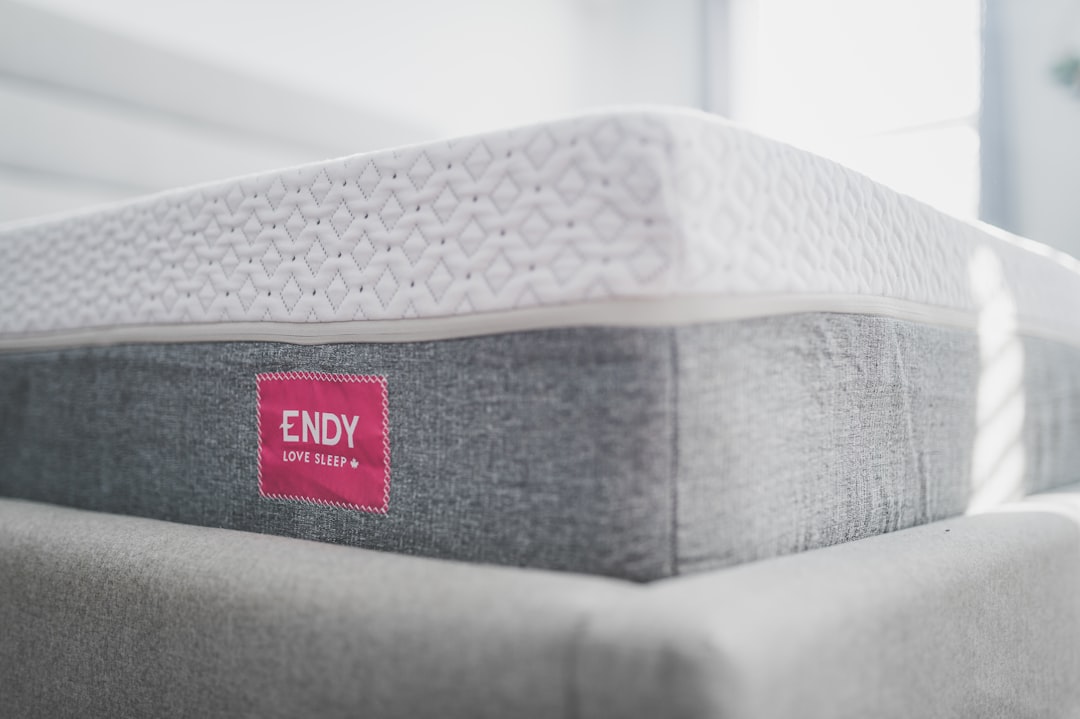
You can read all the specs you want about moisture-wicking covers and breathable coil systems. But the true test of a cooling mattress in Singapore happens when you lie on it in a showroom that’s not aggressively chilled. That’s the specific advantage of visiting a physical location. The ambient warmth in a typical non-air-conditioned HDB bedroom, especially during our mid-year lull, is a crucial variable no online listing can simulate.
The weave of a fabric, the density of a foam layer, how a phase-change material feels under your palm—these are tactile details. On a cool showroom floor, a Tencel cover might just feel smooth. Under a more realistic ambient warmth, you’ll notice if it actually dissipates heat or if it just traps a layer of dampness against your skin. You’ll feel whether the promised ventilation channels make a difference or if the mattress just holds the day’s humidity like a sponge.
This hands-on check is non-negotiable for anyone who’s suffered through a memory foam swamp. Specs can promise high air-flow and heat dissipation, but your own body is the best sensor. Does the surface stay relatively neutral, or does it warm up uncomfortably fast? That’s something you verify by spending a few minutes on it, not by scrolling through product images. For menopausal women dealing with night sweats, or for anyone in a west-facing flat that holds heat, this step is especially critical.
The only scenario where I’d skip the showroom visit is if you’re buying an exact replacement for a mattress you already own and love. But if cooling is your primary concern, and you’re considering new materials or technologies, you really must go down and feel it for yourself. The difference between a mattress that merely lists cooling features and one that genuinely performs in our climate is something you can only detect in person.
In the showroom, the same few worries come up again and again—buyers are right to be sceptical, because not every cooling feature is built for our nights.
Is cooling gel foam enough for menopause hot flushes? Honestly, for a sudden, intense heat surge, gel foam alone often can't keep up. That material works by slowly drawing heat away, but a hot flush is a rapid internal furnace. You'll want a mattress that combines gel with a genuinely breathable cover, like bamboo or Tencel, and ideally a ventilated coil system underneath to act as a heat sink. The goal is to manage the spike, not just the ambient warmth.
Can I use a mattress protector with a bamboo cover? You can, and you should for spill protection, but choose the protector very carefully. A thick, plastic-backed quilted protector will trap all the heat your bamboo cover is meant to release. Look for a thin, breathable one marketed as "cooling" or "moisture-wicking"—it should feel almost like a fitted sheet. Anything that feels like a barrier will defeat the purpose.
How long does phase-change cooling last? The active cooling effect of the PCM layer itself is finite; it absorbs heat until it reaches its melting point, then releases it as you cool down. Over years, this phase-change action can degrade, but the real longevity comes from the mattress's overall breathability. A well-ventilated hybrid with PCM will stay cooler for its entire lifespan than a dense, sealed memory foam block, even after the PCM's peak effect diminishes.
Will a cooling mattress work without air conditioning? It will help, but it can't perform miracles. On a still, humid night where your bedroom air is 30°C and not moving, the mattress can only dissipate heat into that hot, stagnant air. Its job is to stop you from adding to the problem—it won't turn your room into a chill zone. For non-air-con rooms, prioritise maximum airflow: go for aerated latex or a pocketed coil system with a bamboo or Tencel cover, and use a fan to move the air away from the bed surface.
You’ve felt the cool touch in the showroom and heard the sales pitch about advanced materials. Now, pause. That final verification isn’t about trusting a label—it’s about interrogating the actual physics of the thing. Put your palm flat on the surface for a full minute. Does the initial chill fade into a neutral warmth, or does it start to feel like a heat trap? A genuinely breathable core will feel like it’s doing nothing at all, which is exactly what you want.
Marketing loves to talk about ‘cooling gel’ and ‘phase-change’ layers, but the real test is the cover. Unzip it if you can. A true cooling cover is a single, thin layer of woven fabric—often a bamboo or Tencel blend—with almost no padding underneath. If you find a thick quilted topper or a layer of polyester batting stitched to the underside, that’s your first red flag. That extra batting acts like a winter duvet, trapping your body heat against the fancy cooling foam below and defeating the entire system.
Then, think about the long haul in our humidity. A material that feels cool year one but turns brittle or sticky by year three isn’t a good deal. Latex and certain high-quality foam cores are inherently more resistant to moisture and hold their structure. Cheaper gel-infused foams can sometimes break down faster, losing their thermal properties. Ask about the foam’s density and whether the manufacturer guarantees its resilience against Singapore’s 80%-plus humidity. A five-year warranty that covers material breakdown is a stronger signal than a ten-year warranty that only covers the frame.
There’s one exception to this scrutiny: the pure innerspring mattress with a simple, breathable cotton cover. Its cooling mechanism is the open air circulating through the coils, not a high-tech layer. For that type, your last check is simpler—just ensure the cover feels crisp and isn’t coated in any waterproof, plastic-like barrier. Otherwise, don’t commit until you’ve satisfied both checks: core breathability verified by your own hand, and material built to last in our climate. Anything less and you’re just buying a marketing story that won’t survive the first serious heatwave.