You’ve invested in a cooling topper, maybe gel-infused or aerated latex, expecting a dry, cool night. But in a west-facing HDB master bedroom without air-con, that optimism can evaporate by 3am. The tell isn’t just waking up warm—it’s waking up damp. That clammy sensation on your back or shoulders means moisture’s pooling, not dissipating. Your topper is doing its job pulling heat away from your body, but the humid night air and residual warmth from the afternoon sun have nowhere to go. The bedding above you is trapping it all like a lid.
Look for the pattern. If you drift off comfortably but find yourself tossing after midnight, heat’s building up in the system. A quality topper will delay that peak, but in a non-air-conditioned room, ambient temperature doesn’t drop much. It’s a steady siege. By 2am, the combined warmth from your body and the room starts to overwhelm the topper’s capacity to shed it. You’ll feel it as a gradual, creeping discomfort that turns into proper wakefulness. That’s the signal your setup is incomplete.
The exception is if your room gets genuine cross-ventilation—a window on the opposite side pulling in cooler night air, or you’re on a high floor with less heat retention. Most west-facing rooms in older blocks don’t have that advantage. The walls and floor have absorbed hours of sun, and they release it slowly through the night. Your topper is fighting that ambient heat, not just your body heat. Alone, it cannot win.
So the backup isn’t about doubling up on cooling layers; it’s about creating an escape route. Your bedding—the sheets, quilt, and protector on top—must be breathable enough to let that captured warmth and moisture vent out. If they’re not, you’re essentially sleeping under a blanket that’s holding the heat your topper tried to expel. The pairing becomes critical. Think of it as a team: the topper draws heat away from you, and the bedding above lets it escape into the room air. One without the other leaves you stuck in a humid pocket.
Think of that plastic-wrapped mattress you see in a showroom—it’s sealed tight against dust, but it’s also sealed against air. That’s the trap with a cheap waterproof protector. You slap one on your bed and, sure, spills won’t reach the foam, but every night you’re sleeping on a layer that holds heat and moisture right against you. In our climate, that’s a recipe for a sian night. Humidity often sits above 80%, and that trapped dampness doesn’t just make you feel sticky; over time, it can compromise the cooling materials in your topper, especially something like aerated latex which relies on airflow to work properly.
Skip the PVC entirely. You want a base layer that manages moisture, not blocks it. A good quilted cotton or Tencel cover acts like a breathable shirt—it wicks perspiration away from the surface and lets air circulate through. That’s the crucial first step in preserving your investment. A topper isn’t just about immediate comfort; it’s a long-term addition that needs a compatible foundation. A non-breathable base will undermine even the best cooling gel or phase-change materials layered above it, because you’ve essentially capped them with a sauna lid.
The one exception? Maybe if you have a young child who’s prone to accidents, the waterproof claim feels too tempting to ignore. Even then, look for a hybrid option—a protector with a waterproof membrane that’s still topped with a natural, breathable fabric like cotton. It’s a compromise, but it’s better than a full plastic sheet. For almost everyone else, especially in a non-air-conditioned room or for those dealing with night sweats, the priority has to be airflow. Your protector should feel like part of the bedding system, not a separate, suffocating barrier.
So when you’re selecting this first layer, touch it. Hold it up to a light. Can you see the weave? Does it feel like a decent bedsheet, or like a raincoat? That’s your quick test. A breathable protector won’t feel heavy or plasticky; it’ll have a familiar, textile softness. It’s a simple choice, but it sets the tone for everything that follows. Get this right, and your topper can do its job. Get it wrong, and you’ve wasted your money on a cooling upgrade that’s sleeping under a blanket.
A cooling mattress topper relies on specific materials to dissipate body heat in our tropical climate. Gel-infused memory foam or aerated latex layers actively channel warmth away from the sleeper. The cover is equally critical—breathable bamboo or Tencel fabrics promote airflow rather than trapping moisture. This combination tackles both temperature and the high ambient humidity that can make standard foam feel stifling.
Cooling mattress toppers must match your existing bed's dimensions for effective performance and comfort. Singapore's standard Queen size (152x190cm) fits most master bedrooms in HDB and BTO flats. Ensure you measure your mattress precisely, as a topper that's even a few centimetres off can shift and bunch. A proper fit also means the cooling materials are correctly positioned under you throughout the night.
Percale's tight, one-over-one weave creates a noticeably crisp texture that sits cooler against your skin than a standard cotton sateen. That crispness isn't just a feel—it's a function, because the weave structure allows for more air to pass through the fabric compared to denser, smoother finishes. In a typical 4-room BTO master bedroom, where space is tight and airflow can be limited, that breathability becomes crucial. You'll find percale sheets don't cling; they stay separate from your body, letting the mattress topper's cooling surface do its work without a barrier. It's the choice for sleepers who want a neat, ordered feel and a genuinely cooler sleep surface.
Thread count marketing is everywhere, but the length of the cotton fibres matters more for both durability and cooling. Long-staple cotton, like Egyptian or Supima, produces stronger, finer yarns that can be woven into a high-thread-count percale without becoming dense and heavy. Those longer fibres result in fewer loose ends on the fabric surface, which means less pilling over time and a smoother feel that enhances breathability. It's a detail many buyers miss, focusing solely on a high number instead of the material pedigree. For our climate, this combination of fine yarn and an open weave is what actually sustains cooling performance year after year.
Linen operates on a completely different principle, its inherent slubs and loose weave creating a fabric that practically encourages air circulation. It doesn't feel crisp; it feels relaxed and heavy, draping over you and the mattress in a way that still manages to feel light. In a landed home bedroom with better cross-ventilation, linen's natural texture aligns with a more relaxed, breathable sleep environment. The fabric absorbs moisture quickly and releases it fast, which is a subtle advantage during humid nights. It's the ideal partner for a cooling mattress topper that uses phase-change materials or gel, as the linen won't trap the dissipated heat.
The fundamental difference between a cooling sheet and a warming one often lies in the weave, not just the material. A sateen weave, for example, has a lustrous, silky surface because more threads are on the top, creating a denser, less breathable fabric that can feel warmer. Percale's balanced weave is inherently more open, while linen's irregular weave is even more so. This is the non-obvious point: a high-thread-count sateen can actually undermine your cooling mattress topper's efforts by acting as an insulator. For hot sleepers, the weave selection should be the first filter, before you even consider thread count or material blends.
Your final decision hinges on matching the sheet's texture to your sleep environment and personal preference. The crisp, cool percale suits a modern, air-conditioned or well-fanned BTO bedroom where you prefer a structured feel. The softer, rumpled linen is better for non-air-conditioned spaces or for sleepers who find crisp fabrics too stiff. There's no hybrid that does both perfectly; you have to commit to one texture profile to get the full cooling benefit. The one real exception is for those with sensitive skin who might find linen's texture too rough—then a high-quality, long-staple cotton percale is the clear and only alternative.
You’ve got your cooling mattress topper sorted, a sleek layer of gel foam or aerated latex promising a blissful night. Then you throw a heavy down duvet on top and wonder why you’re sweating by midnight. That’s the classic Singapore bedroom mistake—investing in a cool surface but trapping yourself under a heat-retaining blanket. The duvet’s filling is the final boss; if it doesn’t breathe, your topper’s efforts are wasted.
Synthetic fills, like polyester, present a clear trade-off. They’re often cheaper and easier to care for, which is tempting. But on those nights when humidity pushes past eighty percent, they tend to retain more of your body heat. You’ll feel that trapped warmth, a subtle but persistent discomfort that undermines any cooling technology underneath. It’s a case where the initial savings might cost you in sleep quality night after night.
For year-round use here, lightweight and breathable is the only sensible choice. Silk is a standout—it’s naturally temperature-regulating, feels light but cosy, and handles humidity without becoming a damp weight. Tencel, derived from wood pulp, offers similar breathability with a cool, smooth touch. These materials let air move through, allowing your topper to do its job of dissipating heat instead of fighting against a insulating layer.
There’s really only one exception to this rule. If your bedroom is air-conditioned throughout the night and you prefer a heavier, more enveloping feel, a denser fill could work. But for the majority—those in non-air-conditioned rooms, dealing with the tropical baseline or experiencing night-time temperature spikes—a light, breathable duvet is non-negotiable. It completes the cooling system, not sabotages it.
So match your investment. A queen-size bed with a cooling topper deserves a companion that won’t hold heat. Look for fills that prioritise airflow over loft, and feel almost weightless when you lift them. That’s the pairing that actually works in our climate.
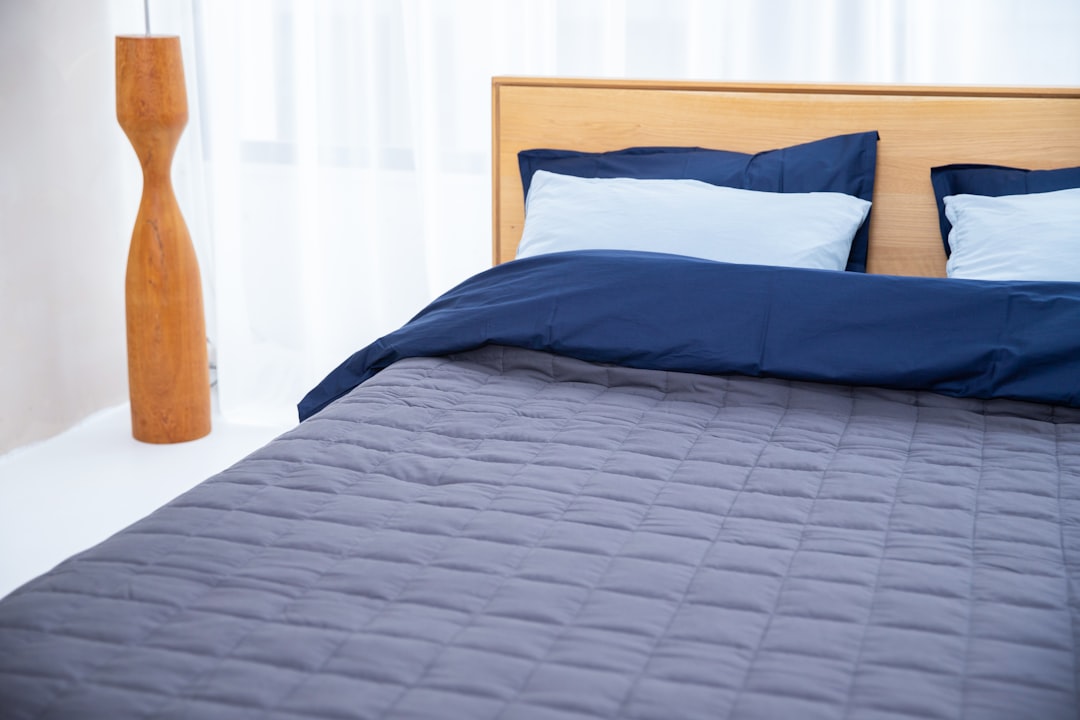
You’ve got your cooling mattress topper, you’ve chosen breathable sheets, and you think you’re done. That’s where most hot sleepers stop—they forget the pillow. Your head rests on it all night, and if that pillowcase isn’t playing the same cooling game as your sheets, you’re creating a heat trap right where you need relief most. It’s a mismatch that can undo all the careful work you’ve put into the rest of your bedding setup.
Think of it like wearing a breathable linen shirt with a thick wool scarf; the inconsistency just doesn’t work. For a truly cohesive cooling system, your pillowcase should be the same material as your sheets, or at least share the same performance properties. A cotton percale sheet paired with a polyester pillowcase will leave you with a hot, sticky spot under your cheek, especially in our humidity. The goal is uniform temperature regulation across every surface that touches your body.
For those dealing with more intense heat, like night sweats, the material choice becomes even more critical. Here, bamboo-derived fabrics really show their worth. They’re not just breathable; they have a natural moisture-wicking ability that pulls sweat away from the skin quickly, helping you stay dry and cool. It’s a specific performance that standard cotton often can’t match during a hot flush. This isn’t about luxury; it’s about choosing a textile that actively manages the problem.
Of course, there’s one exception. If you’re someone who absolutely needs the crisp, cool feel of linen but finds it too rough against your face, then a compromise is okay. You could opt for a smoother, cooling bamboo pillowcase while keeping linen sheets—the head gets a softer, actively wicking surface, and the body still benefits from linen’s breathability. That’s a functional mismatch, not a thermal one.
So when you’re selecting your bedding, don’t treat the pillowcase as a separate, decorative item. It’s the final piece of your thermal management puzzle, and it needs to be chosen with the same performance-first mindset as everything else. Get that right, and your head won’t be the weak link in your cool sleep strategy.
You can’t know if a cooling mattress topper will feel right just by reading about it. The numbers and descriptions are useful, but they don’t translate to the sensation you’ll experience night after night. That’s why skipping a showroom visit is a gamble—you might end up with a combination that feels wrong, even if it ticks all the technical boxes.
Your hand is the best judge. At a showroom, you can press your palm against the topper’s surface and feel its texture. Is it smooth or slightly textured? Does it feel cool immediately or just less warm? Lay your arm across it for a minute and see if that initial coolness holds. Then, do the real test: pair it with the sheet you intend to use. A crisp percale weave, for example, feels distinctly different from a soft sateen—one might slide smoothly over the topper, while the other could feel slightly clingy. That interaction matters for your comfort.
The Megafurniture showroom at Joo Seng lets you try this exact pairing. You can feel their Somnuz® cooling topper and then drape a percale sheet over it. Pay attention to the fabric’s weight and how it settles. A lighter percale might feel breezier, but does it still feel substantial enough? Run your fingers over the sheet-topper surface to check for any unwanted friction. This is the only way to know if the system feels cohesive, not just a stack of separate layers.
Some buyers think a cooling topper is a solo performer, but it’s part of a team. The sheet is its direct partner. If the sheet traps heat or feels uncomfortably slick against the topper’s surface, the whole cooling effect gets compromised. Testing in person lets you confirm the hand-feel matches your preference for firmness and texture—a soft topper under a crisp sheet can feel oddly disjointed. You’ll know straight away if it’s a match.
The exception? If you’re replacing an identical setup you already love, maybe you can skip the trip. But for any new combination, especially in our climate where every detail affects sleep, a half-hour visit is a small price for certainty. You’ll leave knowing the feel, not just hoping for it.
You hear the same questions again and again in the showrooms, especially from folks in the older estates. They've been sleeping on the same mattress for years, maybe a bulky memory foam that felt great at first but now traps heat, and they're looking for a way out without replacing the whole bed.
Can a cooling topper actually fix a mattress that's too warm? It can, but only if the mattress itself isn't the main culprit. A topper works by adding a fresh, breathable layer on top. If your old mattress is a dense, non-ventilated foam that's basically a heat sponge, a cooling topper will help a bit—it'll give you a cooler surface to sleep on. But that trapped heat underneath can still build up. For a real solution, you'd want a mattress with built-in cooling channels or a ventilated core. A topper is a good stopgap, though, especially if you're not ready to commit to a whole new bed.
Do bamboo sheets really make a difference with night sweats? They do, but the difference is subtle rather than dramatic. Bamboo-derived fabrics like Tencel are breathable and feel cool to the touch, which can help wick moisture away from your skin faster than standard cotton. For someone dealing with regular hot flushes, that faster drying time can mean less discomfort and fewer wake-ups. They won't lower your body temperature, but they'll manage the sweat more efficiently, which is often what you need.
How often should I actually wash my bedding in our humidity? Weekly is the ideal, but in our climate, that's not always about cleanliness—it's about moisture management. Sheets and pillowcases absorb sweat and ambient humidity every night. Leaving them on for two weeks lets that moisture settle, and it can start to feel clammy even if it looks clean. A weekly wash breaks that cycle. If weekly feels too much, at least flip your pillowcase mid-week.
Is a quilt better than a duvet for a non-air-conditioned room? Almost always, yes. A duvet, even a thin one, traps air—that's its job. In a 28°C bedroom, that trapped air becomes a warm pocket around you. A quilt is a single, flat layer of filling with a cover; it doesn't create that insulating pocket. It provides weight and warmth without the heat trap. The one exception is if you're using a very lightweight, summer-weight duvet with a highly breathable natural cover, like linen. But for most people in a typical HDB room without air-con, a quilt is the simpler, cooler choice.
You’ve got the perfect cooling mattress topper lined up, but if your sheets trap heat, you’re basically putting a sweater on it. That final glance at the labels before you pay is where the real win happens. Forget the colour or the embroidery for a second—the only thing that matters is what the fabric is made of and how it’s going to handle our climate.
Start with the protector. That thin layer is your frontline defence, and it needs to breathe just as much as your topper does. Look for a material like bamboo-derived viscose or a tightly woven cotton percale; anything labelled “polyester” or “microfiber” in this layer is a heat trap. Then move to the sheets. A high thread count isn’t the goal here—a loose, crisp weave that lets air move through is. A 100% linen or a pure cotton sateen with a light finish will work, but check the care tag: if it says “dry clean only” or “wash separately in cold water,” you’ll regret it after the first monsoon-season sweat.
The duvet cover is the same story. It’s the outermost shell, so its breathability is critical. A heavy, ornate jacquard might look luxurious, but it’ll feel like a blanket in a 28°C room. Go for a simple, smooth fabric that you can wash weekly without it shrinking or fading. The whole set, from protector to cover, should be built for the laundry machine—our humidity means you’ll be washing them often. If any piece can’t withstand frequent hot washes and quick drying, it’s going to fail you.
There’s one exception, though. If you absolutely must have that decorative embroidered pillowcase for the look, get just one and pair it with plain, breathable sheets everywhere else. Don’t let a single aesthetic piece compromise the entire system’s function. Your sleep comfort hinges on every layer working together, not just the one you spent the most on.