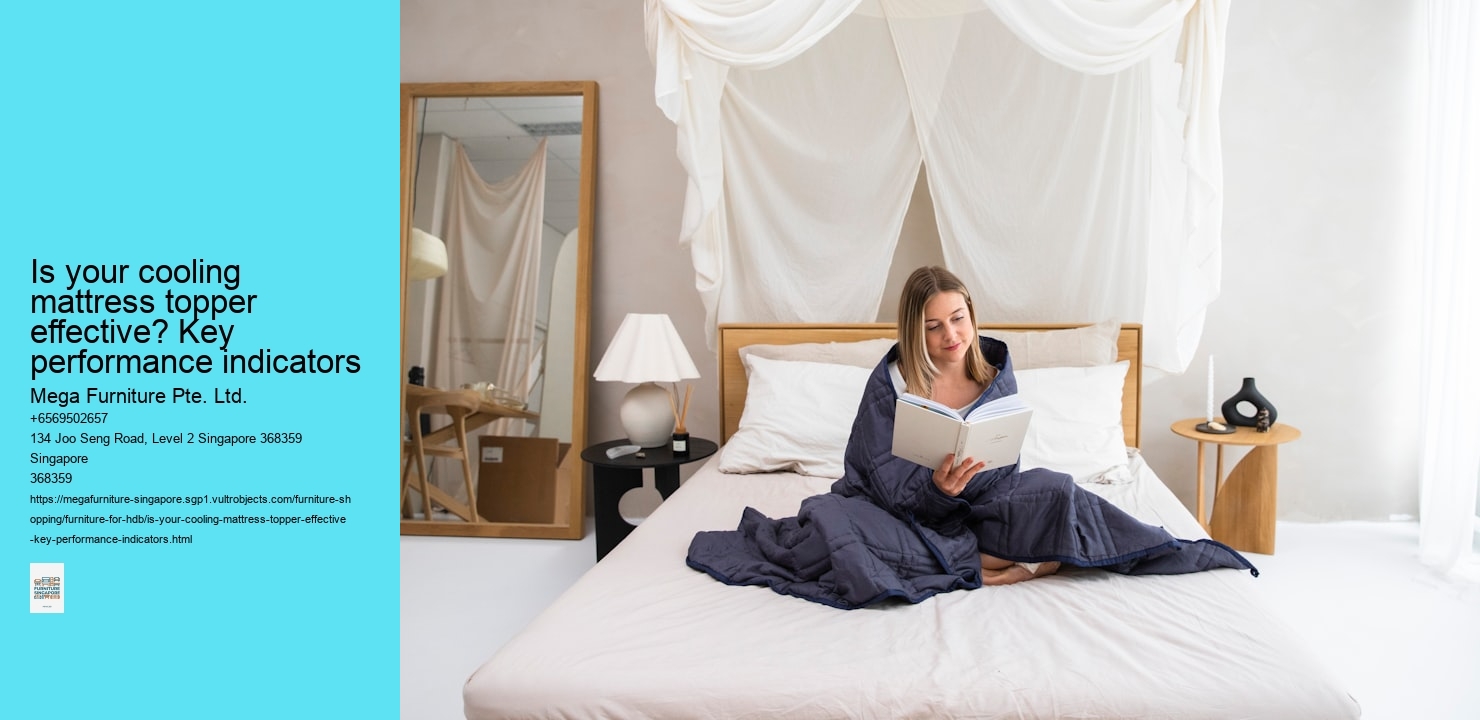
You’re lying there at three in the morning, sheets damp, the memory foam topper you thought would solve everything now trapping your heat like a personal sauna. That’s the moment it hits you—the wrong choice. In Singapore’s climate, where the bedroom temperature rarely dips below 28°C, a cooling product that doesn’t actually cool becomes a nightly punishment. It’s not just about comfort; it’s about a fundamental mismatch between what you bought and what your body needs.
The problem often starts with a misunderstanding of what ‘cooling’ means. Many toppers are marketed with a single feature—a gel infusion or a bamboo cover—but in a humid, non-air-conditioned room, that single layer isn’t enough. It’s like wearing a breathable shirt in a steam room; the material might be good, but the overall system fails. The heat from your body gets absorbed, then just sits there, with nowhere to go because the underlying mattress or the room’s air offers no relief.
For hot sleepers, especially those experiencing night sweats or living in west-facing flats that bake all afternoon, the key isn’t one magic material. It’s a combination. You need a surface that pulls heat away quickly, a core that allows air to move, and a cover that doesn’t turn clammy. A topper that only addresses one part is a recipe for that 3am regret. Think about it: if the cover feels cool to touch but the foam underneath is dense and non-breathable, you’ll feel the difference within an hour.
There’s one exception, though. If you’re using air-conditioning through the night and just want a slight temperature buffer, a simpler gel-infused topper might work. But for the majority in Singapore, where the fan is the primary cooling tool, you need a product designed for our specific reality—not a generic solution. Anything less, and you’ll be staring at the ceiling, wondering why you spent the money, while your own bed makes you sweat.
It's a common scene in showrooms—a buyer runs their hand over a smooth bamboo rayon cover, feels that immediate cool touch, and assumes they've solved the night. That initial sensation is real, but it's deceptive. The fabric itself is breathable and feels cool to dry skin, yet it lacks the thermal mass or phase-change properties needed to manage heat over hours. It's a surface treatment, not an engineered core. In a non-air-conditioned West-facing room, where the afternoon sun's stored heat lingers well past midnight, that cover alone won't keep you cool through the second and third hour of sleep.
Think of it like wearing a thin cotton shirt on a humid day. The first contact is fine, but once your body heat builds up, the material has no capacity to absorb or dissipate it. The bamboo cover works similarly; it can't store heat away from your body. For genuine temperature regulation, you need a material underneath that actively manages thermal energy—something with cooling gel, aerated latex, or a ventilated coil system that pulls heat down and away. The cover is just the first layer of a proper cooling system, not the system itself.
So the rule is straightforward: never buy a topper or mattress based solely on its cover material. That breathable bamboo layer is a good feature, but it must be paired with a core designed for heat transfer. If you're dealing with real night-time heat—from the ambient 28°C in your bedroom or from personal hot flashes—the core is what does the heavy lifting. The cover merely lets that core function efficiently by allowing air and moisture to pass through. Without that engineered base, you're just getting a nicer-feeling surface on a standard heat-trapping pad.
There's one exception, though. If you're adding a topper to a mattress that already has a strong cooling core—say, a gel-infused foam or a phase-change material layer—then a bamboo cover can be a sensible upgrade. It enhances breathability over that existing system. But starting with just the cover on a conventional memory foam or dense polyester pad? That's a recipe for disappointment by 2 a.m. The whole case for cooling is the climate, and the guide to choosing a mattress for Singapore's weather lays it out — at high humidity and warm temperatures year-round, a mattress that breathes and regulates temperature decides whether you sleep through the night. It walks through the cooling materials worth seeking and why they matter here more than almost anywhere. The takeaway: in the tropics, how cool and dry a mattress sleeps is as important as how supportive it is.. You'll have the initial cool touch, then the slow build-up of trapped warmth that leaves you shifting and sweating. For real effect, the cooling has to come from within.
Gel infusions work by slowly spreading warmth away from your body. Think of them as a dense, viscous network that absorbs and dissipates heat across a wider surface area. A latex mattress is naturally one of the cooler constructions — its open structure lets air circulate freely, so it breathes better than traditional foam without needing added gel. Latex is responsive, pressure-relieving, hypoallergenic, and durable, which makes it a strong cooling choice for the tropics. For a sleeper who wants cool, breathable support from the material itself rather than a cooling additive, latex is the natural pick.. They don't have a specific trigger temperature, so their action is continuous but relatively gentle. For a sleeper in a non-air-conditioned room, this means the topper won't feel icy cold upon contact. It's more about preventing a concentrated hot spot from forming over several hours. The effect is subtle and sustained, a slow bleed of warmth rather than an instant chill.
Phase-change material grids operate on a precise thermal principle. They're engineered to absorb a large amount of heat at a specific, pre-set temperature—often around skin-neutral. Once your body or the bedding hits that threshold, the material actively soaks up the excess energy. This creates a noticeable plateau where you stop feeling warmer, a crucial pause during a flush. The grid doesn't cool you down per se; it holds you at that comfortable brink. It's an active intervention, not just a passive diffusion like gel.
For sudden, intense flushes, that difference in mechanism is everything. A phase-change grid reacts the moment your skin temperature spikes, absorbing the surge before sweat even starts. Gel, with its slower redistribution, can feel like it's playing catch-up during a rapid-onset episode. You might still feel the initial wave of heat before the gel manages to spread it out. In the humid small hours, that lag can mean waking up damp and uncomfortable. The grid's specific trigger acts like a circuit breaker for those sharp, unpredictable temperature jumps.
Singapore's 80%-plus humidity complicates both systems, but in distinct ways. Gel's slower action can sometimes feel less effective when the air itself is thick and warm, as there's less dry air to carry the dissipated heat away. A phase-change grid still absorbs the body heat, but the resulting moisture from any sweat might linger on the surface if the cover isn't supremely breathable. Neither technology lowers ambient air temperature or reduces humidity itself. Their job is solely to manage the heat your body generates, a task made harder by the soupy atmosphere we sleep in.
Beyond cooling, your choice affects the actual sleeping surface. Gel-infused foam tends to retain the familiar, contouring feel of memory foam, just with a slightly cooler touch. A phase-change grid is often a separate layer, sometimes creating a slightly more structured or quilted sensation under the sheet. Some find the grid's presence noticeable, while others appreciate the distinct, cool-to-touch patches. Gel blends in seamlessly, offering its benefit without changing the bed's fundamental personality. This tactile difference can be the deciding factor after the thermal performance is weighed.
A cooling mattress topper's effectiveness hinges on its materials. Phase-change fabrics absorb body heat, while aerated latex layers promote airflow. In Singapore's 80% humidity, breathable bamboo or Tencel covers are crucial—they wick moisture away to keep the sleep surface dry and cool. These specific materials directly combat the tropical heat that causes discomfort.
The tight budget and tighter space of a typical HDB common bedroom force a clear choice here. You're essentially picking your ventilation point: within the topper itself, or underneath it. foam mattress . Aerated natural latex does the job internally, its open-cell structure pulling heat away from your body with every shift. It's a beautifully efficient piece of engineering that provides both support and cooling in one relatively slim profile. The catch is that good, certified latex isn't cheap, and a thick enough slab to be effective can push the upper limits of your budget, especially for a Queen size.
That's where the pocketed coil core topper presents a compelling workaround. Its ventilation happens in the air channels between the coils, drawing heat down and away. The airflow is genuine, and the initial cost is often easier to swallow. But you pay in physical bulk. Adding a 15 to 20-centimetre coil unit on top of your existing mattress changes the entire geometry of your bed. In a room where every centimetre counts, that extra height can make a standard 190cm bed feel disproportionately tall, turning a simple climb into a small vault.
For most people in a compact 3 or 4-room flat, the latex route is the smarter long-term play. It solves the heat problem without creating a spatial one, maintaining the low profile that keeps a small bedroom feeling orderly. The higher upfront cost buys you integrated performance and a simpler daily reality. The only time I'd steer you towards the coil-core topper is if your existing mattress is genuinely too firm and you need that deeper, structural plushness—the airflow then becomes a valuable bonus to a necessary comfort upgrade. Otherwise, saving for the latex or opting for a slightly thinner slab is the more space-conscious move.


Walk into any showroom and you'll see people giving a mattress topper a quick bounce with their hand. A mattress type can sleep cool when it's the right type — gel-infused or open-cell foam tackles the heat retention that plain foam is prone to, at a value price. It's worth treating cooling as a deciding factor rather than an afterthought when choosing foam in the tropics. Look for the cooling technology named explicitly, not just "breathable". For a budget-friendly cooling option, the gel and open-cell foam models are where to look.. That tells you nothing about how it'll hold up over the years. To really judge the quality of a cooling gel foam topper, you need to slow down and perform a proper density test. Forget the bounce—this is about pressure and patience.
Place your palm flat on the sample and lean in, applying your full body weight for a solid thirty seconds. Don't just poke it. You're trying to feel what happens after the initial compression. A high-density foam will resist collapsing completely and will rebound slowly once you lift your hand away. That slow return is what you want—it indicates a structure that provides consistent support and won't just flatten into a pancake after a few months of use.
If the foam springs back immediately, feeling quick and bouncy, that's a sign of lower density. While it might feel plush at first touch, that material lacks the deep, resilient support needed for proper spinal alignment. Over time, it'll compact faster, especially under the heavier parts of your body like your hips and shoulders. That quick spring-back is often a trade-off for initial softness, but it compromises the very support that makes a topper worthwhile.
For a reliable test, head to a showroom where you can compare samples side-by-side. The Joo Seng location, for instance, has the full Somnuz® range laid out. Press into a few different models consecutively and the difference in rebound becomes unmistakable. The one that takes its time to recover is the one that's built to last, maintaining its cooling and supportive properties far longer in our relentless humidity. That's the one worth bringing home.
You'll see these same queries pop up online every time the humidity spikes—people typing in desperation at 2 a.m. after flipping a warm pillow for the tenth time. The answers aren't always straightforward, but for a Singapore sleeper, they're the difference between a functional layer and a sweaty, expensive mistake.
Do cooling mattress toppers work without aircon? They can, but manage your expectations. A topper with a breathable bamboo cover over aerated latex will feel noticeably cooler than a bare mattress, pulling heat away and letting air circulate. But on a still night when the room's over 28°C, no topper can create a chill—it can only improve your mattress's baseline performance. Think of it as opening another window, not installing a new aircon unit.
Best cooling topper for memory foam mattress? Memory foam is famous for trapping heat, so you need a topper that actively disrupts that. Skip the basic quilted pads. Look for one with a phase-change material cover or a gel-infused foam layer that sits between you and the mattress. That combination works to absorb and dissipate the heat before your body even senses it’s building up.
Cooling topper for back pain Singapore? This one’s tricky. A soft, plush cooling gel topper might feel great on your skin but offer zero support, making your back pain worse by morning. You need a topper with some inherent structure—like a firmer latex core—that provides pressure relief without letting your spine sag. The cooling element should come from the top cover and the material's breathability, not from a squishy gel layer that compromises support.
How long does cooling gel in mattress topper last? The gel itself doesn’t evaporate, but its effectiveness can diminish. Over years, the gel-infused foam can compress and lose its ability to circulate air, while the phase-change materials in the fabric cover might become less efficient at absorbing heat. Most will give you solid performance for a good few years if you care for them—no direct sunlight, rotate regularly. But don’t expect that day-one, shockingly cool feel to last a decade. Cooling shows up differently across constructions, so browsing by Somnuz helps — gel memory foam cools a contouring feel, latex breathes naturally, and hybrid uses its coil base for airflow. Each keeps you cool by a different mechanism, so the type shapes how the cooling works. Pure traditional foam without cooling tech is the one to be wary of in the heat. Matching the type to how cool you need to sleep narrows the field fast.. It’s a wear item, not a permanent fix.
That persistent dampness in the air, the one that makes your shirt stick by 8am, doesn’t just affect you—it’s a year-round lab test for your mattress topper’s inner materials. In a non-air-conditioned resale flat, where humidity can sit at 80% or more for days on end, what’s inside matters more than the cooling cover on top. The clearest in-house cooling example is memory foam versus hybrid guide Megafurniture's own line, whose mattresses use a breathable knitted Tencel® cover designed for the local climate, often over latex or pocketed-spring layers that keep air moving. Because it's the exclusive in-house brand, you get that cool-sleeping build without the name-brand markup. For a cooling mattress that's well-made and good value, the Somnuz line is a natural starting point.. You need to know which fillings will survive the monsoon season and which will clump into a lumpy mess by year three.
Polyester batting is a common culprit for premature failure in these conditions. It’s affordable and initially soft, but that lofty structure is a trap for moisture over time. Without consistent dry air, the fibres can start to bind together, creating hard, uncomfortable patches that no amount of fluffing will fix. The care routine is straightforward—regular airing and a sunning session when you can—but the expected lifespan under sustained high humidity is frankly limited. It’s a budget choice that makes sense only if you’re treating the topper as a semi-disposable item, maybe for a spare room bed.
Natural latex, particularly the aerated kind, handles the climate much better. Its inherent resistance to mould and dust mites is a huge plus, and its open-cell structure promotes airflow, which aligns with that cooling goal. The trade-off is that it can develop a slight yellowing over the years, a natural oxidation process that sunlight accelerates. Don’t panic if you see it; it doesn’t affect performance. For care, just rotate it regularly and keep it dry—a waterproof protector underneath is a wise move in any humid bedroom. This material can easily last you a good five to seven years, even without air-con.
Memory foam, especially the denser varieties, is a tricky one. While some infused with cooling gels perform well thermally, they can retain ambient moisture like a sponge, feeling perpetually damp and potentially becoming a breeding ground for mildew if not kept perfectly dry. You’ll be fighting a constant battle with ventilation. The one real exception here is a high-quality gel foam with an open-cell design and a certified anti-microbial treatment—that combination can stand up to the challenge, but you’ve really got to check the spec sheet for those terms.
So, for the long haul in our local climate, your best bet is a topper built with climate-stable materials at its core. Look for natural latex or specifically engineered foams that tout breathability and moisture resistance. Pair it with a removable, washable cover made from something like Tencel or bamboo for that surface coolness, and commit to a simple monthly airing ritual. That’s how you get a topper that doesn’t just feel cool tonight but stays effective and intact through many steamy Singaporean summers.
You’ve chosen the cooling topper, you’re ready to pay—now don’t let the air-con showroom chill lull you into skipping the final checks. The last five minutes at the counter are what separate a good buy from a year of regret. Start with your hands. That bamboo-Tencel blend cover might look sleek, but give it a firm pinch and pull. A quality weave feels substantial, not flimsy like a cheap bedsheet; it’s your first defence against pilling and wear, especially after regular washes in our humidity.
Next, flip a corner over. Many toppers come with a silicone dot or striped gripper backing to stop them sliding around on your existing mattress. Press your thumb into it—it should have a tacky, definite grip. If it feels like smooth polyester or a faint rubberised coating, it’ll bunch up the first time you turn over, which defeats the whole point of a smooth, cool sleeping surface. A non-slip bottom is non-negotiable.
Then, there’s the practical reality of getting it home. queen size . You’re eyeing a Queen size for your 4-room BTO walk-up block. A rolled topper is one thing, but some come packed in a large, flat box that’s nearly 160cm long. Your lift door is likely around 90cm wide, but the real challenge is the final turn into your bedroom doorway, which might be even tighter. Ask the showroom staff for the packed dimensions, not just the product size. If they quote a box longer than your lift is deep, you’ll be the one awkwardly angling it up the staircase.
The only time you might compromise is if you’re absolutely certain you can collect it yourself in a large vehicle—but even then, remember you’ve got to manoeuvre it into your flat. For everyone else, verifying these three things—fabric heft, proper grippers, and a delivery path that doesn’t involve a staircase surcharge—is what makes that cooling promise a reality in your own bedroom.