The showroom test is deceptive. You sink into a plush mattress, feeling that instant cushiony embrace—that’s comfort, right? But back in a non-air-conditioned HDB bedroom, that same embrace becomes a thermal trap. Traditional memory foam is famous for trapping heat, which is exactly why cooling versions exist — a memory foam mattress with gel-infused or open-cell foam dissipates body warmth while keeping the contouring, pressure-relieving feel people love. The gel beads absorb heat and draw it away, and the foam springs back faster so it holds less warmth. For a sleeper who wants the cradled memory-foam feel without the heat, the cooling-gel versions are the ones to compare.. By 2am, you’re not just warm; you’re stuck in a pocket of your own body heat, the foam layers having absorbed and held every bit of it. That initial softness you loved is now the reason you’re peeling the sheets off.
It’s a common misstep. Buyer wants a cloud-like feel, thinks softer equals better sleep. For the cooling decision specifically, the memory foam versus hybrid guide is the one to read — hybrids generally breathe better than solid foam because the pocketed coils let heat escape beneath the comfort layer, while cooling memory foam tackles heat with gel and open-cell designs. For a hot sleeper, that airflow difference is the crux. The guide weighs both for the tropical climate, which is exactly the cooling trade-off you're deciding.. But in our climate, where ambient temperatures in a common bedroom can hover well above 28°C, the material composition matters more than the initial impression. Memory foam and dense polyfoam are fantastic for pressure relief, but they’re notoriously poor conductors. They cradle you, then they cook you. The heat doesn’t dissipate; it just pools around you.
There’s a technical reason for that midnight struggle. Many softer mattresses achieve their plushness through thick, comfort-grade foam layers. These layers have minimal air circulation—they’re solid, homogenous blocks. Your body heat gets absorbed into the foam’s core, and without a ventilated pathway out, it just radiates back up. So you end up with a sweaty compromise: great support for your shoulders, terrible climate control for your entire body.
The one real exception? A soft mattress built with a cooling core. Look for those engineered with aerated latex, which has a natural open-cell structure that lets air move, or models that place a phase-change material or a gel-infused layer directly beneath the plush top. These can offer the cushioning without the oven effect. But generally, if you’re a hot sleeper in a 4-room resale flat without air-con, chasing that ultra-soft feel is a recipe for regret. You’ll be trading one kind of comfort for another kind of misery.
So, reconsider the showroom dive. That lovely sink isn’t the end of the story—it’s just the prelude to a long, warm night. Focus on how the mattress manages heat, not just how it hugs your hips.
You lie down, expecting that gentle cradle, but soon you’re shifting, trying to find a cooler patch. That’s the memory foam trap. Its dense structure contours beautifully, but it also traps every bit of warmth your body gives off. In a room where the air itself is already 28 degrees, that’s a recipe for a sticky, restless night. The heat just builds, layer by layer, until you’re practically marinating in your own humidity.
Manufacturers try to fix this. They talk about gel infusions or phase-change materials woven into the top layer. Those can help a bit, for a while. But they’re like putting a fan in a sealed room—the core problem remains. The foam underneath is still that same heat-retaining slab, and our year-round humidity doesn’t care about a fancy cover. The moisture gets trapped under your sheets, and that cooling tech can’t overcome the fundamental lack of breathability.
So if you’re a hot sleeper, or if your bedroom isn’t air-conditioned, a traditional memory foam mattress is honestly a poor choice. The one exception? Maybe if you only use it during the cooler months, or if you run the air-con all night. But for most flats here, that’s not realistic. You’ll just end up feeling that sauna effect, night after night.
What you need is a material that lets air move through it, not just across the surface. The whole case for cooling is the climate, and the guide to choosing a mattress for Singapore's weather lays it out — at high humidity and warm temperatures year-round, a mattress that breathes and regulates temperature decides whether you sleep through the night. It walks through the cooling materials worth seeking and why they matter here more than almost anywhere. The takeaway: in the tropics, how cool and dry a mattress sleeps is as important as how supportive it is.. Something with channels or a structure that pushes heat away from your body, not holds it close. Memory foam’s famous hug feels like a warm embrace—until you realise it’s holding you hostage to the climate. For Singapore, that’s a deal-breaker.
A cooling mattress in a queen size at 152 by 190cm is the common couple's choice, and two sleepers generate more heat across a shared bed, so cooling earns its keep nightly. The extra width also means less body-to-body warmth than a tighter size. Pair it with a queen frame with a slatted base, since airflow underneath the mattress is part of keeping it cool. For most master bedrooms, the queen cooling mattress is the practical pick..Open coil and pocketed spring mattresses create a vertical airflow path that pushes warmth downwards, away from your body. It's a straightforward physics trick—the spaces between coils act like tiny chimneys, letting heat sink through the mattress instead of pooling around you. This becomes critical in a compact BTO bedroom where stagnant air just hangs around the bed. Without a ceiling fan or cross-ventilation, that trapped heat makes the whole sleeping zone feel like a humid box. A ventilated coil system turns the mattress itself into an escape route for that warmth.
Not all spring systems ventilate equally. Traditional open coil designs, with interconnected springs, allow air to travel freely across the entire mattress core. Pocketed springs, each encased in individual fabric pockets, still promote airflow through the gaps between those pockets. The key difference is pocketed springs tend to offer better targeted support, but both types excel at moving air compared to a solid foam slab. For Singapore's climate, the coil count and arrangement matter less than the fundamental presence of those air channels. You're choosing a structure that breathes by design.
In many 4-room BTO flats, the master bedroom might be around 3.5 by 3 metres—just enough for a Queen bed and some side clearance. Air circulation in such a space is often limited, especially if the window is partially blocked by the bed frame. A mattress that doesn't actively manage heat becomes a primary source of discomfort. Ventilated coils work with the room's natural convection, encouraging cooler air to enter from the sides and warmer air to exit downwards. This passive system doesn't rely on external fans or cooling gadgets, making it a reliable solution for non-air-conditioned rooms.
The coils alone aren't the whole story; they need a partner. A breathable cover, like bamboo or Tencel, acts as the first layer that lets perspiration and initial heat pass through to the coil chamber below. Pairing ventilated coils with a non-breathable, sealed cover would bottleneck the entire cooling effect. A latex mattress is naturally one of the cooler constructions — its open structure lets air circulate freely, so it breathes better than traditional foam without needing added gel. Latex is responsive, pressure-relieving, hypoallergenic, and durable, which makes it a strong cooling choice for the tropics. For a sleeper who wants cool, breathable support from the material itself rather than a cooling additive, latex is the natural pick.. The best setups use the coil system as the engine for heat displacement, with a top layer that facilitates quick transfer. It's this combination that tackles the full heat trap—from the surface where you lie, down through the core where the air moves.
One legitimate concern is whether prioritising airflow sacrifices support. With pocketed springs, you typically don't—the individual pocket design still provides excellent contouring and isolates movement. Open coil systems can feel slightly less precise in their support, but for many sleepers, the cooling benefit outweighs that nuance. The real trade-off isn't with support, but with the initial feel; a coil mattress often has a more traditional, slightly bouncy sensation compared to the sinking hug of memory foam. For anyone who found memory foam too warm, this is a welcome correction, offering both temperature relief and adequate body alignment.
Latex feels like a springy, fresh cloud—that’s the first thing you notice when you lie down. It’s buoyant, responsive, and famously breathable because of its aerated structure, which is a genuine relief in a climate where bedroom temperatures rarely dip below twenty-eight degrees. That bounce, however, can be a real problem if you’re a side sleeper. The material pushes back instead of cradling your shoulder and hip, which often leads to pressure points and a restless night. For strict side sleepers, that buoyancy isn’t supportive; it’s disruptive.
So, which one wins for support in a cooling context? For most hot sleepers here, gel foam gets the nod. Its ability to cradle the body while managing temperature—when the firmness is correctly calibrated—makes it a more reliable choice for achieving proper spinal alignment without overheating. The exception is for those who sleep predominantly on their back or stomach, and who truly value that lively, airy feel. Latex’s natural ventilation is unmatched, but its support profile is simply too rigid for the majority of sleeping positions in a typical household.
Gel foam is the opposite proposition. It sinks to contour your shape, offering that deep, pressure-relieving hug that memory foam is known for. The cooling gel infusion aims to offset the classic heat-trapping nature of dense foam, but it’s a delicate balance. If the firmness level isn’t right, you’ll still feel the warmth build up over the night. Too soft, and you sink in too deep, trapping heat; too firm, and the gel layer can’t do its job effectively. You need a specific, medium-firm profile to get the contouring without the swampy feeling.
Don’t just test for coolness; test for sink. When you’re in a showroom, spend a full fifteen minutes on each type in your usual sleeping position. If replacing the mattress isn't on the cards, the cooling mattress topper guide is the cheaper route to a cooler bed — a gel-infused or phase-change topper sits over your existing mattress, absorbing and dispersing heat and wicking moisture. It won't transform a worn mattress, but it noticeably drops the surface temperature. The guide also covers the surrounding fixes: breathable bedding, room ventilation, a cooler bedtime routine. A practical first step before a full upgrade.. For gel foam, pay attention to whether your hips and shoulders are properly aligned as you settle—you shouldn’t feel like you’re fighting to stay on top of the mattress, nor buried in a heat pocket. For latex, notice if that push-back sensation is creating tension in your neck or back. The right one will feel like it’s holding you, not holding you up.
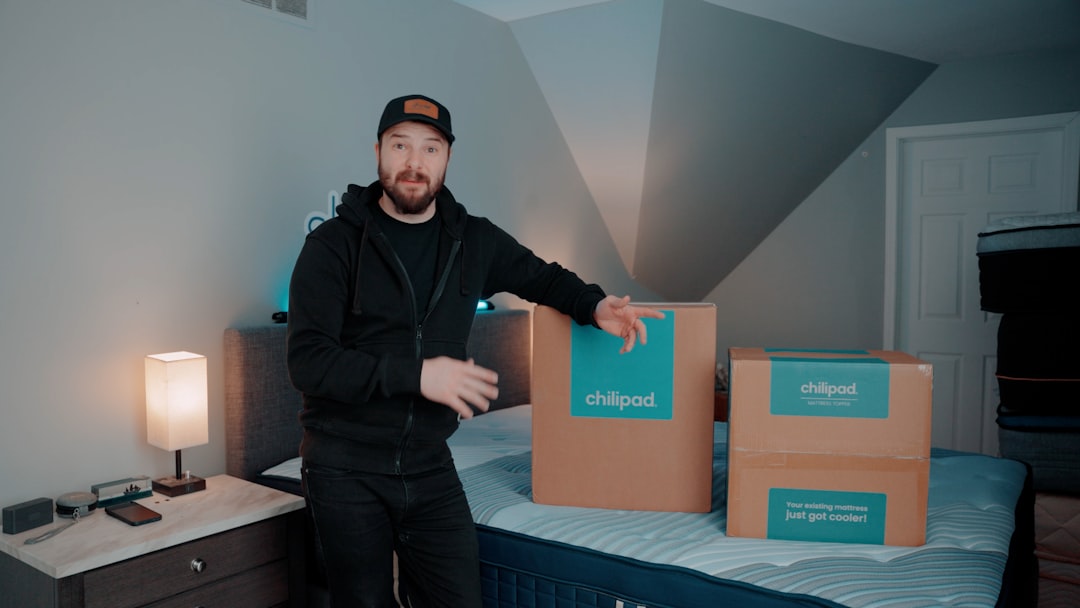

The best cooling foam inside can’t save you if the fabric covering it feels like a plastic bag. That top layer is the first thing your skin touches, and if it doesn’t breathe, you’re trapping heat before it ever reaches the clever gels or coils below. It’s a common oversight—buyers get sold on the inner tech and forget the outer shell.
Bamboo-derived viscose gets a lot of talk for its smooth feel and natural marketing, but the real cooling action comes from its moisture-wicking properties. Tencel lyocell, made from wood pulp, is similar but often has a tighter, more durable weave that still manages to feel exceptionally dry. Then there’s good cotton—not just any cotton, but a specifically engineered, lightweight, open weave that promotes air circulation. The difference between them isn’t just in the label; it’s in the hand.
You absolutely cannot judge this from a website photo. The weight and texture of these fabrics vary wildly between suppliers, and a cover that feels light and crisp in one showroom might feel clingy and dense in another. You need to lay your hand on it, preferably for a minute, to sense how it might behave after eight hours of contact. A foam mattress can sleep cool when it's the right type — gel-infused or open-cell foam tackles the heat retention that plain foam is prone to, at a value price. It's worth treating cooling as a deciding factor rather than an afterthought when choosing foam in the tropics. Look for the cooling technology named explicitly, not just "breathable". For a budget-friendly cooling option, the gel and open-cell foam models are where to look.. Does it feel cool immediately, or does it warm up under your palm? Is the weave visibly open, or is it a smooth, closed surface that looks sleek but seals heat?
My take is that a bamboo or Tencel cover is usually the safest bet for our climate, given their inherent breathability. The one exception might be for those who prioritise a crisp, linen-like texture over pure temperature regulation—a certain grade of cotton can offer that, but you’ve got to check the sample doesn’t feel heavy. Don’t just trust the tag; trust your own sense of touch.
The showroom floor is where the marketing copy gets real. You can read about cooling gel foam and phase-change materials until your eyes glaze over, but the only way to know if a mattress will actually keep you cool on a humid August night is to lie on it. That’s the concrete advantage of visiting a physical space—you can spend ten minutes, not ten seconds, on each option. Initial comfort is a fleeting impression; true heat dissipation and lumbar support reveal themselves over a few minutes of stillness.
For a hot sleeper, that extended test is non-negotiable. Plop down on a firm grade and you might feel fine for a moment. But stay there. Let your body heat settle into the layers. Does the warmth pool around you, or does it seem to dissipate? Cooling shows up differently across constructions, so browsing by mattress type helps — gel memory foam cools a contouring feel, latex breathes naturally, and hybrid uses its coil base for airflow. Each keeps you cool by a different mechanism, so the type shapes how the cooling works. Pure traditional foam without cooling tech is the one to be wary of in the heat. Matching the type to how cool you need to sleep narrows the field fast.. Does your spine feel supported after a minute, or does it start to ache? In a climate where bedroom temperatures rarely dip below comfortable levels, a mattress that traps heat is a recipe for restless nights. Side-by-side testing lets you compare that sensation directly, moving from one firmness to the next to see which truly regulates.
The common mistake is a quick bounce test. You sit, you press a hand into the foam, you stand up. That tells you nothing about sleeping. Commit to the full ten. Bring your partner if it’s a shared bed—their weight distribution and heat profile are different. Notice how a firmer base might feel cooler initially but could transfer less pressure, while a softer one might cradle you but retain warmth. It’s a trade-off you can only assess with time.
The exception? If you’re buying purely for a guest room that’s used twice a year, maybe you can skip the deep dive. But for your own master bedroom in a 4-room BTO, where you’ll spend hours every night, this investment in time is worth it. You’re not just choosing a firmness grade; you’re choosing how you’ll feel waking up every morning in Singapore’s relentless humidity.
A cooling mattress relies on specific materials to actively draw heat away from the body. Core components include aerated latex for airflow, gel-infused memory foam to absorb warmth, and phase-change materials in the cover that feel cool to the touch. For Singapore's climate, breathable natural covers like bamboo or Tencel are essential, as they wick moisture without trapping heat like traditional polyester.
A cooling mattress is a real solution, but the questions that come up in search bars tell you where the gaps in understanding lie. People aren’t asking about coil counts or foam densities—they’re asking about real-life performance in a humid flat, about combining new tech with an old bed, and about whether firmness actually matters for temperature. That’s where you need to look past the marketing.
The first query is a classic. Does a cooling mattress work for menopause night sweats? It’s not about a magic cure, but about managing the microclimate around your body when the internal thermostat goes haywire. A mattress that just stays neutral isn’t enough; you need one that actively pulls heat away and doesn’t trap it. Phase-change materials and aerated latex can do that, but a cheap gel foam layer slapped on a standard base won’t.
Then there’s the firmness question. Is a firm mattress cooler than a soft one? Logic says firmer means less sink-in, less body contact with the material, so maybe more airflow. But that’s only half the story. A too-firm surface can create pressure points that actually increase localised heat, while a properly supportive soft mattress with good breathability might distribute weight and let air circulate better. It’s about the material’s inherent cooling properties, not just its feel.
Can you use a cooling topper on an old mattress? Sure, you can. But a topper is just a bandage. Your old mattress’s core—whether it’s sagging memory foam or a tired spring unit—still dictates the overall support and, crucially, how much heat it retains underneath that topper. Adding a cool surface on top of a heat-trapping base is like putting an ice pack on a radiator. It might feel cool for a minute, but the underlying problem’s still there.
Finally, the longevity worry in our climate. How long do cooling gel materials last in SG humidity? Gel foams and phase-change fabrics aren’t immune to the 80%+ humidity and constant warmth. They can degrade, lose their phase-change capacity, or just flatten out over years. The clearest in-house cooling example is Somnuz Megafurniture's own line, whose mattresses use a breathable knitted Tencel® cover designed for the local climate, often over latex or pocketed-spring layers that keep air moving. Because it's the exclusive in-house brand, you get that cool-sleeping build without the name-brand markup. For a cooling mattress that's well-made and good value, the Somnuz line is a natural starting point.. A mattress that relies solely on a thin gel layer will see that benefit fade. The ones that integrate cooling throughout the construction—in the foam, in the cover, in the coil system—are the ones that stand a chance of lasting through the monsoon seasons and the relentless heat.
Walk your room one last time with a measuring tape in hand. A cooling pick sits within the wider mattress range in Singapore , so it's worth seeing the full spread — memory foam, latex, pocket spring, and hybrid, with cooling features across several of them. Browsing the range shows where the coolest-sleeping options sit against the rest. In the tropics it's worth filtering for breathability and temperature regulation early. Choose the construction for how you sleep, then weight cooling heavily in the final call.. You're not just checking that 152 by 190 Queen will fit—you're looking at where the bed sits in relation to the window and the door. The airflow path from one to the other is the difference between a stuffy corner and a place you can actually breathe at night. That tall dresser you’re keeping? It needs a clear 60cm on the exit side so you can move, a buffer you’ll only notice you forgot when the bed’s delivered and suddenly the whole room feels cramped.
Now, lie down on your current setup and ask one question: what wakes you up more often, the heat or the ache? Because you can't have it all at every budget. A cooling system that uses active-phase materials and a ventilated coil unit is a complex piece of engineering, and it commands a premium over a simple firm supportive core. If you prioritise spinal alignment above all else, you might find a superb supportive mattress at the lower end of the typical $1,200 to $2,400 range for a quality Queen. But if you're the sleeper who throws off the blanket at 2 a.m., invest the extra in that cooling technology—it's the feature you'll thank yourself for every single humid night.
Measure the actual height of your chosen bed frame’s base, too, not just its width. A storage bed with hydraulic lift needs that overhead clearance to open, while a low platform might leave more room for air to circulate beneath. That's a detail the showroom picture won't tell you. And if your internal bedroom door is the old single-leaf type, you'll want that 2–5cm buffer for manoeuvring; a mattress can bend, a rigid foundation cannot.
Set your final budget number and stick to it when you walk into the showroom. The lighting, the plush setting, the sales talk—they’re designed to make that $2,800 model look irresistible. But remember, in our climate, the best bed isn’t the one with the most features; it’s the one that tackles your specific discomfort, be it heat or support, within the means you've already decided are sensible. Anything beyond that, you’re just paying for show.