It’s three in the morning, and you’re awake again. The sheets feel damp, the mattress surface sticky against your skin—it’s that familiar tropical sauna effect, even with the windows open. This isn’t just about a hot night; it’s the humidity wrapping the heat around you, trapping it right where you lie. For anyone sleeping without air-con, or for those dealing with hot flashes, this 3am wake-up call is a brutal reminder that a standard mattress often acts like a sponge, holding onto all that warmth and moisture.
The problem goes deeper than just feeling warm. In our climate, where bedroom temperatures regularly sit above 28 degrees, a mattress that doesn’t actively manage heat becomes a barrier to rest. Memory foam, for example, is notorious for this—it conforms beautifully but can trap your body heat until you’re swimming in it. That clammy feeling on the surface isn’t just unpleasant; it interrupts your sleep cycle repeatedly, leaving you tired and frustrated by dawn.
So what actually helps? You need a mattress engineered to pull heat away from your body and let it dissipate. Think of materials that work with the environment: aerated latex that has natural breathability, or cooling gel-infused foams that aim to regulate temperature. Phase-change materials in some covers can absorb and release heat to maintain a neutral feel. Then there’s the surface itself—a breathable bamboo or Tencel cover can make a tangible difference, allowing air to move through rather than letting moisture pool. Even a well-ventilated coil system can promote airflow better than a solid foam block.
There’s a catch, though. Not every “cooling” claim holds up in our sustained humidity. Some phase-change covers, for instance, might struggle if the bedroom air itself is heavy and stagnant. And a mattress that relies solely on a cool-to-touch cover, without addressing the core’s heat retention, won’t solve the deeper issue. The real test is whether it can handle the marathon of a Singapore night, not just the first hour.
For most hot sleepers here, prioritising a mattress built with heat dissipation from the core out is the clear path. The one exception? If your room is consistently air-conditioned to a cool, dry state, you might get by with a simpler, breathable design. But for the vast majority—those in non-aircon rooms, or facing night sweats—that internal engineering isn’t a luxury; it’s what separates a night of broken sleep from one where you actually stay asleep.
That cosy hug a memory foam mattress gives you in the showroom? It’s a trap. The material’s famous contouring comes from its dense, heat-sensitive cells, which absorb your body warmth and cradle you with it. In a compact 12 sqm BTO common bedroom, often with just one small window and a door you keep shut for privacy, that radiant heat has nowhere to go. You’re not just sleeping on the mattress; you’re incubating inside your own thermal bubble, layer by sticky layer.
Consider the physics of a typical Queen-sized memory foam slab in that small space. It’s a 152 by 190cm rectangle of heat-retaining material, often placed against a wall with maybe 30cm clearance on one side. There’s no cross-breeze to speak of, and the ceiling fan just recirculates the warm, humid air that’s already pooled around you. The foam doesn’t breathe like a ventilated coil system or aerated latex—it soaks up the heat and slowly releases it back throughout the night. You’ll feel it most around 3 a.m., when the room’s ambient temperature finally dips but your sleep surface is still radiating stored warmth from hours before.
For hot sleepers or anyone in a non-air-conditioned room, this turns restorative sleep into a nightly struggle. You’ll find yourself flipping the pillow endlessly, kicking off the sheet, or waking up damp. It’s a particular misery for those experiencing hormonal fluctuations, where the body’s own thermostat is already unreliable. The mattress that promised pressure relief becomes a source of constant, low-grade discomfort because it’s working against our climate, not with it.
There is one exception: if your bedroom is aggressively climate-controlled 24/7, the memory foam’s thermal properties become a non-issue. But for the vast majority in our naturally ventilated HDB flats, that persistent warmth layer is a deal-breaker. You need a sleep surface that actively dissipates heat, not one that hoards it like a thermal battery. The goal isn’t just a soft landing; it’s a cool escape from the day’s heat.
That first night on a gel foam pad feels genuinely shiok. You lie down and the surface seems to absorb your body heat, giving a cool sensation that promises a restful sleep in your non-air-conditioned bedroom. This initial effect is real and works because the gel particles are actively drawing warmth away from your skin. It’s a welcome relief, especially after a long day in our humid climate. But this feeling is a temporary state, not a permanent feature of the material. The cooling capacity is finite, like a battery that needs to recharge.
The gel doesn’t magically disappear heat; it stores it. Over consecutive nights, especially in a west-facing room that traps afternoon sun, the material reaches its thermal limit. The gel becomes saturated, unable to absorb more energy without releasing what it’s already holding. Think of it like a sponge that can only soak up a certain amount of water before it starts dripping. In Singapore’s steady warmth, that saturation point arrives faster than in climates with cooler nights to reset the system. There’s no overnight cool-down to help the gel shed its stored heat.
By the third or fourth night, you’ll notice the cooling effect isn’t as pronounced. The pad feels neutral, maybe even slightly warm to the touch as you settle in. This is the diminishing return that many buyers don’t anticipate when they test the mattress in a cool showroom for just a few minutes. The material’s performance decays with repeated use because its heat-dissipation rate is fixed. During our hotter months, when ambient temperatures stubbornly stay high, the drop-off happens even quicker. You’re left with a foam pad that’s just a foam pad.
Gel-infused foam is fundamentally a passive technology. It lacks a mechanism to actively cycle heat away, unlike a ventilated coil system that allows air movement or a phase-change material that can actively regulate temperature. Once the gel’s micro-particles are full, they stop working. This is a physical limit, not a design flaw, but it’s a limit that matters enormously in a 4-room BTO where the bedroom temperature rarely drops. The foam itself also retains some heat, which compounds the problem once the gel effect fades. It’s a one-trick solution that can’t handle a marathon.
The claims fall shortest during our predictable seasonal peaks. From April to August, when humidity and heat combine, the gel foam’s finite capacity gets overwhelmed almost nightly. There’s no recovery period for the material to cool down between sleeps. For someone experiencing menopausal hot flushes or just a generally warm sleeper, this period turns the promised cooling feature into a non-feature. The pad becomes part of the problem, not the solution. That’s the real test—not a single night’s feel, but performance across the entire sticky year.
The real test of a cooling mattress isn't the first hour you lie down. It’s around three in the morning, when the fan’s breeze feels like it’s stopped moving and the heat your body’s been steadily generating finally pools around you. That’s where phase-change materials, or PCMs, pull ahead of simpler gel infusions. They don’t just dissipate heat; they absorb and store it, acting like a thermal battery for your bed.
For sleepers in landed properties or older flats where ambient night temperatures stay stubbornly high, this delayed action is key. A gel might feel cool to the touch initially, but its effect is passive and can be overwhelmed. PCMs actively manage the heat load, buying you several more hours of regulated comfort. They’re particularly effective for anyone whose body temperature spikes unpredictably, offering a buffer against those surges.
The only time you might skip PCM is if your sleep environment is already aggressively controlled. If your bedroom is air-conditioned to a constant 22 degrees, the material has less thermal energy to work with and its clever phase-change cycle can’t fully engage. But for the majority of us sleeping with just a fan or in a non-air-conditioned room, it’s a smarter layer of defence against the SG night. You get a longer, more consistent cool, not just a promising first impression that fades by midnight.
Think of PCMs as tiny, microscopic heat sponges woven into the mattress fabric or infused in a foam layer. They’re engineered to melt at a specific temperature—often around skin temperature—soaking up your excess body warmth as they change from solid to liquid. Then, when your body cools or the room temperature dips slightly, they solidify again, releasing that stored heat away from you. It’s a genuine cycle, not just a one-way transfer, which creates a much more stable microclimate through the night.
A cooling mattress for Singapore must use materials that combat 80%+ humidity. Breathable Tencel or bamboo covers wick moisture, while gel-infused memory foam or ventilated latex layers prevent heat retention. These engineered layers work together to regulate sleep temperature, ensuring the mattress core stays dry and comfortable throughout our tropical nights.

That 80% humidity reading on your weather app isn’t just a number—it’s the reason your supposedly breathable bamboo sheets can feel damp by morning. Bamboo viscose is a natural fibre, sure, and it’s definitely more breathable than a polyester blend. But its structure is still a bit spongy, which means in our relentless dampness, it can absorb and hold onto moisture instead of pushing it away. You wake up feeling that slight, clingy dampness, not the crisp coolness you paid for.
Enter Tencel lyocell. Its fibres are engineered to be incredibly smooth, creating a surface that doesn’t just absorb sweat but actively wicks it away from your skin and disperses it. Think of it as a moisture highway versus a bamboo sponge. This difference is technical, but you feel it directly—especially if you’re a woman experiencing the night sweats that often come with menopause. When a hot flash hits, that efficient wicking becomes non-negotiable; you need the fabric to work with you instantly, not slowly soak it up.
So, for most hot sleepers in a non-air-conditioned room or a west-facing flat that never fully cools down, Tencel is the sharper tool for the job. It manages the micro-climate right against your skin more effectively. The only time you might reconsider is if you have a strong preference for the specific, slightly linen-like texture of bamboo, which some find cosier. But for pure thermal regulation in our climate, the smoother fibre wins.
Care is straightforward for both—cold wash, gentle cycle, avoid harsh detergents that can clog those delicate fibres. Just remember, a cooling cover is only one part of the system; it works best paired with a mattress that has good internal airflow from coils or aerated latex. Get the combination right, and you’ve got a fighting chance against that 3 a.m. wake-up call in a pool of your own sweat. That’s the goal, right?
" width="100%" height="480">Is your cooling mattress working? Temperature checks for Singapore homes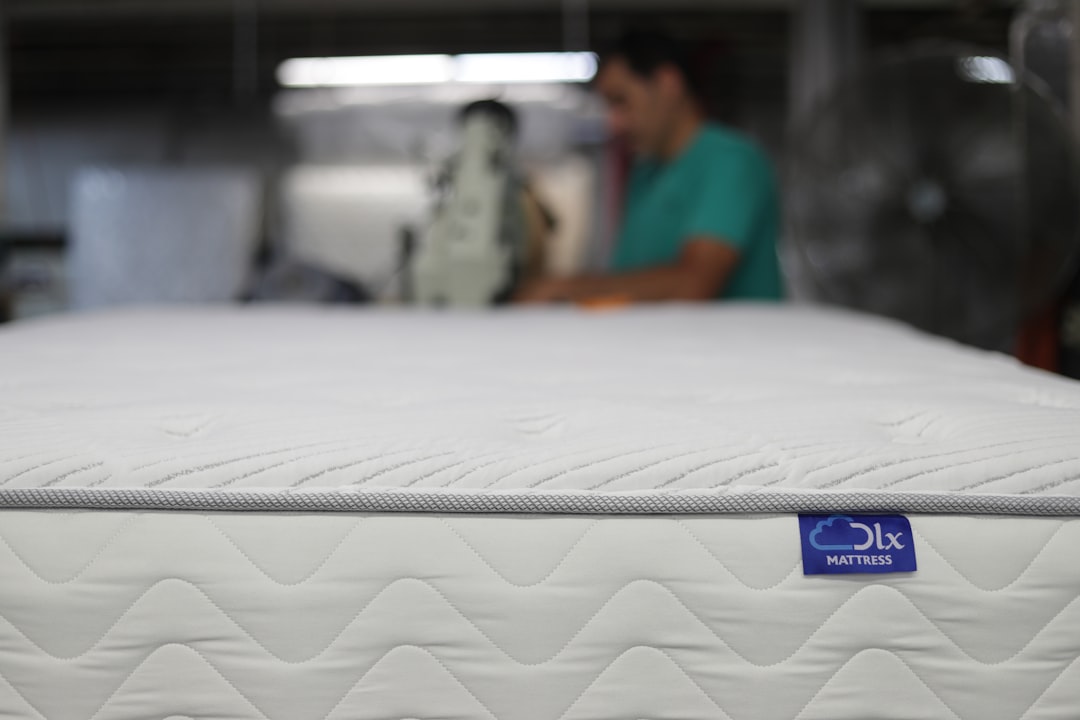
Sleeping on a solid foam mattress in a non-airconditioned room can feel like you're trapped under a blanket of your own heat. The material just holds onto warmth, especially in a typical 4-room resale flat where the only moving air comes from a ceiling fan. That's where ventilated coil systems pull ahead—they aren't just springs, they're a built-in ventilation network. The open gaps between coils let air actually move through the mattress core, not just across its surface. This continuous airflow stops heat from pooling underneath you, which is a genuine advantage when the ambient temperature in your bedroom never really drops.
Think about a Queen mattress in a master bedroom that's maybe three and a half by three metres. A solid foam block sits there like a slab, passively absorbing your body heat all night. A coil system with proper ventilation channels that heat away. It's a subtle but constant exchange, working with whatever air movement you've got in the room. Even with just a fan, you get a cooler sleeping surface because the mattress itself isn't acting as an insulator. The difference isn't about a dramatic temperature drop; it's about avoiding that slow, suffocating build-up of warmth that ruins sleep.
Now, a coil mattress isn't a magic bullet for every hot sleeper. If you're dealing with intense night sweats or flushes, the surface material of the mattress matters just as much—you'll want a breathable bamboo or Tencel cover to complement the coils. But for the majority of sleepers in flats without aircon, the core airflow from ventilated coils is the more critical fix. It addresses the fundamental problem of heat retention at the source. Foam, even cooling gel foam, can't replicate that through-core movement.
The one real exception? If your priority is absolute silence and zero motion transfer, like in a shared bed where one partner tosses and turns, a high-density foam might still be your pick. Coil systems can have a bit more natural flex and sound. But for solo sleepers or couples who prioritise temperature regulation over perfect stillness, the ventilated coil is the clear winner in a non-aircon setting. It turns the mattress into a participant in your room's climate, not just a bystander.
You’ll be on your back for ten minutes. That’s the only way to know if a cooling mattress is actually doing its job for you, because the feel of its support changes everything. Ordering one online, you’re just guessing at how the cooling gel or phase-change layer will behave under your actual body weight—and that’s a costly mistake waiting to happen. The showroom lets you eliminate that guesswork completely.
Lie down properly. Don’t just press a hand into the corner. Your full weight distributes heat differently, and the mattress’s response to your hips and shoulders is what determines if you’ll sleep cool or just feel a chilly surface for five minutes before the warmth builds up. A cooling bamboo cover can’t compensate for a foam core that traps your body heat because it’s too soft for you, sinking you in. You need to feel how the entire system—the coils for airflow, the aerated latex, the specialised top layers—works as one unit when you’re on it.
That ten-minute test is about letting your body settle. The initial cool touch is easy for any brand to promise. What matters is minute three, when the materials have absorbed your body’s warmth—does it still feel like it’s dissipating it, or are you starting to feel the familiar memory foam swampiness? For hot sleepers in non-air-conditioned rooms, that difference is the whole game. A mattress that feels perfectly cool in a showroom’s air-con might perform very differently in your own humid bedroom at 2 a.m.
The exception? Honestly, if you’re absolutely set on a specific model you’ve tried before and you’re just replacing it, then maybe you can skip the ritual. But for anyone new to cooling tech, or anyone who’s been burned by a warm memory foam in the past, not doing this is just being stubborn. You wouldn’t buy a sofa without sitting on it. A mattress you’ll spend a third of your life on deserves at least the same courtesy—your back and your sleep temperature depend on it.
Does a cooling mattress work without aircon? It'll help, but don't expect a miracle. These mattresses are engineered to dissipate your body heat, not cool the air around you. In a non-aircon room where the ambient temperature stays above 28°C, the best you'll get is a surface that doesn't trap your warmth like traditional foam—you won't feel cold, just less stifled. Pair it with a good fan for airflow and you've got a fighting chance for a decent night's sleep.
Which is cooler, latex or memory foam? Latex wins, hands down. Natural or aerated latex has an open, breathable structure that lets air move through it. Memory foam, even with cooling gel, is fundamentally dense and tends to cradle your body, which can still feel warm over time. The gel just slows down the heat build-up; it doesn't eliminate it. For our climate, a latex core or a hybrid with a latex comfort layer is the cooler choice.
How long do cooling gel effects last? The gel itself doesn't wear out, but its effectiveness can diminish. Over years, the gel-infused foam can compress and lose some of its heat-transfer properties. You're looking at the foam's lifespan, not the gel's—typically a good five to seven years before you might notice it's not as cool as day one. Proper care, like rotating the mattress and using a breathable protector, helps it last.
Will a cooling mattress help with menopause night sweats? It can be a real game-changer for that sudden, intense heat. The phase-change materials or advanced cooling covers in some models are designed to absorb that flush of heat quickly, which can prevent you from waking up drenched. It tackles the symptom at the point of contact. For maximum relief, combine it with moisture-wicking bamboo sheets and, if possible, a bit of aircon or a strong fan—the mattress handles the heat, the airflow handles the humidity.
Walk out of a showroom without a proper lie-down and you’ve already lost. That plush, cool surface feels perfect for the thirty seconds you perch on the edge, but your body needs a solid quarter-hour to truly settle in—to let the cooling gel or phase-change material actually engage with your warmth. Don’t just lie there; mimic your sleep position, shift around. If you feel any pressure points or, worse, a rising heat under your back after ten minutes, that’s your sign. The mattress isn’t working for you, no matter what the tag says.
Then, get specific about the cover. Ask if it’s removable and machine-washable, but go further. Singapore’s dust is a fine, persistent film that mixes with our humidity, and a ‘breathable’ bamboo cover that can’t handle a regular cold wash will become a grimy, clogged layer that defeats its own purpose. Can you tumble dry it on low, or does it need line drying in our unpredictable weather? That detail matters more than any marketing spiel about airflow.
Logistics are next. Confirm the delivery timeline, but frame it around your HDB lift. The mattress itself, if it’s a flexible one, can usually bend around the tight 90cm doorway opening. The real question is for the bed frame, if you’re getting one. A rigid platform base might not make that turn into the lift, and staircase carrying often comes with a surcharge. Give them your block and flat type; a good delivery team will know the common hurdles in older estates or specific BTO layouts.
Finally, pin down the warranty with climate in mind. A ten-year guarantee against manufacturing defects sounds great, but will it cover the slow settling of foam accelerated by our constant 80%-plus humidity? Probably not. What about the integrity of cooling materials after years of heat cycling? Ask directly. The answer will tell you how much faith the maker has in their product’s engineering for the tropics. Anything vague is a red flag.