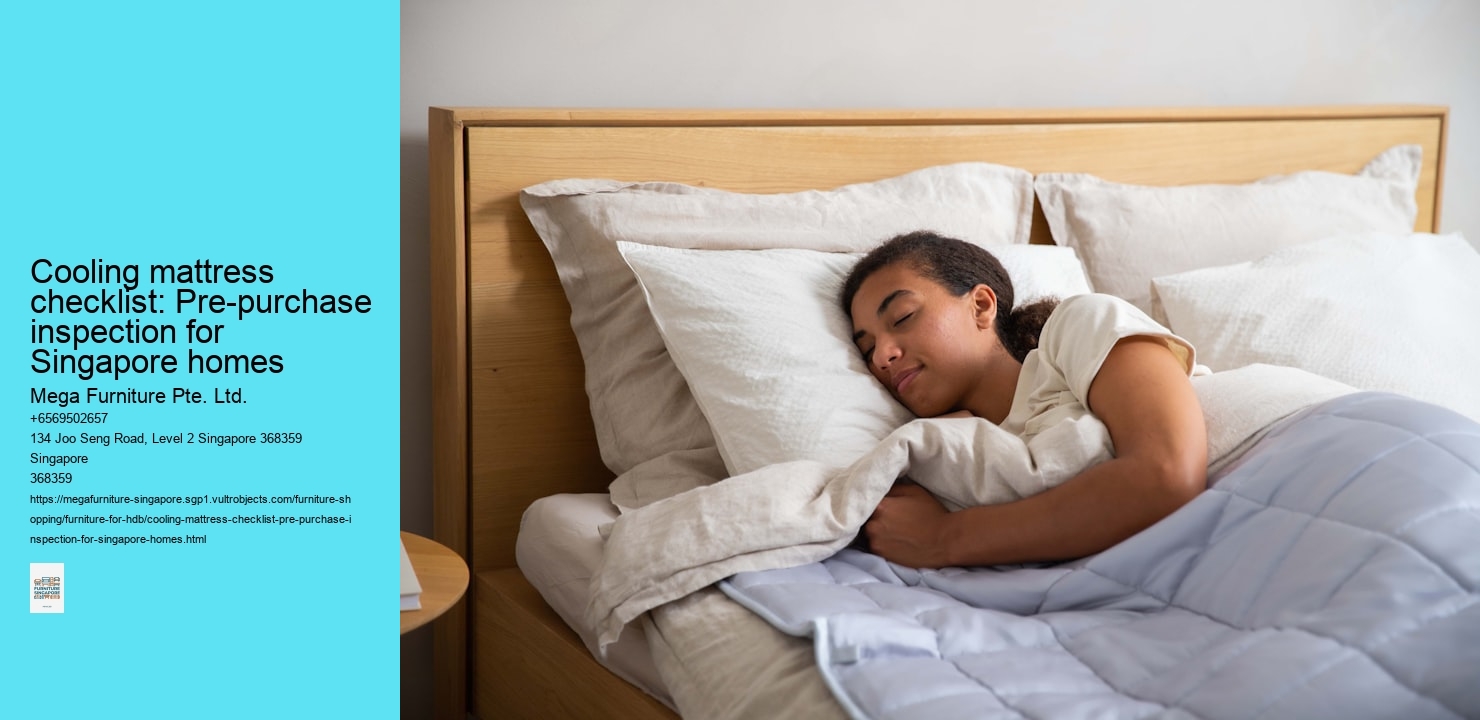
The most common mistake is believing a cooling mattress can perform miracles on its own. It’s an engineered heat-dissipating system, sure, but it still needs a working environment. Picture a west-facing resale flat bedroom, maybe twelve square metres, that gets baked by afternoon sun and has windows that don’t really catch a breeze. Even the best mattress with phase-change materials or ventilated coils will just become a repository for trapped heat if the air around it is stagnant.
You need to measure your room’s ventilation before you measure the mattress’s specs. A Queen bed occupies a significant footprint in a typical HDB common bedroom, and the air around it needs to move. If your layout leaves only a narrow gap between the bed and the wall, or if your windows are blocked by bulky furniture, that cooling mattress is fighting a losing battle. The rule is simple: the mattress can pull heat away from your body, but it needs somewhere to send that heat. Without a path for that warm air to escape—an open window, a ceiling fan, even a steady pedestal fan—the benefit is drastically reduced.
There’s one exception where airflow might be less critical. If your bedroom is consistently air-conditioned, the ambient temperature is already controlled, and the mattress’s job becomes more about managing the microclimate between you and the bed surface. But for the majority of sleepers in non-air-conditioned rooms, or those who only run the AC sparingly, assuming the mattress alone solves overheating is a costly misstep. You’re essentially buying a high-performance engine and then never opening the car windows.
So walk into your bedroom on a typical humid evening and assess the feel of the space. Can you sense a draft when the window is open? Does the air feel heavy and still? That’s your baseline. A cooling mattress is a partner, not a saviour. It works best when paired with a strategy to move the air in the room itself—that’s the non-obvious point many buyers overlook. Getting the mattress right is half the equation; ensuring your room can support it is the other, and in Singapore’s climate, neglecting that second half means you’ll still be waking up feeling too warm.
Memory foam’s reputation for comfort often overlooks a crucial detail: it’s essentially a thermal insulator. Its dense, viscoelastic structure doesn’t just contour to your body; it absorbs and traps your body heat within a network of closed air pockets. In a temperate climate, that might create a cosy warmth. Here, where bedroom temperatures routinely hover around 28°C even at night, it transforms the mattress into a personal heat sink. You’re not just sleeping on foam; you’re sleeping in the warmth it’s collected from you over hours.
Manufacturers have tried to mitigate this with cooling gel infusions or phase-change material layers. These additions can shift the heat away from the surface momentarily, but they don’t fundamentally alter the foam’s breathability. The underlying structure still restricts airflow, so that displaced heat often circulates back. It’s a bandage on a design flaw—one that feels particularly ineffective during our humid monsoon seasons or in non-air-conditioned rooms. For anyone prone to night sweats or hot flushes, that trapped warmth can turn a restful night into a restless one.
That’s why the search for a genuinely cooling mattress should steer you towards materials engineered for airflow. Aerated latex, with its open-cell structure, allows heat to dissipate naturally. Ventilated coil systems, with their air channels and minimal foam layers, promote constant circulation. These aren’t just minor variations; they’re fundamentally different approaches to managing sleep temperature. They address the core issue of stagnant air that memory foam, by its very nature, creates.
The only time I’d consider a traditional memory foam here is if you’re committed to sleeping with the air-con on every single night, and you’re confident the room temperature stays consistently low. Even then, you’re fighting the material’s inherent properties. For most Singaporeans, especially in a typical 4-room BTO where the master bedroom might not get the strongest airflow, alternatives that prioritise breathability simply make more sense. Your sleep comfort shouldn’t depend on running a compressor all night.
Your sleeping posture decides this. If you're a side sleeper, you sink deep into the mattress—your shoulders and hips press into the foam. That's core territory. Surface cooling won't reach you there. A back sleeper rests more atop the bed, so a Tencel cover can work nicely. Stomach sleepers are a tricky middle ground; they might need both. Think about where your body actually touches the bed every night.
The heat you generate isn't uniform. It concentrates where your body mass presses down hardest. That's why a memory foam mattress can feel warm—it traps that heat right under you. Surface cooling tackles the heat radiating from your skin's surface. Core cooling intercepts the heat before it even reaches the cover, pulling it away from your core body temperature. You need to know where your personal furnace is located.
Cooling gel foam or phase-change materials are embedded layers, often several centimetres down. They're not a topper. They work inside the mattress structure, like a heat sink drawing warmth away from where you lie. A bamboo cover is just a fabric layer on top—it's about breathability and immediate contact. The difference is physical: one is shallow, the other is deep within the bed's construction.
Singapore's ambient heat is relentless, but your bedroom's microclimate matters too. If you sleep with the air-con on, surface cooling might suffice because the room air is already chilled. In a non-air-conditioned room, where the mattress itself heats up, you'll need that internal cooling engine. Core cooling materials actively regulate temperature regardless of the room's air. They don't just ventilate; they manage thermal energy.
Surface-cooling covers wear like any fabric—they can pill or thin over years. Core cooling systems are built into the foam; they degrade with the foam's lifespan. That's a durability question. A cover is replaceable, but you can't swap out a gel layer. Consider which cooling method aligns with how long you intend to keep the mattress. It's a commitment to a particular kind of cool.
Singapore’s humidity isn't just a weather report—it’s a daily material test. That 80% figure means your mattress isn't just lying there; it’s absorbing moisture from the air, night after night. Gel-infused foam, marketed for cooling, can feel disappointingly clammy in a non-air-conditioned room because the gel layer itself doesn’t breathe. You’ll notice it most on those still nights when the air feels heavy, and your sleep surface never quite feels dry.
The cover matters just as much. A bamboo or Tencel top feels cool initially, but its long-term performance hinges on how it handles dampness. A non-removable, non-breathable cover over a foam core is a recipe for that musty feeling you can’t quite air out. Look for a mattress where the cooling isn't just a surface trick, but a built-in principle: ventilated coil systems that channel air, or natural latex layers that resist moisture retention. These designs work with the climate, not just against the initial heat.
Consider a typical 4-room BTO bedroom, around 12 sqm with windows that might not get a constant breeze. Without an air-con running, condensation risk is real. It’s not just about sweat; the ambient moisture settles into the layers. A memory foam core, even with cooling claims, can become a humidity trap. That’s why breathable, moisture-resistant layers are the smarter long-term play. Aerated latex, with its open-cell structure, allows air to circulate and moisture to dissipate better—though it comes at a higher cost. For many, that investment pays off in durability and a genuinely cooler feel.
There’s one real exception. If your bedroom is air-conditioned nightly and you’re diligent about ventilation during the day, a gel-foam hybrid might suffice. But for the majority in our naturally ventilated flats, prioritise breathability over a single cooling feature. A mattress that can’t handle humidity will feel warmer over time, no matter what the tag says.

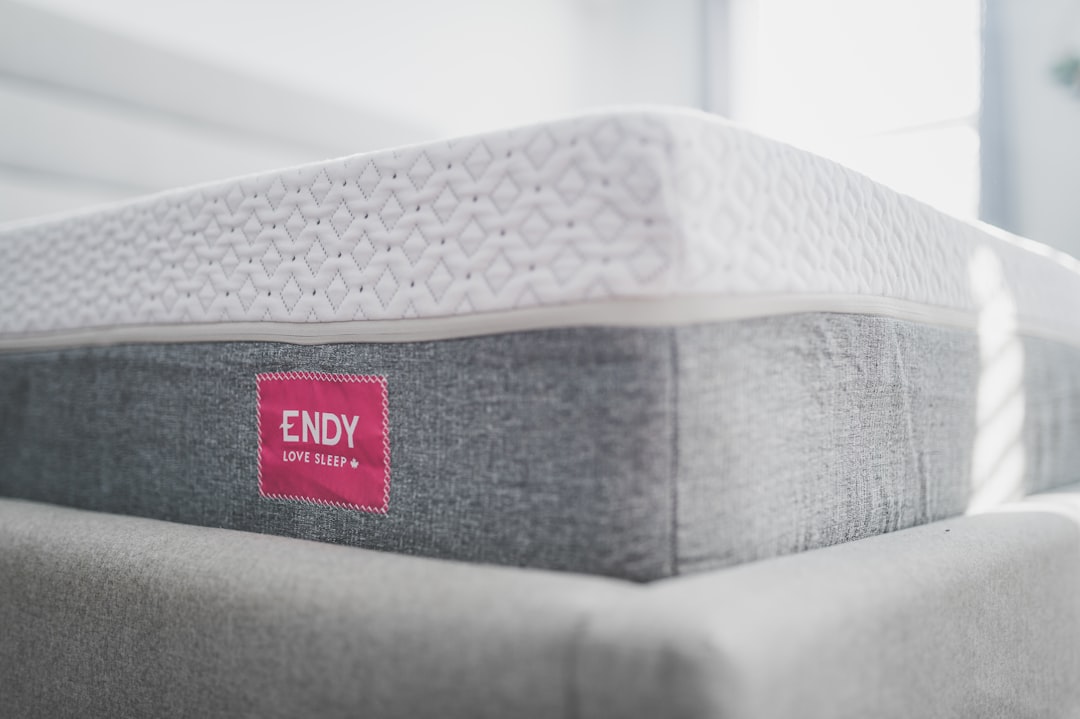
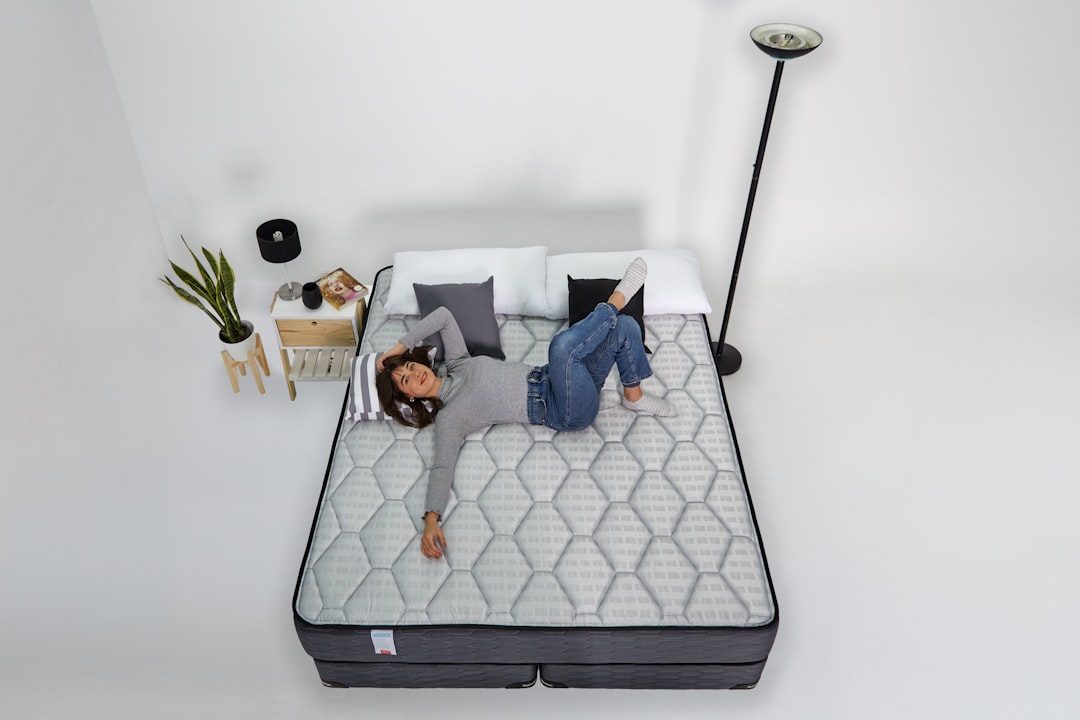
A warranty that covers a structural crack but ignores the mattress slowly turning into a warm, soggy sponge isn't much use here. In our climate, the real failure happens over years—the cooling layer loses its bite, the breathable cover gets clammy, the whole thing starts to sag. Your warranty questions need to target those gradual changes.
Start with the thermal regulation layer. Ask directly: "What's the guarantee against the cooling gel foam or phase-change materials losing their effectiveness over time?" Most warranties won't mention this. If they say it's covered, get them to specify the terms—like a guarantee that the mattress won't exceed a certain surface temperature after five years of use. If they shrug, you know that feature's longevity is a gamble.
Next, the cover. A bamboo or Tencel cover feels great initially, but daily sweat and humidity can wear it down. Check if the warranty covers the cover fabric becoming less breathable, or if it only applies to actual tears. Some brands treat the cover as a separate, non-warranted accessory, which is a problem when it's the main thing touching you every night.
Finally, sagging. In a humid climate, materials can soften and compress faster. Don't just ask if sagging is covered—ask how deep a depression qualifies as a defect. Many companies require a visible dip of over two inches, which means you're sleeping in a valley long before you can claim. Find out if they have a specific clause about sagging due to environmental humidity, because that's the root cause here.
The one exception? If you're planning to replace the mattress within five years anyway, maybe you can overlook a weak warranty. But for anyone wanting a long-term investment, a warranty that actually speaks to Singapore's conditions is your best defence against buying a cooling mattress that simply stops cooling.
The cooling layer is what you’re buying for, but the base underneath dictates how you’ll actually sleep. A mattress that promises a cool surface can still leave you aching if the foundation doesn’t match your body. That gel-infused foam or aerated latex sits on top of something else—a medium-firm core, a softer spring system, a plush memory foam base. The combination creates a feel you can’t guess from a product description or a review. It’s a physical interaction, one that varies dramatically across models even within the same cooling technology range.
This is why a showroom visit isn’t just about seeing the colour or checking the stitching. You need to lie down. Not just a quick sit on the edge, but a proper, extended test where you can sense how the cooling effect blends with the underlying support. In a typical HDB master bedroom, where a Queen is the default, that balance becomes critical night after night. A cooling layer atop a too-soft base might feel wonderfully plush at first, but over hours it could let your spine sag. Conversely, a very firm base with a thin cooling top might feel rigid and unforgiving, negating the comfort you’re paying for. The only way to know is to experience the gradient yourself.
Consider the typical scenario: you walk into a spacious showroom, perhaps the one in Tampines or Joo Seng, and you’re faced with several mattresses all labelled with similar cooling features. You try one. It feels instantly cooler than your old bed, but after a few minutes you notice a slight pressure on your shoulders. You move to the next. The cooling sensation is similar, yet your hips sink in a bit more comfortably. That’s the difference. It’s not about the cooling failing; it’s about the marriage between temperature management and structural support. You’ll spend years on this decision, so investing half an hour to test it in person is a non-negotiable step.
There’s a single exception to this rule. If you’re replacing an existing mattress of a known, specific firmness that you’ve slept well on for years, and you’re buying the exact same model again, you could skip the test. But that’s rare. Most people are upgrading or changing type, moving from a traditional spring to a hybrid cooling foam, or seeking relief from night sweats. In those cases, assuming the feel from a picture is a gamble. Your sleep style—whether you’re a side sleeper needing shoulder relief or a back sleeper wanting lumbar support—interacts uniquely with each combination.
So allocate the time. Go when you’re not rushed, wear comfortable clothes, and spend at least ten minutes on each contender. Pay attention to how the cool surface feels after your body heat builds up, and how the base responds to your weight distribution. That hands-on assessment is the final, crucial filter before you commit. Without it, you’re buying a promise, not a proven fit.
You’ll hear these questions in any mattress shop on a humid Saturday afternoon, when buyers are trying to figure out if a cooling mattress can actually survive the local climate. The answers aren’t always straightforward, because the technology varies so much.
Does a cooling mattress still work without aircon? Absolutely, but its performance depends heavily on the materials. A mattress with a breathable bamboo cover and aerated latex will still promote airflow and feel noticeably cooler than a standard memory foam one, even in a non-air-conditioned room. However, if your bedroom’s ambient temperature is consistently above 30°C, the effect becomes more about preventing heat buildup rather than delivering an actively cold feel—it’s about managing your own body heat, not cooling the room.
How long does the cooling effect last? This one’s tied to the core construction. Phase-change materials embedded in the foam can maintain their temperature-regulating properties for years, as they’re designed to absorb and release heat cyclically. Cooling gel infusions, on the other hand, can gradually lose their peak effectiveness over several years of use, especially if the mattress isn’t rotated regularly to distribute wear. The cover’s breathability, though, that’s a constant—it won’t degrade if you care for it properly.
Are cooling mattresses good for menopause night sweats? They’re one of the best investments for that specific struggle. The sudden heat surge from a hot flush gets trapped in a traditional mattress, making you feel like you’re sleeping on a warmed plate. A cooling mattress with a ventilated coil system or a phase-change topper actively pulls that heat away from your body surface, helping you settle back to sleep faster. It won’t stop the flush, but it manages the aftermath so you don’t wake up drenched and uncomfortable.
Can I use a cooling mattress protector on any mattress? You can, but the benefit is seriously limited if the base mattress itself is heat-trapping. Adding a cooling protector over a dense, non-breathable memory foam core is like putting a breathable shirt over a thick winter coat—the outer layer helps a bit, but the inner insulation still wins. It’s a decent stopgap for an existing bed, but for a true cool sleep, you need the whole system working together: a breathable, heat-dissipating core paired with a suitable protector.
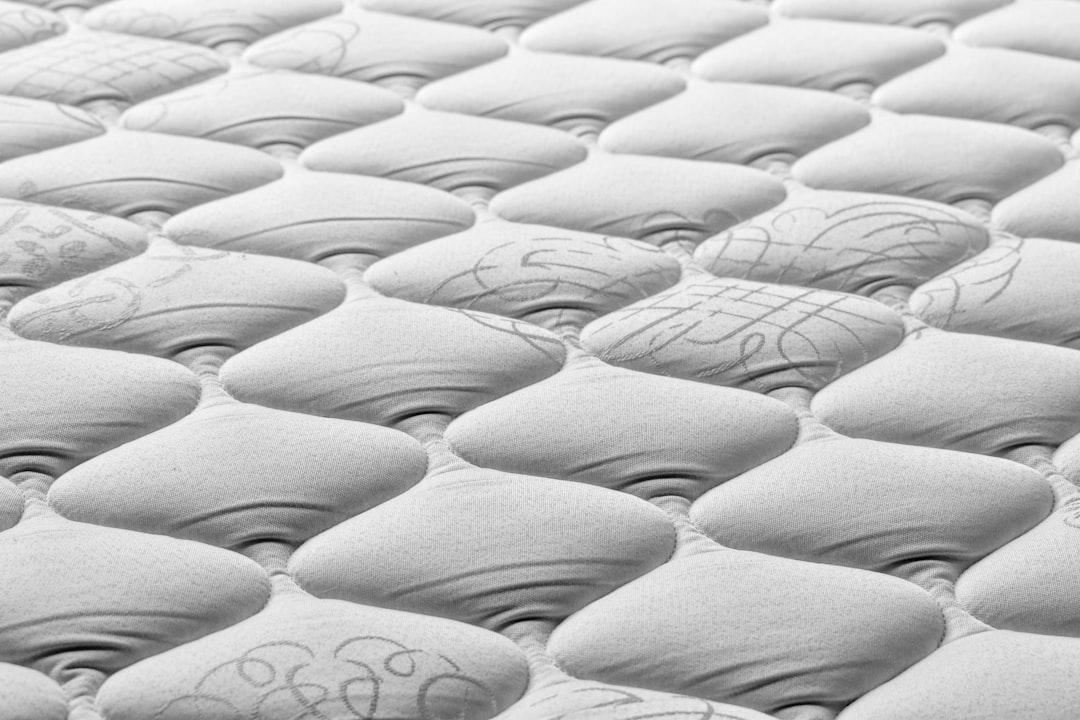
You’ve done the research and narrowed your choices. Now, before the delivery truck arrives, run this final verification. It’s not about ticking boxes; it’s about confirming your decision won’t leave you sweating at two a.m.
First, revisit the ventilation of your actual bedroom. A mattress can breathe, but if the room itself is stagnant, you’re fighting a losing battle. Stand in your bedroom and assess the airflow—is there a cross breeze from windows, or is it a typical enclosed HDB layout? That persistent heat isn’t just ambient; it’s trapped. A cooling mattress works best as part of a system, not a solo solution.
Next, match the material type to your sleeping depth. If you sink deep into memory foam, a thin cooling gel layer on top won’t cut it; you need a core that’s aerated, like ventilated coils or aerated latex. Conversely, if you sleep lightly on top, a breathable bamboo cover over a supportive foam might be enough. Don’t just trust the label; trust how you actually lie.
Then, confirm humidity tolerance. Singapore’s 80%+ humidity isn’t a seasonal event; it’s a constant. Ask about the mattress’s inner materials—will the layers resist mould growth in a non-air-conditioned room? Some foams trap moisture more than others. This is the non-obvious point: a mattress that sleeps cool on a dry night might still feel clammy during the monsoon.
Finally, the in-person feel test. You must go back to the showroom and lie down for a proper fifteen minutes, not just a quick press. Feel the surface temperature against your skin after you’ve settled in. Does it stay neutral, or does it warm up? Your body’s reaction in that quiet showroom corner is the most honest data point you’ll get.
Skip this final check only if you’re absolutely certain your bedroom is air-conditioned every night. Otherwise, these steps are your insurance against a costly, sweaty mistake.
A cooling mattress relies on specific materials to pull heat away from your body. Cooling gel foam absorbs and disperses warmth, while aerated latex naturally allows air to circulate. Breathable bamboo or Tencel covers enhance this effect, preventing that trapped, sticky feeling common on standard memory foam. In Singapore's 80%+ humidity, these material choices are the first defence against a hot sleep.