Singapore’s humidity, often pushing past 80%, doesn’t just make you sticky—it picks a fight with your mattress fabric. The wrong choice here doesn’t just feel warm; it can trap moisture against your skin and degrade over time. You want a cover that breathes, and feels light and dry to the touch, not one that clings like a damp towel after a morning run.
Cotton percale is a classic for a reason. Its tight, plain weave creates a crisp, cool surface that lets air circulate, making it a reliable pick for those who sleep hot. Bamboo-Tencel blends take it a step further, engineered to wick moisture away from the body exceptionally well—they’re a top choice for anyone in a non-air-conditioned room or experiencing night sweats. Then there are the high-tech options, like covers with hydrogel layers or phase-change materials that offer a genuine cooling sensation. Just know that some of these advanced treatments can degrade with repeated washing, so you’ll want to check care labels.
The feel in the showroom is everything. A fabric can look breathable but feel heavy and dense. That’s why it’s worth heading down to a Megafurniture showroom to actually lay your hand on the Somnuz mattress covers. Feel the weight, rub the texture, and see if it’s the kind of material you’d want against your skin on a sweltering night. You can’t judge breathability from a photo.
For most people here, the bamboo-Tencel route is the smartest balance of performance and durability. The one case where I’d look elsewhere is if you have very sensitive skin and prefer the natural, un-treated feel of a high-thread-count cotton percale—it’s less of a moisture manager, but supremely gentle and cool. Everything else, especially any synthetic blend that feels plasticky or doesn’t let air pass through, is a no-go for our climate. That kind of material will leave you sweating one.
That extra centimetre of mattress cover fabric bunched up at the foot of your bed might seem trivial, but it's a genuine airflow killer. A cooling mattress relies on breathable materials and ventilation to work—a cover that's too large drapes over the sides, smothers the ventilation channels or perforations, and traps heat exactly where you don't want it. You'll find many imported mattress covers are sized for international standards, like a 190 by 90cm single, while the actual mattress in your Singapore bedroom is often a local 188 by 88cm. That two-centimeter gap all around is enough to create a loose, insulating layer that defeats the cooling tech you paid for.
Always check the physical tag on the mattress itself before you buy any cover. Don't trust the bed size label on the retailer's website or the generic 'single' description—go straight to the dimensions printed on the mattress. This is especially true for beds from local manufacturers, which frequently adhere to our slightly different conventions. A Queen here is typically 152 by 190cm; a King is around 182 to 183cm wide. If your cover is cut for a wider international super-king, you're going to have a problem.
Think of it like wearing a slightly oversized raincoat in our humidity—you're covered, but you're also sealed in and sweating. A snug-fit cover allows the mattress's cooling materials, whether it's aerated latex or a gel-infused layer, to do their job properly. There's no fabric barrier blocking the heat escape path. For those in non-air-conditioned rooms or dealing with night sweats, this precision matters more than you'd think.
The one exception? If you've deliberately bought a slightly smaller mattress to ensure lift access into your older HDB block, where the lift door might only be 90cm wide. In that case, you already know your mattress dimensions are non-standard, and you should be hunting for a cover that matches those specific, odd measurements. Otherwise, assume your local bed is a local size, and measure it. That simple check saves you from a costly, sweaty mistake.
That standard 25-centimetre cover you already own, it’s going to fight a 30-centimetre cooling gel mattress. The fabric pulls taut across the extra bulk, stressing every stitch line until the seams groan. You’ll see visible tension lines along the sides, a sure sign the material is under constant duress. Over weeks, that relentless pressure can lead to popped threads or a split seam, especially after you’ve washed the cover a few times. A too-tight fit doesn't just look bad; it actively compromises the cover’s integrity and your investment.
Compression is the enemy of airflow. When a shallow pocket squeezes a thick mattress, it presses the cooling materials flat, collapsing the tiny air channels designed to vent your body heat. That fancy gel foam or aerated latex can't do its job if it’s packed in like sardines. Instead of dissipating warmth, the whole system becomes an insulated blanket, defeating the entire point of a cooling sleep set-up. In our humidity, that trapped heat turns your bed into a sauna you can't escape.
Guessing mattress depth is a sure way to get it wrong. You need a proper ruler or measuring tape, and you must measure from the very bottom of the mattress base to the very highest point of its top panel, not just the plush layer. Do this on the bed frame, as the mattress settles under its own weight, and check a few spots in case it’s uneven. Don’t trust the label’s stated thickness either—manufacturing tolerances can vary by a centimetre or two, and that small difference is everything. Write down the exact figure before you even look at cover specs.
Look for the ‘pocket depth’ or ‘fitted sheet depth’ specification on any cover you consider. This number must exceed your mattress measurement by a comfortable margin, not just match it. For a 30-centimetre mattress, you’ll want a pocket of at least 33 to 35 centimetres to allow for proper drape and easy tucking. That extra few centimetres of fabric isn’t just empty space; it’s the crucial buffer that lets the cover sit smoothly without pulling. Deep-pocket designs are built for this, with reinforced elastic and more generous side panels.
Buying the wrong size already, then the problems start. The cover will creep off the corners every night, leaving you to wrestle with it at 2 a.m. The constant friction from a too-tight fit can also wear down the mattress’s own breathable cover fabric over time. It’s a hassle you don't need, and it quietly voids the performance you paid for. The only time a standard cover might work is if your ‘thick’ mattress is actually a hybrid with a much slimmer foam layer on top of a spring base—measure to be sure. Otherwise, match the depth properly one time, sleep cool every night.
" width="100%" height="480">Cooling mattress covers: Ensuring proper fit for optimal airflowCooling mattress cover fabrics must withstand Singapore's constant 80%+ humidity. Breathable bamboo or Tencel covers excel here, wicking moisture away and resisting mould growth. Synthetic performance fabrics like Crypton also offer stain resistance, crucial for maintaining a fresh sleep surface. Avoid thick, non-breathable materials that trap heat and dampness overnight.
The thick mattress bag that zips around the whole bed—that’s full encasement. It’s a fortress against dust mites and spills, but it’s also a second skin that doesn’t breathe. In a 12 sqm common bedroom where the only airflow might be from a single window and a fan, that sealed layer becomes a problem. You’re trapping heat between your body and the mattress, which defeats the entire point of buying a cooling mattress in the first place. The technology inside—the gel foams or aerated latex—can’t do its job if it’s wrapped in a non-breathable barrier.
So which one wins for a non-air-conditioned room? For most people, the topper is the better call. The priority has to be letting the mattress breathe. Look for a topper with a fitted skirt or deep pockets that grip the mattress corners tightly—some even have elastic straps that hook underneath. That’s the key to minimising the slide. A good cotton or Tencel cover over the topper can also help keep everything in place.
A topper, by contrast, is just a top layer you lay on the surface. It’s simpler, often cheaper, and crucially, it allows air to circulate around the sides and foot of the mattress. That ventilation is everything in our climate. But the trade-off is real: toppers slide. They shift and bunch up overnight, especially if you’re a restless sleeper, and you’ll find yourself constantly straightening the sheet in the morning. It’s a minor annoyance that becomes a major irritation over time.
I’d only go for a full encasement in two very specific scenarios. One, if you have severe allergies and the sealed barrier is non-negotiable for health reasons. Two, if you’ve got young children or pets that are prone to accidents—the protection is simply more important than perfect airflow. In that case, you must seek out an encasement specifically marketed as ‘breathable’ or ‘air-permeable’, usually made from a tightly woven cotton or a specialty microfiber. Don’t just grab any plastic-feeling zip-up cover; you’ll cook inside it. Even with a breathable version, you’re accepting a compromise on cooling efficiency for the sake of hygiene and protection.
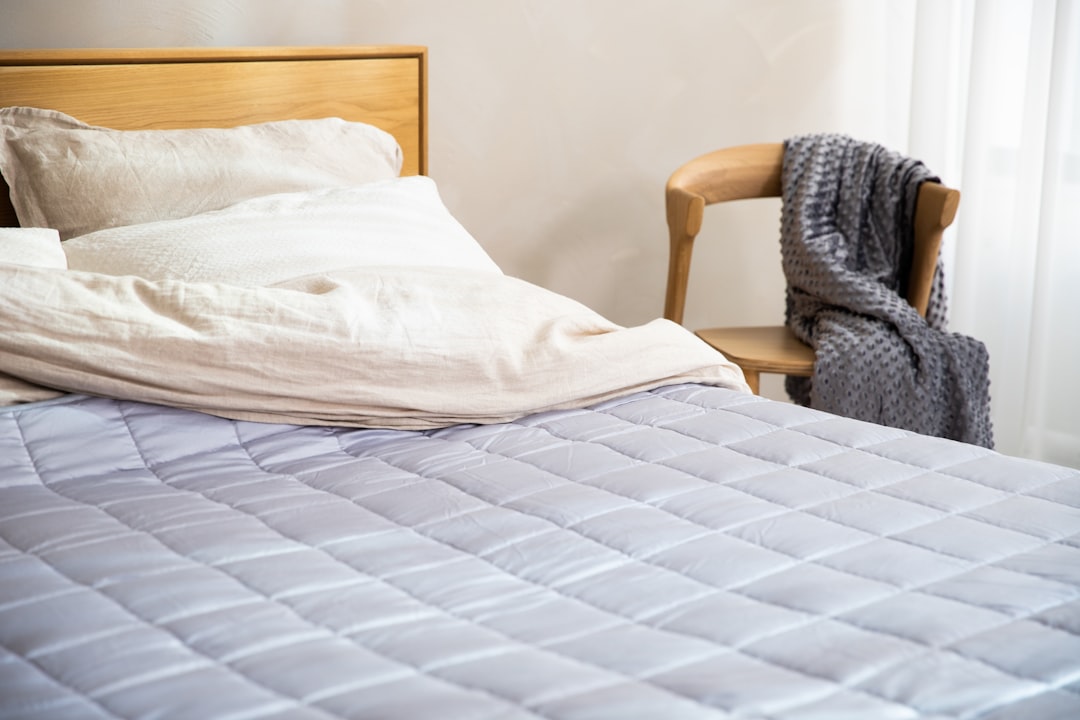
A mattress cover that shifts and bunches in the middle of the night defeats its own purpose entirely. That slight gap between the cover and the mattress surface is where the cooling effect breaks down—your body heat builds up against a loose layer of fabric instead of being channelled through the mattress’s own breathable materials. The culprit is almost always a weak elastic skirt that can’t maintain tension, especially after a few washes.
You’ll want a skirt with deep, reinforced corner anchors. Think of them as the foundation that keeps the whole thing taut. They should be substantial fabric pockets or loops that grip the mattress corners firmly, pulling the cover’s sides down evenly. This ensures the cover’s cooling surface—whether it’s Tencel or a phase-change fabric—stays in continuous contact with the mattress below. If the anchors are just flimsy tabs of elastic, they’ll stretch out and lose their grip after a few months.
Check the skirt construction details before you buy. A good one will have elastic woven directly into a band of sturdy fabric, not just stitched onto the edge where it can fray. The elastic should run the entire perimeter, not just in short sections at the corners. For a standard 152 by 190cm Queen, this kind of full-wrap construction is non-negotiable if you want a fit that lasts through Singapore’s year-round humidity, which can degrade cheaper elastic faster.
The only time you might compromise is if you’re dealing with an unusually thick mattress, say over 30cm. Some deep-pocket designs rely more on extra fabric depth than aggressive elastic to stay put—but even then, the corner anchors still need to be robust. A cover that slips around is just an extra, useless layer trapping heat. For a cooling mattress to work as engineered, its cover must be a second skin, not a loose sheet.
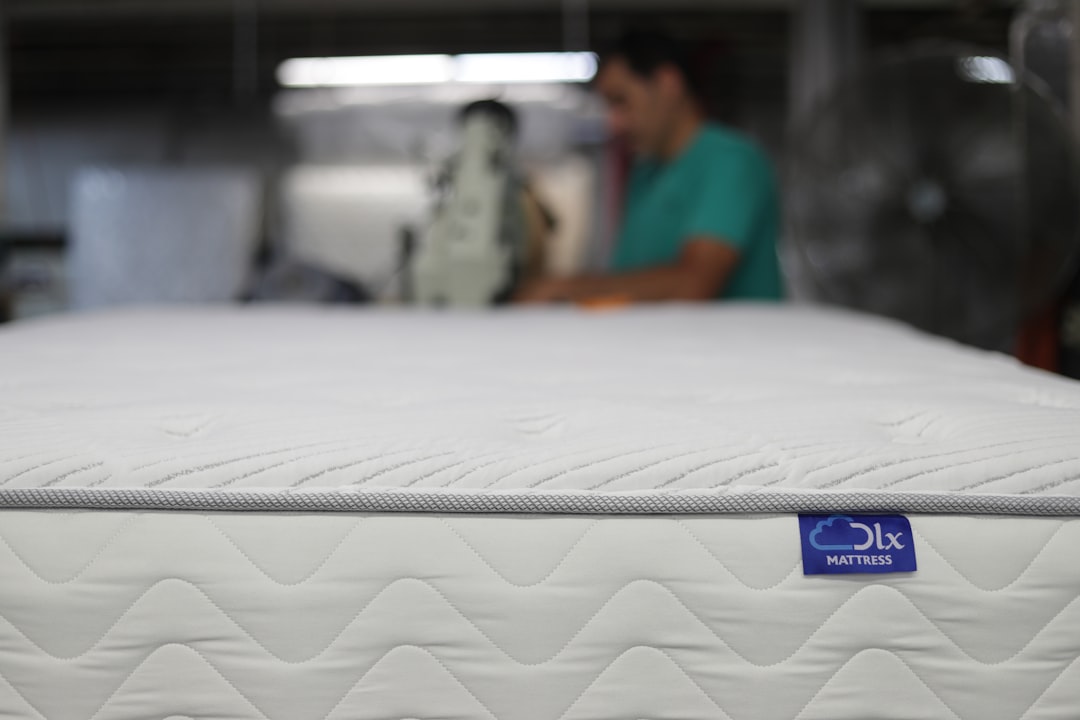
You'll hear this one a lot. The truth is, a cooling cover can't lower the air temperature around you—it's not an aircon unit. What it does is work on the microclimate right against your skin. By wicking moisture away quickly and using breathable fibres, it prevents that sticky, trapped heat feeling that makes you toss and turn. So, in a non-aircon room, you'll still feel the general warmth, but you won't have that awful clammy sheet sticking to you. It's about managing your personal heat, not the room's.
Can I use one on a memory foam mattress? Absolutely, and you probably should. Memory foam is notorious for retaining body heat, which is a real problem in our climate. A good cooling cover acts as a barrier, letting the foam do its pressure-relief job while the cover handles the temperature regulation. Just make sure it's a fitted sheet style or a thin, stretchable protector; you don't want a thick, quilted topper that smothers the foam's contouring effect.
How to wash without ruining the cooling layer? This is where many good covers go to die. The cooling tech—be it phase-change fabric or special coatings—often lives in the inner lining. Always, always check the label first. Most will demand a cold, gentle cycle with a mild detergent, no fabric softener, and a low tumble dry or, better yet, line drying away from direct sun. Hot water and harsh chemicals will break down the advanced fibres in one go.
Will it fit my odd-sized old mattress? Maybe, but you can't assume. Standard Queen here is 152 by 190cm, but older mattresses or imported ones can be off by a few centimetres, and that's enough for a fitted sheet to pop off all night. The solution is simple: get out the measuring tape. Note the exact length, width, and depth. Many brands offer deep-pocket or custom-sized options, but you need your numbers ready. A cover that's baggy or straining won't lay flat, and that ruins the whole airflow premise.
The showroom floor is a terrible place for guesswork. You’ll see a cooling mattress that feels perfect, only to realise your Queen frame is actually 152 by 190cm and the display model is a 198cm-long premium version that won’t fit your BTO bedroom. Bring your own bed’s exact length, width, and depth, written down and double-checked against the skirting. That depth is the one most people forget—a thick 30cm mattress topper on a standard divan can push the total height past your comfort zone, especially if you’re adding a cooling encasement later.
Speaking of which, decide on that layering before you go. A dedicated cooling mattress cover, often a tight-fitting encasement, is the cleanest route for optimal heat dissipation from the core materials. But if you already own a decent mattress and just need a temperature fix, a cooling topper might be the smarter, more economical move. You can’t properly judge the feel of a phase-change material or a Tencel cover if you’re planning to bury it under another three inches of separate padding.
Your primary fabric preference matters, too. Breathable bamboo feels distinctly different from crisp percale or smooth, aerated latex. Knowing you want a naturally moisture-wicking fabric over a synthetic blend narrows the field instantly in a large showroom. Don’t get swayed by a fancy gel-grid pattern if the underlying fabric against your skin isn’t right for Singapore’s humidity.
Then, with your numbers and preferences in hand, you’re ready. Head to a showroom with display beds set up—you need to test the fit and the feel in a real sleeping posture, not just a hand-press on a wall sample. Lie down for a solid five minutes. A mattress that feels cool initially might trap heat after a while, or one with a ventilated coil system might feel too firm for your side-sleeping preference. That’s the real test—your body, on the mattress, with your own criteria clear in your mind. Everything else is just window-shopping.