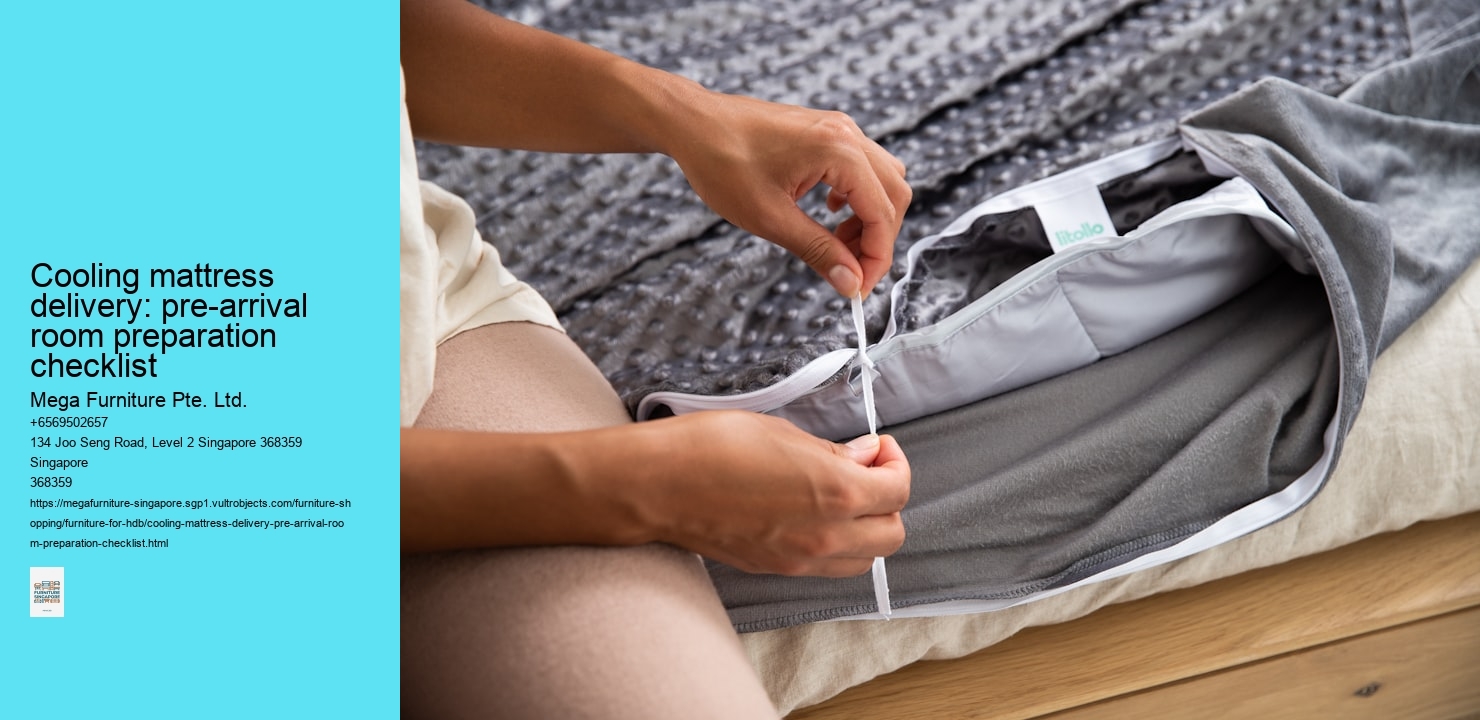
Picture a typical weekday afternoon in a 4-room BTO flat. The delivery crew arrives at 4pm, a window they’ve squeezed between earlier drop-offs and evening appointments. They’re carrying a Queen mattress, 152 by 190 centimetres, wrapped and ready to go straight onto your frame. But your 12 sqm common bedroom looks like a storage unit—boxes stacked against the wall, a wardrobe half-assembled, last week’s laundry piled on the floor. They can’t just slide the mattress in; they need a clear path to the bed frame and space to manoeuvre. So they leave it leaning in your narrow corridor, a bulky obstacle you’ll have to deal with later. Your cooling mattress, the one engineered to dissipate heat, sits there unboxed while you scramble to clear the room. That’s a wasted evening, and you’re sleeping on your old, warm bed one more night.
The logistics aren’t just about your bedroom door, which is usually around 91.5 centimetres wide. It’s the whole journey from the truck to the room. HDB lift doors are often only 90 centimetres wide, and corridors can be tight, with turns that a large, flat package can’t easily navigate. A flexible mattress can bend through these spaces, but the crew needs a straight shot to lay it down. If they’re wrestling with your clutter, they’re also fighting the clock. Delivery schedules are packed, and a delay at your flat means the next customer gets their setup pushed back. It’s not just inconvenient; it’s disrespectful to the crew’s tight timetable and your own plans.
So the rule is simple: the room must be ready. That means the bed frame is assembled and centred, the floor around it is completely clear, and the path from the main door to the bedroom is unobstructed. Leave a buffer of at least 60 centimetres on the side you’ll exit from, and 30 on the others. Shift that dresser, stash those boxes under the bed if it’s a storage model, and get everything off the floor. This isn’t about being kiasu; it’s about being practical. You’ve invested in a mattress designed for Singapore’s climate, one with cooling gel or aerated latex to manage that 28°C ambient heat. Don’t let a messy room delay the relief it’s meant to bring.
The only exception? If your bed frame isn’t delivered yet, obviously. But then you should have coordinated the deliveries so the frame arrives first. Otherwise, you’re just creating a problem you’ll have to solve yourself, and that mattress will be leaning against your wall until you do.
The delivery team will need a clear path from your front door to the bedroom, and enough open floor space to lay the new mattress flat. That means moving any furniture that blocks the way—nightstands, dressing tables, even that laundry basket that always ends up in the corner. In a typical HDB common bedroom, which might be around 12 square metres, every centimetre counts. You’ll want to shift things out before the crew arrives, because they’re on a tight schedule and won’t have time to play Tetris with your belongings.
Old bedding has to go, too. That includes the mattress protector, the fitted sheet, and the mattress itself. It’s your responsibility to dispose of the old unit. Don’t assume the delivery team will take it away for you—they’re there to deliver, not to haul off your decades-old spring unit. Have a plan for it. If it’s still in decent shape, maybe you’ve arranged for a charity pickup or a neighbour to claim it. If it’s destined for the bin, you’ll need to book a bulky item removal with your town council, a process that can take a few days. Do that well in advance.
Manoeuvring a packed-up Queen or King mattress through an HDB flat is a precise operation. The lift door is usually the tightest squeeze, often just 90 centimetres wide. A flexible mattress in a roll-pack can bend around that corner, but the box it comes in might not. Corridors in older blocks can be narrow, and that final turn into the bedroom doorway—which might be under 91 centimetres—is often the real challenge. If your old mattress is still propped against the wall, there’s simply no room to bring the new one in and pivot it into place.
So, clear a landing zone. Strip the bed frame down to its bare slats or base. This isn’t just about courtesy; it’s the only way to ensure a smooth swap. The exception? If you’re doing a straight replacement of just a mattress topper or a thin protector, then maybe you can get away with less fuss. But for a proper cooling mattress—a substantial piece of engineering that’s likely heavier and bulkier than your old one—giving the team a blank canvas is non-negotiable. It’s the difference between a ten-minute installation and a frustrating, scratched-wall struggle.
A cooling mattress must resist Singapore's 80%+ humidity to maintain its structure and hygiene. Look for breathable, moisture-wicking covers like Tencel that prevent mould and mildew build-up. High-density foam cores are less likely to sag or degrade in a damp environment compared to lower-quality materials. Proper ventilation under the bed is key—avoid completely boxing in the mattress base.
Test every window in the bedroom before the mattress arrives. That grille latch that's been sticking for months needs a proper WD-40 treatment now, not when you're sweating at three in the morning. A cooling mattress works by dissipating your body heat into the air, but if that air is stagnant and hot, the heat has nowhere to go. You'll just be sleeping on a technologically advanced heat trap. This is especially critical for older flats where window mechanisms can seize up from years of humidity and lack of use. A smooth, full opening is what you're after, not just a token crack.
Consider where your standing or ceiling fan sits relative to the bed's final position. Air needs to move across the sleep surface, not just stir the air near the door or the wardrobe. For a typical HDB master bedroom layout, you'll want the airflow to cross the mattress diagonally, pulling cooler air from one window and pushing warm air out another. If your fan only oscillates in a fixed arc that misses the foot of the bed, you're losing half its potential. Reposition it now while the room is empty—it's a five-minute job that becomes a major hassle once the new Queen is in place and made up.
West-facing bedrooms in neighbourhoods like Eunos or Bedok face a specific afternoon furnace effect. The sun bakes the external wall for hours, and that thermal mass radiates heat into the room long after sunset. Your cooling materials will be fighting an uphill battle against this ambient radiant heat. The solution isn't just a fan; it's about creating a cross-breeze that actively flushes that stored heat out before you turn in. Heavy curtains help during the day, but at night, you need that ventilation path clear and functional. Ignoring this is like buying a raincoat but forgetting the umbrella during a monsoon downpour.
Ventilation is a path, not a general concept. Visualise the air's journey: where does the cooler evening air enter, and where does the warm exhaust exit? A common mistake is having two windows on the same wall, which creates almost no cross-flow. The ideal path is a straight line or diagonal across the mattress zone, unobstructed by large furniture like a tall dresser or a full-length mirror leaning against the wall. Clear the intended path of any boxes or clutter that might deflect the breeze. Think of it as designing a highway for cool air, with your mattress as the central interchange.
Check the airflow situation at the actual time you'll be sleeping. The breeze pattern at noon can be completely different from the still, humid air at midnight. A window that catches a lovely draft during the day might be useless at night if the wind direction shifts. Spend an evening in the empty room with your planned fan setup running, just to feel where the dead spots are. This is your last chance to swap a fan for a more powerful model or to install a simple window deflector that channels air inward. That final verification beats any assumption, every time.
The most common delivery hiccup isn't a missing screw—it's a mattress that simply won’t go through the front door. Delivery crews cannot bend a cooling mattress like a regular foam one; the rigid, often multi-layered construction designed to regulate temperature means it stays stubbornly flat. That Queen-sized 152 by 190cm block of cooling gel foam and aerated latex is a one-piece unit, and if your lift door or staircase turn is too tight, it’s not coming up.
If the lift route is a no-go, the only option is the staircase, and that usually means a surcharge. It’s a tough, sweaty job for the team, and the cost reflects that. For landed homes or walk-up apartments, this is a given, but for an HDB flat with a problematic lift, it’s an unwelcome surprise on delivery day. The only time I’d skip a full measurement is if you’re in a newer BTO where the layouts are standardised and generous—but even then, a quick check with a tape measure takes five minutes and saves a major headache.
You’ll want to measure the entire path, not just the bedroom. Start at the main door, then check every internal doorway, especially the one to the master bedroom. In many older resale flats, those internal frames can be surprisingly narrow. The real choke point is often the lift door itself, which in some blocks can be as tight as 80cm. Don’t just measure the opening; account for the skirting that eats another centimetre or two, and leave a proper buffer for the delivery team to manoeuvre. Corridor turns in point-block layouts can be tricky too.
So before you get excited about that phase-change material, grab a tape. Walk the route. Note the tightest corner. It’s a boring step, but it’s the one that guarantees your new cooling bed actually makes it to the bedroom.
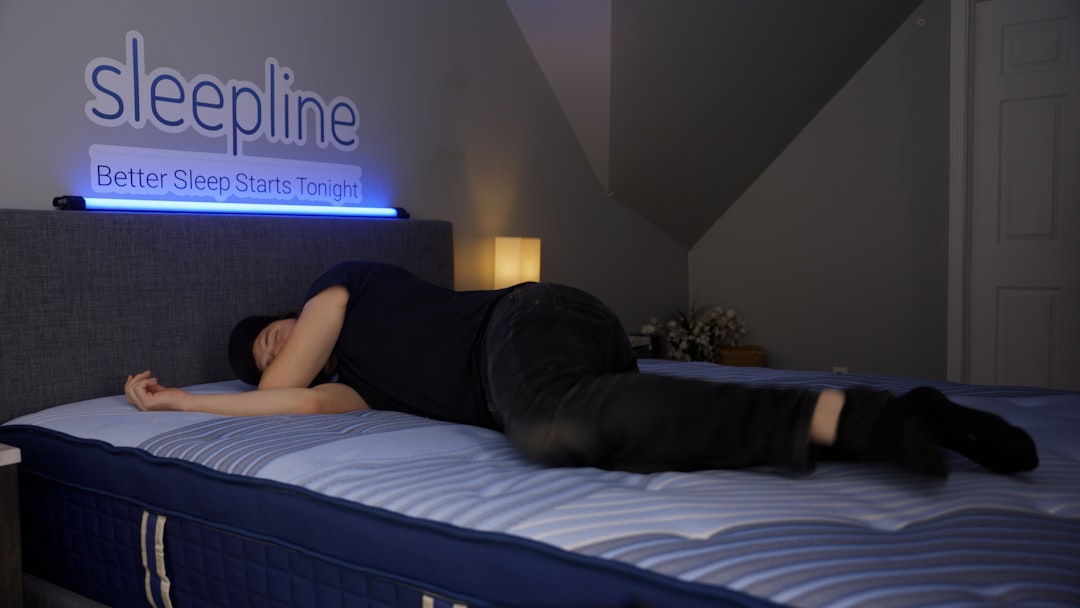


That first night's temptation is understandable. You've waited weeks, the delivery's finally here, and all you want is to collapse onto your fresh, cool surface. Resist it. Every new cooling mattress, regardless of its specific technology, needs a full day to breathe and settle into the humidity of your room before it can perform as designed. Sliding onto it prematurely can compress the materials before they've fully expanded, potentially affecting the support layers and, more critically, the intricate cooling systems woven into its core.
Think about the environment it's just entered. In a non-air-conditioned Singapore bedroom, humidity levels often hover around that 80% mark or higher. That's not just a number on a weather app—it's a tangible, thick dampness that new materials actively absorb as they adjust from a climate-controlled warehouse. The phase-change materials, the aerated latex, even the breathable bamboo cover need time to equilibrate. They're designed to work with our climate, but they must first acclimatise to it. Airing it out for 24 hours lets any residual packaging odours dissipate and allows the internal structure to find its stable, intended form.
The only exception? If your bedroom is kept under consistent, dry air-con around the clock, you might get away with a shorter wait. But for the vast majority of us, in our typical HDB flats where the air-con clicks off after a few hours, that full day is non-negotiable. It's the difference between the mattress performing its temperature-regulating magic from night one and it feeling oddly stiff or failing to circulate air properly because the layers were pinned down too soon.
So plan your delivery for a morning, if you can. Unwrap it, let it lie flat on the bed frame, and just walk away. Open the windows to encourage airflow, even if it's the usual warm breeze. By the following evening, every gel foam cell and ventilated coil channel will have expanded to its proper specification, ready to tackle the real test: a restful, cool night's sleep.
You can read every spec sheet and pore over lab reports, but nothing beats pressing your hand into a cooling gel foam layer yourself. The way it responds—or doesn’t—to your body heat and pressure is something you can’t gauge from a website photo. For something you’ll spend a third of your life on, that in-person test is non-negotiable.
That’s why a trip to a physical showroom isn’t just a nice-to-have; it’s your best defence against a costly, sweaty mistake. You need to feel the weave of a Tencel cover to judge its breathability, and you need to lie down for a solid five minutes to see if the initial cool sensation lasts or if it just traps heat after a while. You’ll notice things a brochure won’t tell you, like whether the ventilated coil system feels drafty or just right.
Head to a Megafurniture showroom, either at Joo Seng or Tampines. Go during a quieter weekday afternoon if you can, so you can take your time without feeling rushed. Don’t just perch on the edge—fully lie down in your usual sleep position. Bring your partner if it’s a shared bed; one person’s perfect firmness can be another’s backache. Pay attention to how quickly the surface rebounds after you get up; a slow recovery might mean it’ll sleep warm.
The only time I’d skip this step is if you’re replacing an identical model you already know and love. Otherwise, you’re gambling with your comfort. A mattress might look perfect online, but the real test is whether you can imagine sinking into it on a humid 2 a.m. when the air’s still. That answer only comes from being there in person.
Before you commit to a cooling mattress, you'll find a few practical questions surface again and again. It's not about doubting the technology, but about how it fits into the real, often aircon-free, HDB bedroom.
Can cooling mattress work without aircon?
It can, but you need to calibrate your expectations. The materials work by drawing heat away from your body and dissipating it into the air—so if that air is already thick and 30 degrees, there's a limit to how cool you'll feel. You'll get better air circulation and less of that trapped, sweaty feeling compared to a standard memory foam, but it won't magically create a chilled sleep surface in a non-ventilated room.
How long does cooling effect last?
This is about the materials, not a battery that runs out. Phase-change fabrics and gels are engineered to work consistently for years, but the initial 'wow' feeling when you first lie down might become less noticeable over time—you simply get used to it. The real test is whether you wake up less often from heat, and a well-made one should keep performing through our perpetual summer.
Will it smell after delivery?
Most mattresses, cooling or not, have some degree of off-gassing from the foams and adhesives. That new-product smell is common and should air out in a well-ventilated room over a week or two. A quality cooling cover made from natural fibres like bamboo or Tencel tends to have less of a chemical odour than some synthetic covers, but give it time to breathe regardless.
Is it heavier than normal mattress?
Often, yes. Adding cooling gels or denser, more supportive foam layers for breathability can add bulk. A Queen-sized cooling hybrid can be a significant lift for two people, which matters if you plan to rotate it regularly or if your delivery team has to navigate a tight staircase. That heft usually signals durable construction, but it's a practical point for smaller flats.

The delivery team’s arrival is a clockwork operation, so a blocked corridor or a forgotten mattress in the corner can cost you a rescheduling fee and a whole lot of waiting. Your final sweep isn’t about perfection; it’s about removing the predictable obstacles that turn a 20-minute job into an hour-long headache. Think like the movers—they need a clear, straight shot from the lift to your bedroom door without any need to navigate around last-minute clutter.
First, clear the floor path completely. That means moving laundry baskets, shoe racks, and any small furniture that’s encroaching on the hallway. In a 4-room BTO or condo, the tightest pinch point is usually the internal bedroom doorway, which can be just under 90cm wide. A Queen mattress, at 152cm wide, will need to be angled through that space, and any obstacle on the floor forces an awkward shuffle that risks scuffing your walls or the frame. Give them a good 60cm of clearance on the exit side of the bed’s final position, too, so they’ve got room to manoeuvre the base into place.
Next, open the windows in the bedroom wide. This isn’t just for ventilation while they work; a cooling mattress needs to breathe right from the start. Its performance fabrics and aerated layers are engineered to dissipate heat, and you want that system engaging immediately in our humid air. More critically, if you’re replacing an old mattress, confirm its removal *before* the new one arrives. Many removal services operate on a separate schedule, and you cannot have two mattresses in the same room—there’s simply no space. A pro tip: measure the access path from the lift lobby to your door, noting any sharp turns. If the lift door is the standard 90cm, a flexible mattress can bend in where a rigid platform bed frame cannot, so knowing this helps you manage expectations.
One real exception? If you live in a landed home with a wide staircase and direct street access, the path confirmation is less critical. For everyone else in a typical HDB block, that five-minute check saves everyone’s time and temper. When the doorbell rings, you should be able to point them down a clear runway straight to the empty spot where your cool night’s sleep is about to begin.
" width="100%" height="480">Cooling mattress delivery: pre-arrival room preparation checklist