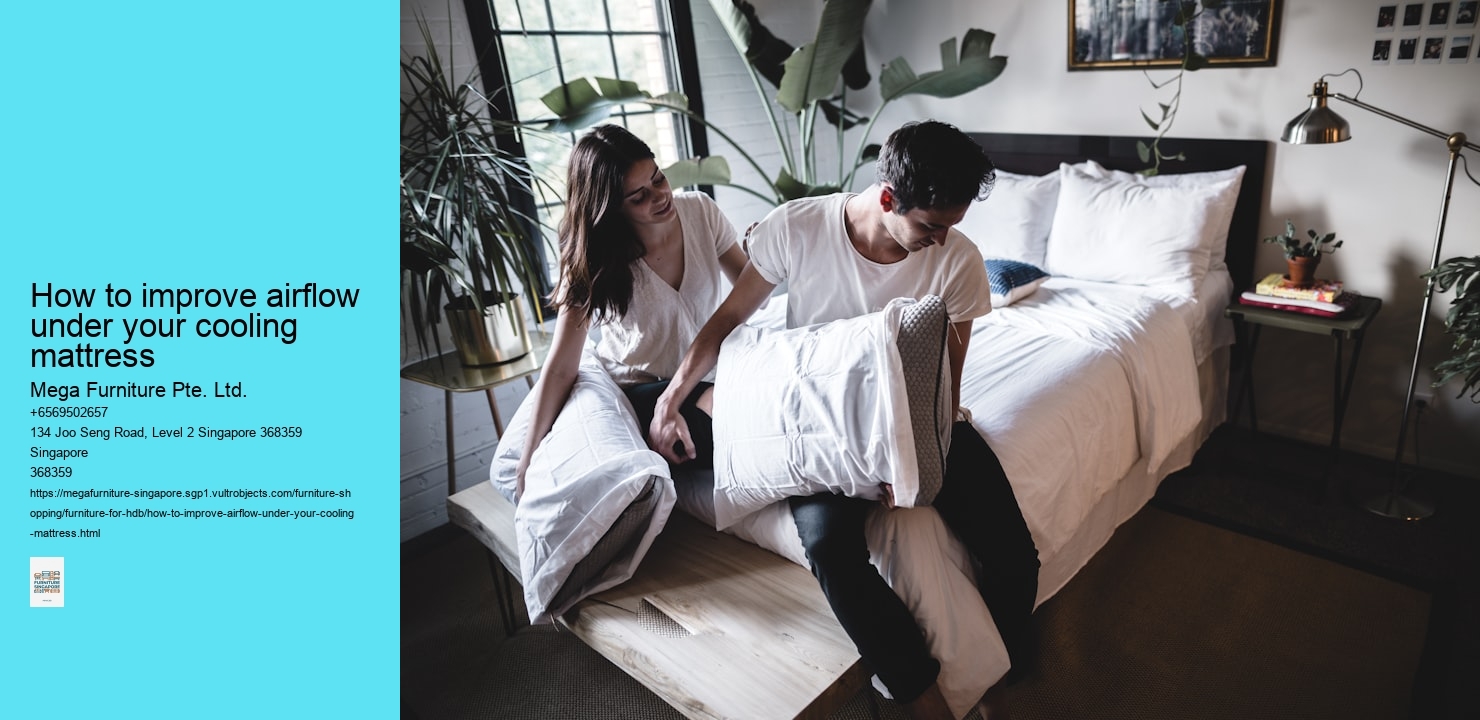
You've invested in a cooling mattress, chosen for its gel foam or ventilated coils, expecting relief from Singapore's relentless night heat. Yet you're still waking up damp and uncomfortable, the mattress surface cool to the touch but your back feeling inexplicably warm. That's the trap—the problem isn't always the mattress itself, but the stagnant, warm air caught beneath it, unable to escape.
Place a mattress flush on a solid platform bed or a non-breathable divan base, and you've essentially created a sealed pocket. Our ambient air, rarely dipping below 28°C, gets trapped there, slowly warming the underside of your mattress all night long. The cooling technology on top is fighting a losing battle against a steady heat source from below. It’s a classic case of solving only half the equation.
The base matters as much as the mattress. A solid plywood platform might look sleek and feel sturdy, but it’s a thermal barrier. Even a low-profile slatted base can fail if the gaps are too narrow or the timber is too thick, offering minimal air channeling. You need real airflow—generous gaps between slats, ideally with a centre support rail that also allows air movement, or a high-leg bed frame that lets air circulate freely underneath.
There’s one exception: if your bedroom is air-conditioned full-time and kept consistently cool, the ambient air trapped underneath is less of an issue. But for the vast majority in non-air-conditioned rooms or those using the AC sparingly, that pocket of trapped air becomes a heat reservoir. Your cooling mattress can only perform if it’s allowed to breathe from all sides, not just the top.
You can spend all day comparing bamboo thread counts, but if your mattress is sitting on a solid platform, you’re basically trapping heat in a box. That’s the reality for a lot of HDB bedrooms, where the air just doesn’t move. The first thing to sort out isn’t the cover—it’s the base. A slatted foundation or a bed frame with proper perforations lets air circulate underneath, which is critical for pulling heat away from the mattress core. Without that, even the best cooling gel foam can’t do its job properly.
Think of it like a computer needing a fan. A cooling mattress is engineered to dissipate heat, but it needs an exit route. In a typical 4-room BTO master bedroom, that still air gets heavy, especially during the year-end monsoon when everything feels damp. A mattress plonked directly on the floor is the worst offender, creating a perfect pocket for warmth and, frankly, inviting mould along the underside. A simple slatted base elevates the whole system and lets the room breathe.
So your real choice is between a slatted base, a perforated bed frame, or going without. For most people here, a proper frame with generous gaps is the way to go. It creates a consistent air channel. The single time I’d skip it is if you’re in a super compact space—like a 3-room flat’s common bedroom that’s barely 12 sqm—and every centimetre counts. Then, a low platform with integrated slats might be the compromise, but you must check that the slats aren’t spaced too close together. They’re useless if they’re just decorative.
Don’t get distracted by the marketing talk about miracle fabrics. Get the foundation right first, because that’s what determines whether your investment in a cooling mattress actually pays off in our climate. The airflow underneath is non-negotiable.
The gap between your bed slats is a critical measurement that most people never think to check. If the slats are spaced wider than about five centimetres, your mattress will start to sag into the gaps, which defeats the whole purpose of a supportive base. Conversely, gaps smaller than two centimetres choke off the airflow that a cooling mattress desperately needs to work properly. You'll want to get a tape measure and actually check this on any bed base you're considering, because a surprising number of off-the-shelf frames get it wrong. That sweet spot between two and five centimetres provides the perfect balance of firm support and free ventilation for the air to circulate underneath.
Not all wood can handle our climate. Cheap, untreated pine slats are a common culprit—they absorb moisture from the air and warp over time, which ruins the even support. Hardwoods like kiln-dried rubberwood or acacia are far more stable when faced with our constant eighty-plus percent humidity. They hold their shape and keep your mattress level, which is non-negotiable for maintaining warranty coverage on a premium cooling model. Investing in a base made from these more resilient materials is a long-term win, preventing the sian scenario of a lumpy, uneven sleep surface after just one monsoon season.
Singapore's ambient moisture is a relentless force, and your bed base faces it twenty-four seven. This isn't a gentle test; it's a full assault that cheaper materials often fail. You can simulate the stress by placing a typical slatted base in a non-air-conditioned room for a few weeks and watching what happens. Warping isn't always dramatic—sometimes it's a subtle bowing that you only feel once the mattress is on top. That's why a quick showroom sit-test isn't enough; you need to consider how the frame will behave in the real conditions of your flat, especially if your bedroom isn't cooled throughout the night.
Wide gaps don't just feel uncomfortable; they actively damage your mattress. A cooling mattress, with its specialised foams or latex layers, requires a uniformly solid foundation to perform as designed. When slats are too far apart, the mattress core works overtime to bridge the empty spaces, leading to premature sagging and material breakdown. This uneven pressure also compromises the integrated cooling channels, blocking the very airflow you paid for. It's a classic case of a weak link undermining the entire system, and it's an expensive mistake that voids warranties faster than you can say "orthopaedic".
Blocking the breathability underneath is just as bad as having no support. Cooling technologies like gel-infused memory foam or aerated latex rely on passive air movement to carry heat away from your body. If the slats are packed too tightly together, they create a solid barrier that traps warm, stale air against the mattress underside. That heat then radiates back up, turning your cool sleeping surface into a thermal insulator. Ensuring there's sufficient gap isn't a luxury; it's the fundamental engineering that allows the mattress to do its one job in our tropical nights.
A cooling mattress needs to withstand our climate's constant 80%+ humidity. Its breathable cover and internal materials must resist moisture retention and mould growth over years. Look for phase-change material layers or aerated latex that maintain their cooling properties without degrading in damp conditions.
Proper care maximises a cooling mattress's lifespan and thermal performance. Regularly air it out by stripping the bed and, if possible, using a fan to ventilate the core. Spot-clean any spills on the cooling cover with a damp cloth to prevent blockages in the fabric's breathable weave.
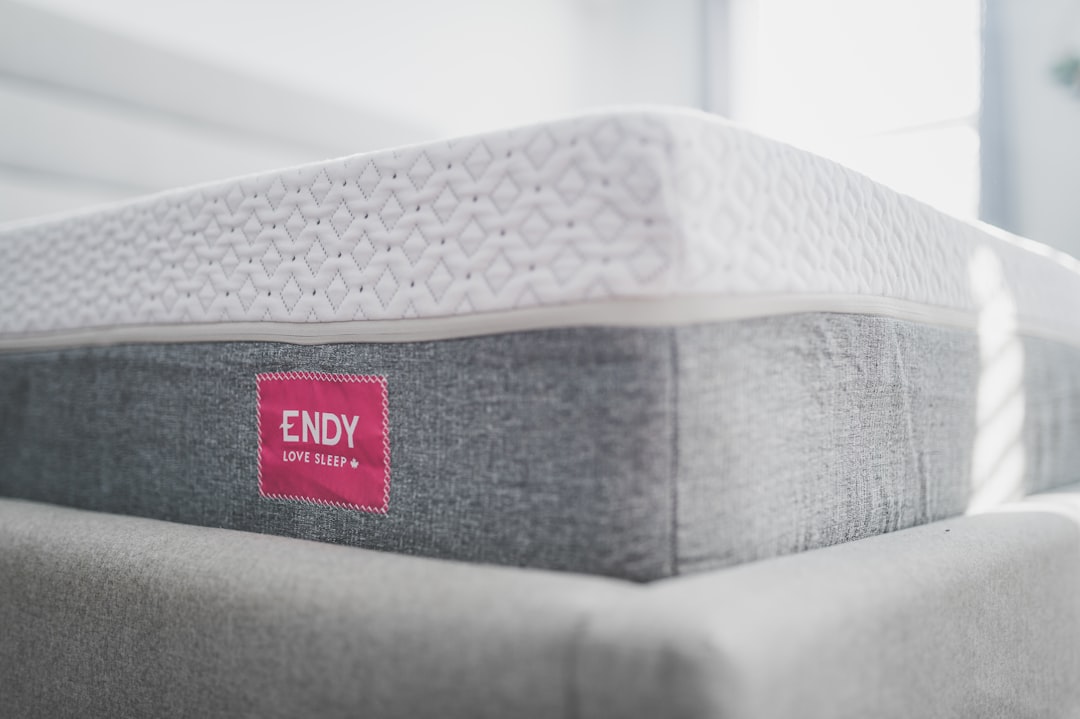
If your cooling mattress sits directly on a solid platform or storage bed base, you're basically blocking its best feature. Those ventilation channels and breathable layers are designed to pull heat away from your body, but without airflow underneath, the whole system can't work properly. It's like having a high-performance exhaust fan that's sealed against a wall—all that engineering is wasted. A low-profile mesh or woven base creates that crucial air gap, letting the mattress do its job.
You'll find options in the eighty to two hundred dollar range, which is a reasonable investment considering the improvement in sleep comfort. For anyone who's already committed to a storage bed for practicality—and let's be honest, in a four-room flat you need that extra space for luggage—this is the compromise that makes sense. You keep your storage and you unlock the cooling tech you paid for. The only scenario where I'd skip it is if your mattress is already on a traditional sprung base with plenty of gaps; those usually provide enough airflow already.
These aftermarket panels are a simple fix. They're thin frames, often just a few centimetres high, made from a grid of flexible mesh or woven rattan. You just place them on top of your existing solid surface—a typical Queen-sized panel fits the common 152 by 190cm BTO bed frame depth without any fuss. The open weave allows air to circulate freely underneath the mattress, which helps dissipate trapped heat. This is especially key during our humid months, when stagnant air under the bed can feel like a warm, damp blanket.
Fit is straightforward. Most panels are designed to sit flush within the perimeter of a standard bed frame, so there's no risk of them sliding around. Just ensure the overall height—your mattress plus the new base—still works for you. Some people find the extra few centimetres makes getting into bed more comfortable, others don't notice the change at all. It's a small tweak that solves a big problem: letting your cooling mattress actually cool.

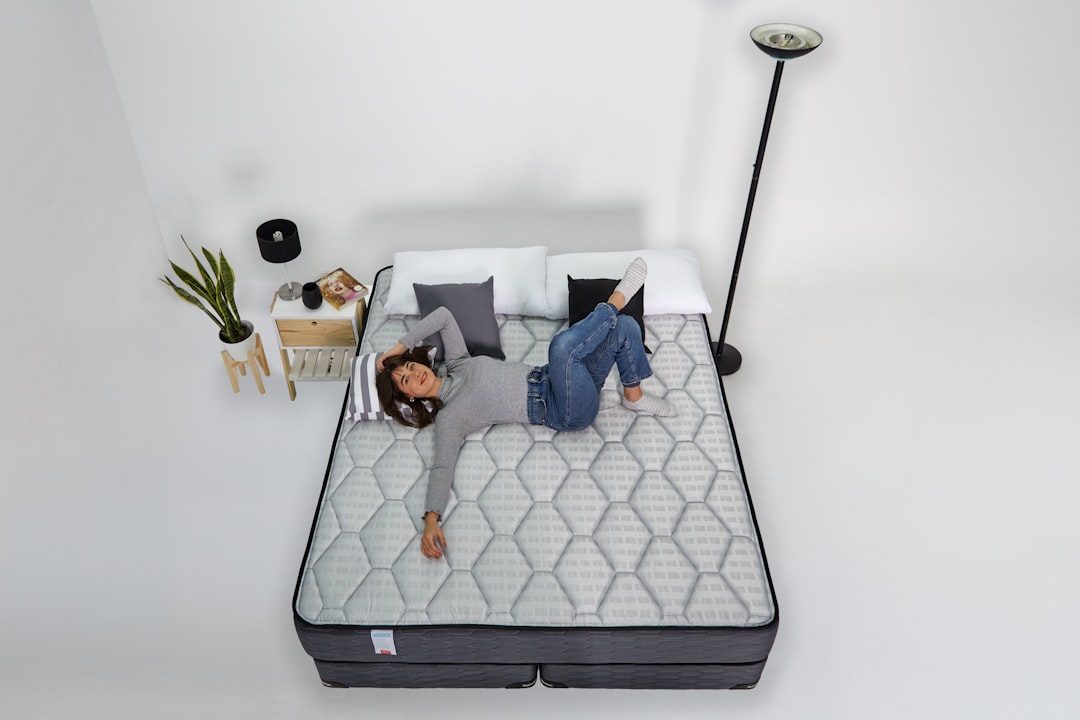
The master bedroom in a 4-room BTO is often around twelve square metres. That’s enough for a Queen bed and a wardrobe, but airflow becomes a room-scale puzzle. You can’t just rely on a cooling mattress’s breathable cover or gel foam; you need the breeze to reach it. In these compact layouts, the window placement is usually fixed—one wall, maybe two. The trick is to treat your bed as a channel, not a barrier.
Position the frame between two windows, if you’ve got them. Even a slight offset can help. Aligning the bed with the doorway, when the door is left open overnight, works too. It creates a path for whatever movement there is in the night air. Avoid tucking the bed into a corner where walls meet. That’s where air stagnates, and your mattress’s cooling tech fights a losing battle against trapped warmth.
Consider the common layout where the window is on one wall and the door on the adjacent one. Placing the bed head against the wall opposite the window, with its side facing the doorway, often gives the best chance. You’re not blocking the inlet or the outlet. Some will insist on the bed head under the window for the view, but that’s a trade-off—you might sacrifice the cross-flow.
There’s one real exception. If the room’s only window is directly opposite the door, and the space is truly narrow, you might have to place the bed head against one of the side walls. It’s a compromise, but you can mitigate it by keeping the area under the bed clear—no storage boxes blocking the path—and using a low-profile frame. The goal is to let that slender corridor of air pass through as freely as possible.
" width="100%" height="480">How to improve airflow under your cooling mattress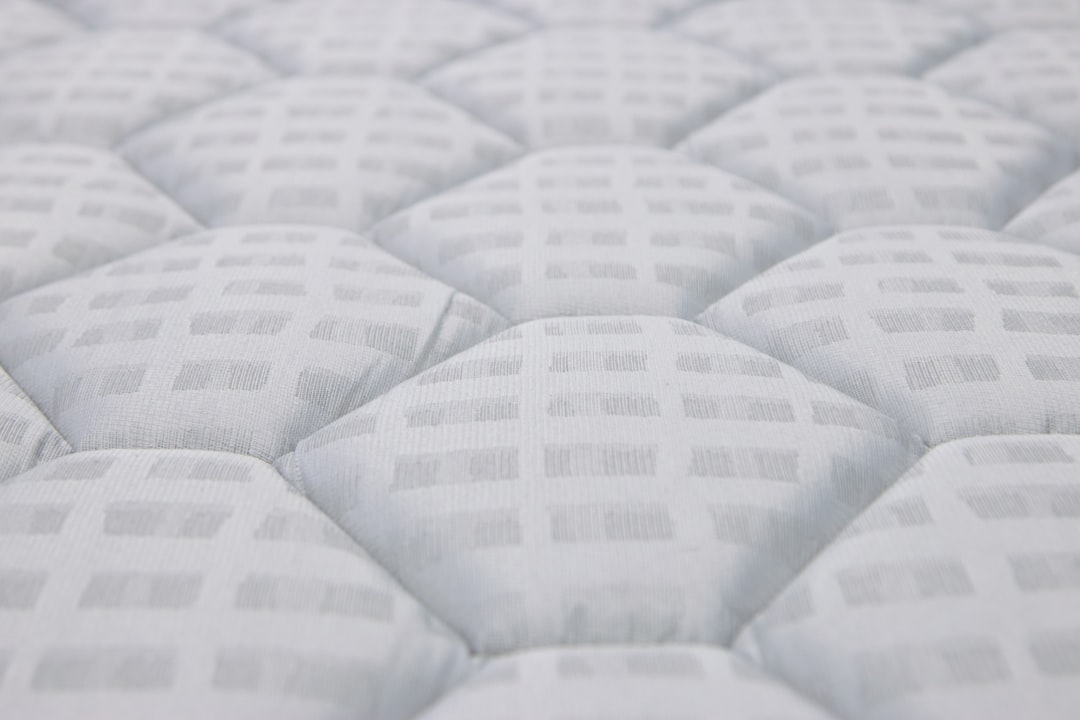
You’re already sleeping on a cooling mattress, but you’re still waking up feeling warm. That’s the exact moment you should consider the frame underneath. A cooling mattress works by dissipating heat, but if that heat gets trapped underneath because your old bed base is solid and enclosed, you’re only solving half the problem. The mattress can’t breathe properly, and you’re left with a pocket of warm, stagnant air right where you sleep. It’s a common oversight—people invest in the technology of the mattress itself, then pair it with a platform that cancels out its main feature.
A purpose-designed cooling bed frame addresses that directly. It’s engineered with integrated side vents and an open structure to promote continuous airflow around and beneath the mattress. This isn’t just about letting air in; it’s about creating a microclimate that actively pulls heat away from your body throughout the night. In our climate, where ambient temperatures rarely drop below a comfortable level, this consistent ventilation becomes critical. You can’t gauge this from a product description or a list of specs online. The difference is tactile—you have to feel the airflow and assess how the mattress’s firmness interacts with the supportive base.
That’s why a visit to a showroom is non-negotiable here. Lying down on their in-house Somnuz® mattresses placed on their matching ventilated bases lets you test the system as a whole. You’ll notice whether the firmness level is right for your posture, and more importantly, you’ll sense if that subtle circulation of air is present. It’s a specific experience that separates a true cooling setup from a standard bed. Joo Seng or Tampines locations offer this hands-on comparison. Without it, you’re buying on paper alone, which for something as personal as sleep temperature is a gamble.
The one scenario where you might skip this investment is if your bedroom is consistently air-conditioned throughout the night. In that controlled environment, the need for aggressive heat dissipation from the bed itself is reduced. But for the majority—those in non-air-conditioned rooms, or who run the AC only for a few hours—the combined effect of a cooling mattress on a ventilated frame is what finally bridges the gap between a hot climate and a cool night’s sleep. It turns a good product into a complete solution.
You’ve just spent good money on a cooling mattress, but you’re still sweating at three a.m. That’s when the real questions start popping up, and they’re usually about how the mattress lives with the rest of your bedroom setup.
Does a cooling mattress topper work on a storage bed? Yes, it can, but you’re adding another layer of foam or gel on top of the mattress, which itself is already sitting on a solid base. The topper’s cooling effect relies on airflow through its own materials, and a storage bed’s sealed platform doesn’t help that. It’ll still feel cooler than a regular topper, but the real benefit comes from pairing it with a mattress that’s already breathable—otherwise you’re just trapping more heat underneath.
Can I use a fan under my mattress? Not directly under it, unless you’ve got a gap. In a typical storage bed or on a solid platform, there’s no space for air to circulate. If your frame has slats, placing a fan on the floor nearby can help move the stale, warm air that collects underneath, especially during those humid monsoon months. It’s a simple trick, but it only works if there’s a path for the air to travel.
How often to flip a cooling mattress in humid weather? Most modern cooling mattresses aren’t designed to be flipped at all—they have a specific comfort layer on one side. If yours is a double-sided model, rotating it head-to-foot every three to six months is enough to combat any uneven settling from our constant humidity. Flipping it over entirely might just put you on a firmer, less-cooling base layer.
Is a latex mattress cooler on the floor or on slats? Always on slats. Putting any mattress directly on the floor in Singapore is a recipe for mould and trapped heat. A latex core is naturally aerated, but it needs that channel underneath for air to pass through. A proper slatted base, with gaps between the planks, lets the mattress breathe properly and actually use its cooling properties. On the floor, it’s just an expensive sponge waiting to kena dampness.
You’ll know April’s coming when the air starts to feel thick even before the rain arrives. That’s your cue—the annual maintenance check for your cooling mattress shouldn’t wait until you’re sweating through the night. This isn’t about deep cleaning; it’s a quick, targeted look at three things that keep airflow working properly when the humidity climbs.
First, check the slats. Over a year, even sturdy ones can bow slightly from the constant weight. A bowed slat reduces the gap underneath, choking the ventilation that helps a cooling mattress do its job. Run your hand along them; if any feel uneven, that’s a sign. It’s a simple fix, but ignoring it means you’re sleeping on a compromised system.
Next, get under the bed. Dust accumulates there, and in a humid season, that layer can become a damp, compacted block that stifles airflow completely. A quick vacuum pass—just a minute or two—clears the channel. Do this before the humidity locks the dust down, otherwise you’re trying to breathe through a clogged filter.
Finally, consider rotating your mattress. Many cooling designs are single-sided; you can’t flip them, but you can turn them 180 degrees. This shifts your body’s heat zones—where your shoulders and hips press nightly—to a fresh section of the surface. The wear from your concentrated body heat gets evened out, which helps the cooling materials perform consistently. Rotate it once, just before the temperatures rise, and you’ll extend its effective life.
Skip this routine only if your mattress sits on a solid platform with no under-bed space at all—then the slat and dust checks don’t apply. But the rotation still matters. For everyone else, doing these three steps before April hits is a small investment that pays off in cooler nights throughout the coming humid months.