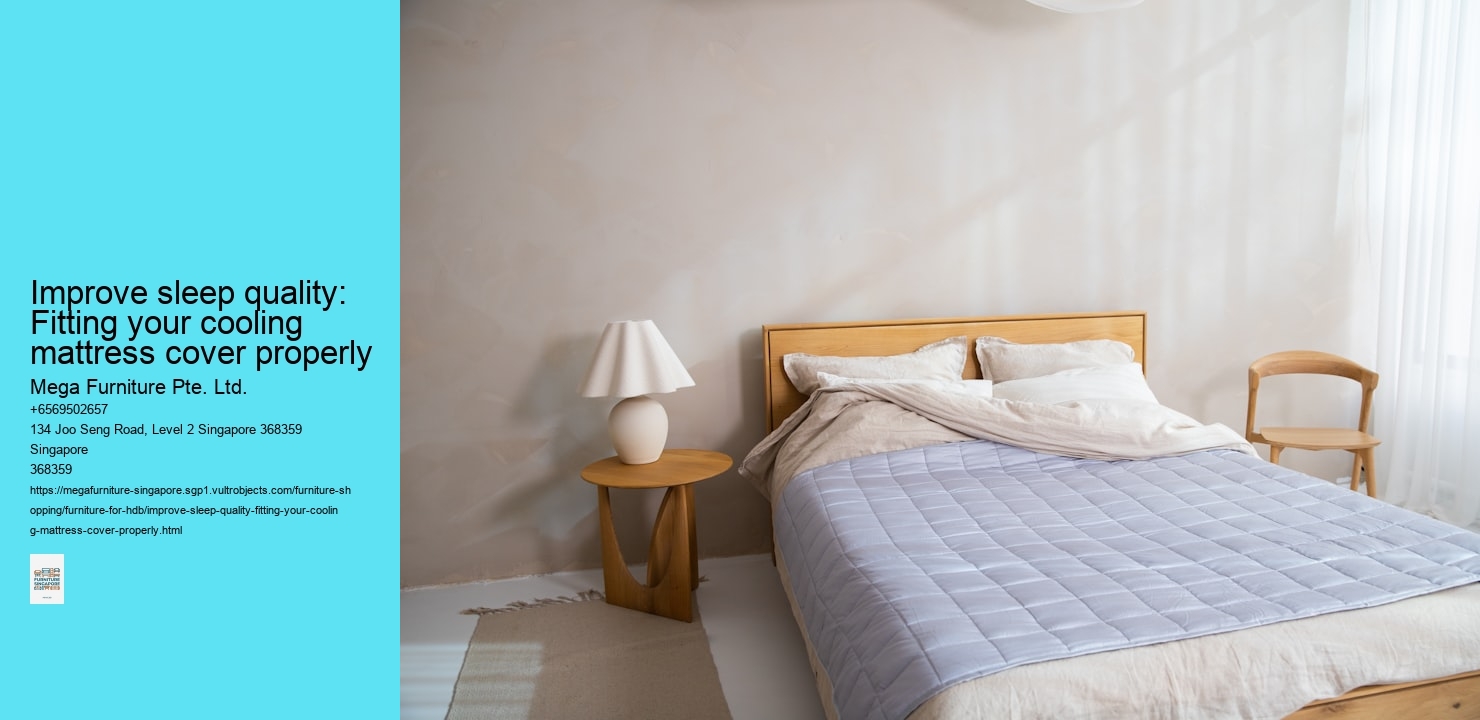
It’s that moment when you peel yourself off the bedsheet, your cotton pyjamas damp and clinging as if you’ve just finished a workout. The air in the room feels thick, a solid 80 percent humidity that the night has trapped between your walls. This isn’t just a warm night—it’s that specific, clammy awakening familiar to anyone in a resale flat with a west-facing bedroom, where the afternoon sun has baked the concrete and the evening offers no reprieve. You might not even be running the air-con, but you’re still waking up in a puddle.
That sticky feeling is your first, most visceral clue that your sleep setup is failing you. It’s the pain point that starts a cascade. Before you even think about phase-change materials or aerated latex, you’re grappling with a basic failure of your immediate environment. The cover on your mattress, if it’s fitted poorly or made from the wrong stuff, becomes a barrier instead of a bridge—it holds that moisture against your skin all night long. A gap or a wrinkle isn’t just an aesthetic annoyance; it’s a pocket where heat and dampness get concentrated, turning your intended cool oasis into a tropical microclimate of its own.
Think about the geometry of a typical HDB master bedroom, maybe 3.5 by 3 metres. A Queen mattress fills a good portion of it, leaving limited air circulation on the sides. If your cover is bunching up at the corners or pulling too tight across the middle, you’ve created dead zones. These are the spots where air stops moving, where your body heat gets trapped, and where that famous 28-degree ambient temperature feels a whole lot hotter. A perfectly flat, taut cover, by contrast, lets the mattress’s own cooling engineering do its job—the breathable layers can actually breathe.
So you see, the most advanced cooling gel foam in the world is rendered almost useless by a badly fitted cover. It’s like having a high-performance air conditioner but leaving all your windows open. The fight against night sweats begins with this simple, mechanical step: getting the fit right. Everything else—the choice of Tencel over bamboo, the promise of ventilated coils—is secondary if your first layer of defence is already compromised. You can have the best technology underneath, but humidity will find that weak spot every time.
That 'cooling' label on a mattress cover can be a trap. You see it, you grab it, thinking you've solved the problem. But by midnight, you're kicking off a damp sheet because that generic polyester blend is doing exactly what it's designed to do—it's insulating. It's holding your body heat right against you, turning your sleep surface into a humid pocket in a room that's already pushing 28°C. For a hot sleeper, that's a recipe for a sian night.
The key is breathability, not just marketing. A fabric that truly breathes, like a proper bamboo weave or Tencel, works by letting air move through its fibres. It wicks moisture away from your skin and allows it to evaporate. That's a passive, constant process that works with the ambient air, assuming there's some airflow in the room. It's a solid choice for many, especially if your main issue is general warmth. But in that still, humid HDB bedroom where the air feels thick, even a breathable fabric has its limits.
Where phase-change materials come in is a different league entirely. They're not just moving air; they're actively managing temperature. These smart fabrics absorb your excess body heat, store it, and then release it back when your skin cools down. Think of it as a thermal battery built into the cover, working to maintain a steady, neutral temperature zone right where you lie. It’s a targeted intervention for the sleeper who wakes up in a pool of sweat, not just a warm one.
So, don't just look at the tag. A hot sleeper’s priority in our climate has to be performance over price tag. The wrong fabric choice isn't a minor comfort issue—it's the difference between a restorative night and one where you're battling your own bedding. The only time I'd consider a basic polyester 'cooling' cover is if it's purely for a rarely used guest room, where the bed sees a night or two a year during the cooler months. For your own bed, where you face the heat every single night, investing in a fabric that truly understands thermodynamics is non-negotiable.
A Queen-sized cooling cover on a 152 by 190cm memory foam mattress in a 12 sqm common bedroom—that’s where the trouble starts. If the cover is even a few centimetres too large, it won’t lie flat against the mattress surface, creating loose fabric that gathers into ripples and folds. These aren't just cosmetic flaws; they act like tiny dams against the very airflow the cover is engineered to promote. The breathable bamboo or Tencel fabric gets pressed against itself, its pores blocked by the extra layer, and the cooling effect is smothered before it even begins. You’ve paid for advanced temperature regulation, but a poor fit turns that investment into little more than a fitted sheet.
Those ripples don't just sit there—they trap air. Each fold creates a sealed pocket where stale, warm air from your body gets caught and held, completely defeating the mattress's heat-dissipating design. In our climate, with ambient bedroom temperatures often exceeding 28°C, this creates isolated microclimates directly under your sleep zones. Your back or legs might lie over a smooth, cool section, but your shoulders sink into a wrinkle that becomes a personal heat trap. The phase-change materials or cooling gel foam underneath can't work if the conductive pathway is interrupted by a layer of dead air.
The consequence is inconsistent surface temperature, leading to hot spots that can wake you up throughout the night. You might feel generally cool, but a persistent warm patch under your hip or lower back will disrupt sleep completely. This is especially frustrating for menopausal women experiencing hot flushes or for anyone in a non-air-conditioned room, where every degree of extra warmth feels amplified. The mattress technology is there, but the cover’s poor fit creates a barrier that the cooling systems cannot penetrate, rendering the most advanced ventilation coils or aerated latex somewhat useless where it matters most.
Stagnant air is humid air. In Singapore’s humidity, often around 80%+, trapped body moisture has nowhere to go when airflow is blocked by bunched fabric. This moisture lingers against the mattress surface, potentially leading to a damp feeling and increasing the risk of mould or mildew over time—even on a modern mattress. That microclimate of stagnant air isn't just hot; it's uncomfortably moist, which can degrade the mattress materials faster and create an unhygienic sleep environment. A properly fitted, taut cover wicks perspiration away, but a rippled one simply collects it.
So the rule is non-negotiable: a cooling cover must be sized with near-exact precision, pulled drum-tight across every corner. There’s no room for “close enough” when the goal is unimpeded breathability across the entire sleep surface. For a memory foam mattress, which naturally conforms to your body, a loose cover will always find a way to wrinkle under pressure. The single exception might be a stretch-fit style designed for a specific depth range, but even then, you must check the specifications against your mattress's exact dimensions. Getting this right transforms the cover from a passive barrier into an active partner in temperature regulation.
Cooling mattress covers often use breathable bamboo-derived viscose or Tencel lyocell fabrics to promote airflow. These materials feel cool against the skin and wick moisture away efficiently, a key feature for Singapore's humid climate. Some covers integrate phase-change material panels that actively absorb and release heat to regulate temperature throughout the night. The fabric's weave and permeability are more critical for cooling than its colour or pattern.
A cooling mattress cover must fit your mattress dimensions precisely to avoid bunching or gaps that impede its function. Standard Singapore mattress sizes like Queen (152x190cm) are common in HDB master bedrooms. Ensure the cover's elastic skirt or zipped enclosure matches your mattress's depth, which can vary from 25cm to over 30cm for thicker models. A well-fitted cover stays put through the night without disrupting the cooling surface.
That first monsoon season after you buy a cheap mattress cover—that’s the real test. You’ll fit it snug over your Queen, admire the tidy profile, and think you’ve beaten the heat. Then the humidity hits, the kind that lingers from March to October, and those thin elastic edges start to lose their fight. They don’t snap back; they just hang there, stretched and tired. What you’re left with is a cover that’s slightly baggy, with gaps along the sides where it’s supposed to hug tight.
This is purely a material resilience issue. Budget bands, typically priced between eighty and two hundred dollars, often use a lower rubber content or a thinner, less durable weave. They can’t withstand the constant cycle of tension and the relentless eighty-plus percent humidity. They degrade from the inside out, losing their elasticity permanently. You’re not just re-stretching it each time you wash the cover; you’re fighting a losing battle against material fatigue.
Heat seeps in through those gaps, completely undermining the point of a cooling cover. Your phase-change material or breathable bamboo can only work if it’s in proper contact with the mattress surface. A loose cover creates air pockets—dead zones where your body heat gets trapped instead of dissipated. It’s a common, frustrating discovery: you invested in cooling technology, only to have its performance halved by a few centimetres of failed elastic.
The one time you might roll the dice on a cheaper band is if you’re in a fully air-conditioned bedroom year-round, where humidity is controlled. For everyone else—especially in those non-air-conditioned rooms or west-facing flats—that initial saving is a false economy. You’ll be buying a new cover in a year, maybe less. The better bands use a wider, denser elastic with higher rubber content, and they’re often stitched into a more robust fabric skirt that shares the load. That’s what keeps the fit secure season after season, ensuring the cooling materials can actually do their job.
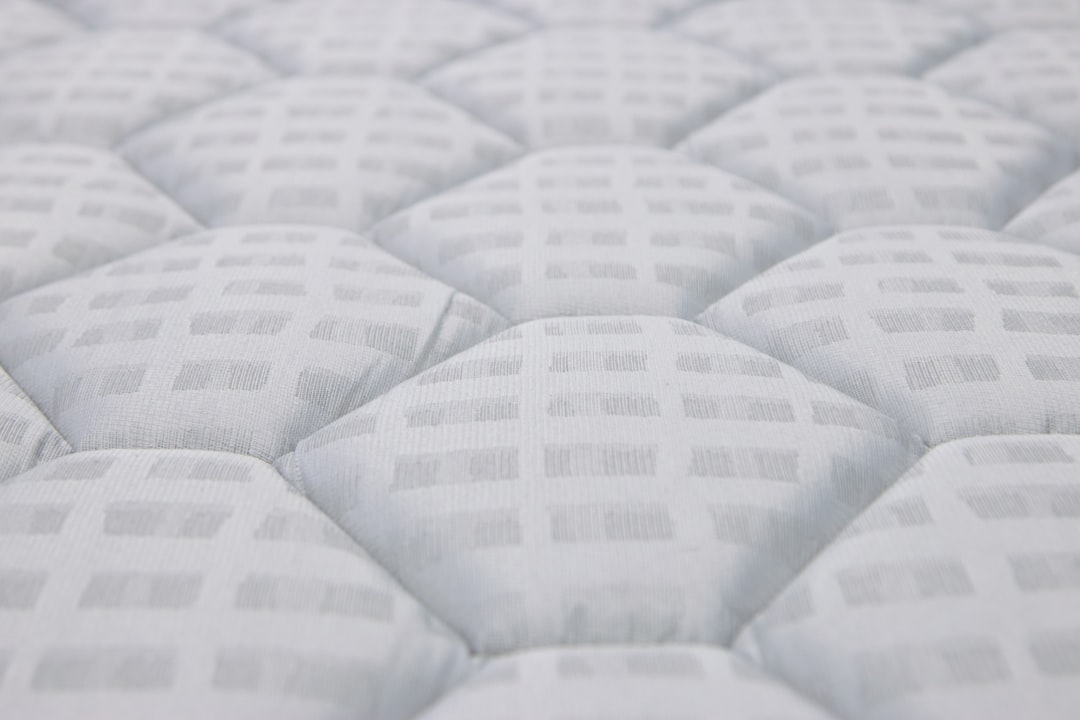

That fitted sheet you bought, the one that’s a bit too snug for your Queen mattress? It’s quietly grinding away at your cooling surface every night. The tension creates constant friction, and over months in our humidity, that friction can wear down the very fibres engineered to dissipate heat. You won’t notice it tomorrow, but in a year or two, that prized cool-to-the-touch feel might be replaced by a slightly pilled, less effective surface. The real sting comes when you try to claim a warranty for premature wear—many manufacturers will point straight to cover damage and say that’s not a material defect. It’s on you.
Think of it like a high-performance fabric on a car seat. You wouldn’t throw a rough, ill-fitting cover over it and expect the leather to stay pristine. Your cooling mattress works on a similar principle; its top layer is a precise system of breathable bamboo, Tencel, or phase-change materials. A poorly fitted protector bunches and rubs, compromising that system’s ability to pull heat away from your body. For condo owners, where bedroom layouts are tight and every piece is a precise fit, getting the cover dimensions wrong is an easy mistake. You measure the 152 by 190cm footprint, but forget the added height of a pillow-top or the way a deep pocket needs to stretch, not strain.
So, do you skip a protector to preserve the cooling tech? Absolutely cannot. Spills, sweat, dust mites—our climate guarantees all three. The solution isn't to go without, but to choose a protector designed for the job. Look for one that specifies a deep pocket for your mattress’s exact height and uses a similarly breathable, stretch-knit fabric. It should lie flat without tugging at the corners. A good one acts like a second skin, not a straitjacket.
This is where the kiasu instinct serves you well. Protecting your investment means reading the fine print on both the mattress warranty and the protector’s packaging. That cooling feature you paid for is a long-term play for better sleep in a 28°C night. Don’t let a twenty-dollar sheet of the wrong size undermine a thousand-dollar mattress’s core function. Get the fit right, and the warranty stays intact while the cooling efficacy lasts for years.
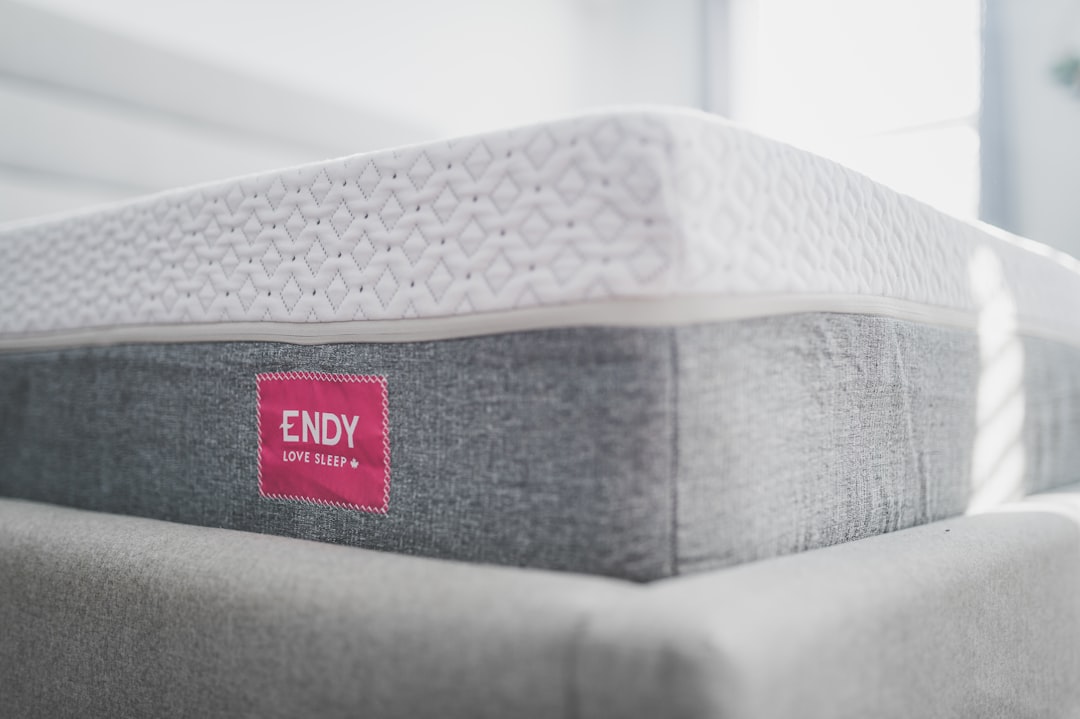
You’ll see plenty of cooling claims online, all promising a blissful sleep free from night sweats. A Tencel cover, a gel layer, a ventilated core—the specs look convincing on a screen. But specs are just numbers and words. They can’t tell you if that fabric will actually feel cool against your skin after a long, humid night. The only way to know is to put your hand on it, to sit on it, to lie down and wait a minute. That’s why skipping the showroom is a gamble you shouldn’t take.
Think about the weave. A cooling cover isn’t just about the material name; it’s about how thick and dense that fabric is. A loose, thin weave might feel breathable at first touch, but it won’t have the substance to properly manage heat over hours. You need to feel the weight of it, run your fingers over the texture to gauge its density. Some covers feel almost like a crisp, cool sheet—others have a heavier, more substantial hand. That difference matters when your bedroom temperature climbs past twenty-eight degrees.
Then there’s the firmness. A mattress might feel supportive when you press down with your hand, but your body distributes weight differently. You need to actually lie down, settle into it, and see how the cooling layers interact with the support core. Does the firmness feel consistent, or does it trap heat in certain spots? Testing with the cover on is crucial—sometimes a cover can subtly change the feel of the underlying foam or springs, masking the true cooling performance. A quick five-minute test in a showroom reveals that interplay.
So, make the trip. Head over to a showroom where you can spend time with the actual product. Find a mattress, sit on it, and pay attention to the initial sensation on your skin. Lie back and wait. Does the initial coolness fade quickly, or does it persist? That’s the real test. You’ll know, within minutes, whether the promise matches the reality. For something you’ll use every night, that confirmation is worth the journey.
You'll see the same searches popping up late at night, typed into a phone in a stuffy HDB bedroom. The questions are specific, born from real frustration with the heat, and they rarely get a straight answer from a generic product page.
Will a bamboo cover actually handle the sudden, intense heat of a menopausal hot flush, or is it just marketing for a mild night sweat? It's a different kind of heat entirely, and the material science behind that claim matters.
Layering a cooling topper over a memory foam mattress seems like a clever hack—but does it just trap the heat between two layers, creating a warm sandwich that defeats the whole purpose? You're adding bulk and possibly compromising the engineered airflow of the original mattress.
Then there's the maintenance anxiety. That expensive, tech-infused cover finally needs a wash after a year of Singapore humidity. Will a single cycle in the machine ruin its phase-change properties or strip away whatever treatment makes it feel cool to the touch? Nobody wants to accidentally cook their investment.
And fit. A loosely draped cover that bunches up isn't just an annoyance; it can create pockets of still air that insulate instead of breathe. But a cover stretched drum-tight over a thick mattress—does that pressure actually squash the cooling gel capsules or phase-change fibres flat, rendering them useless? The tension matters more than you'd think.
Walk into a showroom unprepared and you’ll get swayed by the sales talk or the plushness of a display model—you’ll forget what actually matters for your flat and your sleep. That’s why a final checklist, scribbled on your phone or a piece of paper, is your best defence. It forces you to commit to your own criteria before you’re faced with fifty options.
Start with the practicalities you can’t guess on the spot. Measure your current mattress depth exactly, including any topper. A cooling mattress often sits taller than a standard one, and you need to know if your existing bed frame or headboard will accommodate it—or if you’re shopping for a new base altogether. Note your room’s orientation too; a west-facing bedroom that bakes in the afternoon sun might push you towards a mattress with active phase-change materials, not just a breathable cover.
Decide on your primary fabric priority before you touch anything. If night sweats or hot flushes are your main concern, a phase-change cover could be the non-negotiable. For general tropical heat, a bamboo or Tencel top might suffice. Don’t let the showroom’s prettiest pattern sway you from the fabric that actually regulates temperature.
Finally, budget with the long view. A good cooling mattress isn’t a one-time purchase; it’s part of a replacement cycle. Think about how many years you expect from it, and what you’ll do when the cooling effects diminish—some technologies wear out faster than the support. Factor that into your spend. The only time I’d skip this forward-looking calculation is if you’re certain you’ll be moving or upgrading your entire sleep setup within a few years.
With these points settled, you can visit the showroom and test with confidence. You’ll know which models are genuine contenders for your space and your body, and you can ignore the rest.
" width="100%" height="480">Improve sleep quality: Fitting your cooling mattress cover properly