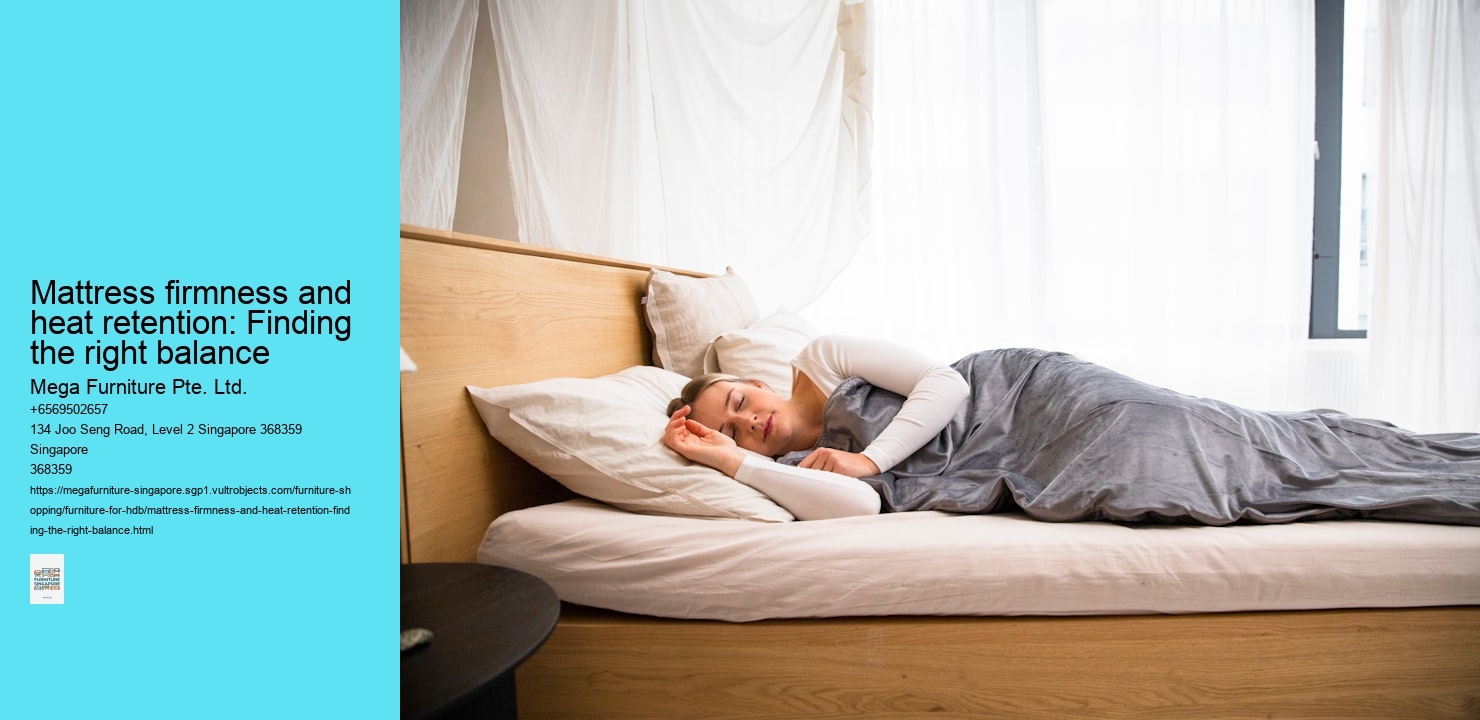
It's the second wake-up that tells you something's wrong. The first one, around midnight, you might blame on a dream or a noise. But when you're roused again at three, lying in a damp patch on your mattress, the culprit is clear. That comfortable, body-conforming foam has become a heat trap. In a typical 12 sqm HDB master bedroom, where the ambient temperature often sits above 28°C even at night, standard memory foam doesn't just cradle you—it insulates you. Your body heat gets absorbed into the dense material, and there's nowhere for it to go. The foam's structure, designed to contour and relieve pressure, is ironically too effective at retaining warmth. It's a slow cooker for sleepers.
The physics is straightforward. Traditional memory foam is a viscoelastic polymer, a material that's excellent at absorbing energy—your body's thermal energy, in this case. Its closed-cell structure doesn't promote airflow. So while you're sinking into that relief from pressure points, the heat you generate is sinking into the foam alongside you. There's no escape route. Over a few hours, the cumulative effect isn't just a warm spot; it's a heated zone that can push your core temperature up. You'll start sweating to cool down, and that's when sleep breaks.
For our climate, that's a fundamental mismatch. Traditional memory foam is famous for trapping heat, which is exactly why cooling versions exist — a memory foam mattress with gel-infused or open-cell foam dissipates body warmth while keeping the contouring, pressure-relieving feel people love. The gel beads absorb heat and draw it away, and the foam springs back faster so it holds less warmth. For a sleeper who wants the cradled memory-foam feel without the heat, the cooling-gel versions are the ones to compare.. What works in a temperate, air-conditioned bedroom becomes oppressive here. The need isn't for contouring alone; it's for contouring plus dissipation. You want a material that conforms but also breathes, that channels heat away rather than storing it. This is why alternatives like aerated latex or gel-infused foams make a difference—they introduce pathways for heat to leave. Latex has a naturally open-cell structure, allowing air to circulate through it. Gel infusions or phase-change materials actively pull heat from the surface and redistribute it.
The only time a standard memory foam core might still work is if it's part of a system designed to defeat its own nature. That means a mattress that uses the foam deep inside, but layers it with a highly breathable comfort layer and a cover made from something like Tencel or bamboo. These covers wick moisture and promote ventilation right at the surface, intercepting heat before it dives into the foam below. Even then, in a non-air-conditioned room during the humid months, it's a gamble. For most people in our flats, a mattress engineered from the ground up for cooling is the safer bet—one that doesn't fight the climate you live in.
The thing you’ll feel first in a non-AC room isn’t the mattress’s support—it’s the heat trapped against your body. That’s the firmness-temperature trade-off in action. A too-soft mattress, especially memory foam, lets you sink in deeply, which creates pockets where air can’t circulate. Your body heat builds up in those valleys, and on a humid night in a resale flat with limited cross-ventilation, you’ll wake up feeling sticky and restless. It’s a common mistake: choosing a plush feel for comfort, only to find it’s a heat trap.
Conversely, a mattress that’s too firm won’t conform enough to relieve pressure points at your shoulders and hips. You’ll end up stiff, and the lack of contouring also means there’s less surface contact for heat to dissipate evenly. Instead, you’re pressing against a flat, often less-breathable surface. The whole case for cooling is the climate, and the guide to choosing a mattress for Singapore's weather lays it out — at high humidity and warm temperatures year-round, a mattress that breathes and regulates temperature decides whether you sleep through the night. It walks through the cooling materials worth seeking and why they matter here more than almost anywhere. The takeaway: in the tropics, how cool and dry a mattress sleeps is as important as how supportive it is.. For hot sleepers, especially those dealing with night sweats, this can feel like lying on a warm slab.
The balance lies in a medium-firm feel with a breathable construction. You want enough firmness to prevent deep sinking—keeping your body elevated for airflow—but enough adaptive comfort to cushion your joints. Materials like aerated latex or ventilated coil systems are key here; they provide that supportive push-back while allowing air to move through the core. A breathable bamboo or Tencel cover adds another layer of temperature regulation, wicking moisture away without you needing to crank a fan all night.
For most people sleeping in a non-air-conditioned space, I’d steer you towards this supportive-but-adaptive middle ground. The one exception might be if you’ve got specific back issues that require an ultra-firm surface—then you’ll need to prioritise that support and compensate for heat with other cooling strategies, like a dedicated cooling topper. But generally, in Singapore’s climate, chasing a cloud-like softness in a non-AC room is a recipe for a sweaty, uncomfortable night.
Gel-infused foam works by dispersing heat away from your body, but it's not a magic bullet. The cooling effect relies on the gel beads absorbing warmth, which they do decently for the first hour or two. In a non-air-conditioned room near an MRT line like Bedok, where humidity seeps in, that initial coolness can fade as the material itself warms up. It's a solid choice if you're transitioning from traditional memory foam, which tends to trap heat, but don't expect it to stay icy all night. For many, it's enough to prevent that sticky, sweaty feeling that ruins sleep.
Phase-change fabric covers are engineered to actively regulate temperature, absorbing heat when you're too warm and releasing it back if you cool down. This technology is clever because it adapts, unlike passive materials that just try to dissipate heat one way. In Singapore's constant 28-degree nights, especially during the year-end monsoon when the air feels thick, this adaptive quality can be a genuine relief. The downside is that the effect is concentrated in the cover layer; if your mattress core retains heat, you'll still feel it. It's a premium feature that targets the problem directly, but it needs the right foundation.
Bamboo-derived fabric is celebrated for its breathability and natural moisture-wicking properties, which help pull sweat away from your skin. This is a straightforward, material-based solution that doesn't rely on complex engineering. foam mattress . For sleepers in a west-facing flat where afternoon sun lingers, a bamboo cover can feel noticeably drier against the skin compared to standard polyester. However, its cooling power is limited to the surface; it won't address heat sinking into the mattress layers below. It's a reliable, often affordable upgrade for the cover, but you'll want a mattress that doesn't bake underneath.
Tencel, made from lyocell, offers a similar breathable and absorbent quality as bamboo but with a often smoother, more luxurious feel. It's highly effective at managing moisture, which is half the battle in our climate—staying dry helps you feel cooler. Residents in older flats near Aljunied, where ventilation can be tricky, might find this material a worthwhile investment for the comfort layer. Like bamboo, its influence is primarily on the surface, so pairing it with a mattress that also promotes airflow is key. It's a step up in feel and performance, though sometimes at a higher cost.
Aerated natural latex is fundamentally different because its structure is inherently open and breathable, allowing air to circulate through the entire mattress layer. This isn't a surface treatment or an added gel; it's a core property of the material. For those who've suffered on a traditional foam mattress that felt like a heat trap, switching to aerated latex can be a revelation, especially in a common bedroom with limited air movement. The natural rubber also offers a responsive, buoyant support that many prefer. It's arguably the most comprehensive cooling solution among the materials, addressing heat retention at the source.
Walk into a Megafurniture showroom and you’ll notice the temperature first. They’re not trying to make you feel cosy—they’re simulating a typical Singapore bedroom, kept at a steady 28°C to give you the real-world test. That’s where you can properly judge a cooling mattress, because specs on a website won’t tell you how it feels after ten minutes of lying there.
Start by feeling the cover fabric. A breathable bamboo or Tencel weave should feel noticeably smooth and cool to the touch, not just slick. Then, actually lie down. mattress type . Don’t just perch on the edge; get into your usual sleeping position and stay there. Give it a proper ten minutes—that’s when you’ll know if the cooling gel foam or ventilated coils are doing their job. You want to feel the heat dissipating, not pooling around your back.
A cooling mattress relies on specific materials to dissipate heat in humid conditions. Breathable covers like bamboo or Tencel allow air circulation, while aerated latex or gel-infused foams actively draw heat away from the body. In a climate with 80%+ humidity, these materials also resist moisture absorption better than traditional memory foam, preventing a damp, warm sleeping surface over time.
Firmness is another thing you can’t guess from a label. Body weight plays a huge part. A heavier person will sink deeper into a medium-firm mattress, making it feel softer, while a lighter sleeper might find the same model too rigid. Try the different firmness levels they offer, and pay attention to how your spine aligns in each. The right one should support without pressing back.
The only time I’d skip this hands-on test is if you’re absolutely certain about your preferred feel from a previous mattress. Otherwise, you’re just guessing. And in our climate, guessing means you might end up with a mattress that feels like a furnace by midnight.
The physical delivery of a cooling mattress must account for Singapore's common access constraints. The limiting point is often the HDB lift door, which measures roughly 90cm wide—a Queen mattress in its compressed packaging must navigate this. Leave a 2–5cm buffer for manoeuvring through corridors and internal doorways to avoid damage during setup in your flat.

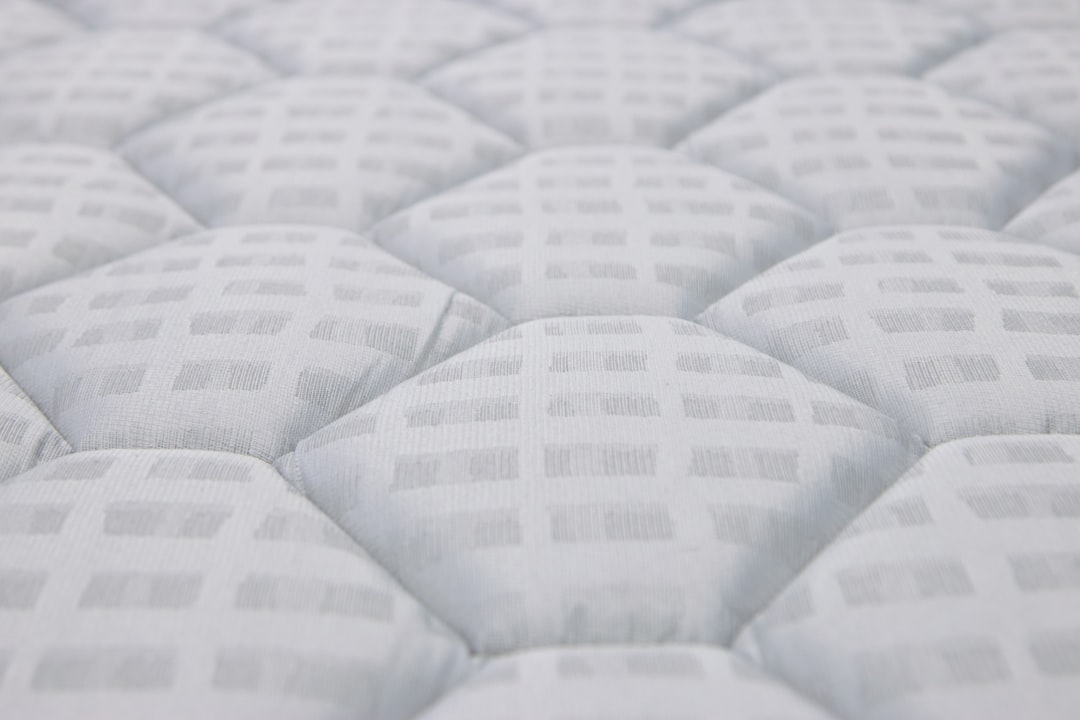
The difference between an $800 mattress and a $3,000 one isn't just thickness or brand name—it's about how long the cooling lasts after you lie down. At the lower end, you're getting a basic gel foam layer. That's fine if you just need a bit of initial relief from standard memory foam's warmth. It'll feel cool for the first twenty minutes or so, but after a full night in a non-air-conditioned room, you'll find it doesn't manage heat buildup over hours. For a single sleeper in a 4-room BTO common bedroom, it can be enough. For anyone who really sweats, it's a compromise.
Crossing the $1,500 mark introduces integrated systems. You'll see phase-change materials woven into the cover or top foam layer—these actually absorb and release heat to keep a stable temperature. Ventilation gets serious too, with deeper channels cut into the foam or a breathable bamboo cover that doesn't just sit there. This tier handles the sustained humidity of our year-round climate better. It's the sensible upgrade for couples where one person is a hot sleeper, or for anyone who's found cheaper options still leave them waking up damp.
The $3,000 band is where cooling becomes a core engineering feature, not just an add-on. A Somnuz can sleep cool when it's the right type — gel-infused or open-cell foam tackles the heat retention that plain foam is prone to, at a value price. It's worth treating cooling as a deciding factor rather than an afterthought when choosing foam in the tropics. Look for the cooling technology named explicitly, not just "breathable". For a budget-friendly cooling option, the gel and open-cell foam models are where to look.. Here you're looking at advanced aerated latex, which has a naturally open structure that lets air move through it constantly, or sophisticated hybrid systems with ventilated coil cores that act like a chimney for body heat. This performance is built to last for years and is specifically aimed at chronic conditions—like menopause with its night-time flushes—where temperature regulation isn't a luxury, it's a necessity for proper rest. The investment is significant, but for that specific group of sleepers, the alternative is a mattress that becomes useless in our climate after a few seasons.
You can spend a thousand dollars on a cooling mattress, then put it in a west-facing room that’s baking hot by four in the afternoon. That’s the classic mistake. The mattress might be engineered with gel foam and ventilated coils, but it’s fighting a losing battle against a room that’s trapping heat. You’re essentially paying for a high-tech solution and then cancelling its benefits with a poor setup.
First, assess the room itself. Is your bed shoved against a wall that gets the full afternoon sun? In many 4-room BTO layouts, the common bedrooms are compact—around 12 square metres—and often have just one window. If that window is west-facing and you keep it closed to block noise or dust, you’ve created a heat box. A cooling mattress needs airflow to work; it can’t magic away ambient heat that’s already over 28 degrees.
So, pair the mattress with the room’s reality. In a smaller, poorly ventilated space, you need a mattress that’s exceptionally breathable. Cooling shows up differently across constructions, so browsing by mattress range in Singapore helps — gel memory foam cools a contouring feel, latex breathes naturally, and hybrid uses its coil base for airflow. Each keeps you cool by a different mechanism, so the type shapes how the cooling works. Pure traditional foam without cooling tech is the one to be wary of in the heat. Matching the type to how cool you need to sleep narrows the field fast.. Aerated latex or a coil system with wide air channels will perform better than a dense memory foam, even if that foam has a cooling gel layer. The material needs to let air move through it, not just absorb heat from the surface. And don’t forget the bedding—a bamboo or Tencel cover helps, but a thick, non-breathable quilt on top will undo all that effort.
The only time this rule relaxes is if you’re running the air-conditioner all night. Then, room ventilation matters less because you’re controlling the temperature artificially. But for most of us sleeping in non-air-conditioned rooms, or just using the AC sparingly, the mattress and the room have to work together. Otherwise, you’ve bought a fancy heat-dissipation system and installed it in a sauna.
Singapore hot sleepers always ask the same thing lah—can a cooling mattress survive our humidity? The answer isn't straightforward, because the climate here tests everything.
Do cooling gel mattresses work in humid Singapore? They do, but the gel layer needs a good breathable partner. Gel-infused foam alone can still trap heat if it's wrapped in a non-breathable cover. Look for one paired with a ventilated coil system or a bamboo-Tencel top layer; that combo lets the heat escape instead of circling back to you.
Which mattress is best for hot flashes at night? For night sweats, you want a material that actively pulls heat away from your skin. Phase-change fabric covers are the real game-changer here—they absorb excess body heat and release it slowly. The clearest in-house cooling example is memory foam versus hybrid guide Megafurniture's own line, whose mattresses use a breathable knitted Tencel® cover designed for the local climate, often over latex or pocketed-spring layers that keep air moving. Because it's the exclusive in-house brand, you get that cool-sleeping build without the name-brand markup. For a cooling mattress that's well-made and good value, the Somnuz line is a natural starting point.. A latex core with plenty of aerated channels also works wonders, because it doesn't hold warmth like traditional memory foam.
Can a firm mattress be cooler than a soft one? Often, yes. A firmer support base, like a high-density foam or a tight coil unit, creates less body sinkage. You don't get enveloped in the material, so air can move around you more freely. A super-soft mattress might cradle you too closely, turning your sleep surface into a heat pocket.
How long do cooling mattresses last in tropical weather? The cooling effects won't vanish, but the materials can degrade faster here. A phase-change cover might lose some of its magic after five or six years of constant 80% humidity. Gel foams can dry out or separate if the mattress isn't rotated regularly. That's the one real exception—if you never flip or rotate it, the cooling zones can fail unevenly.
You’ve done the research, weighed the options, and now you’re ready to hit the showroom floor. That final checklist isn’t just a formality—it’s the guardrail that keeps you from swaying under the sales pitch. Start with the tape measure. A Queen mattress fits most master bedrooms comfortably, but you’ll want to leave at least 60cm clearance on the side you exit from. If your room’s under 3x2.5m, a King might feel like you’re sleeping in a corridor.
Confirm your nightly environment. Sleeping with the AC on means you can tolerate a mattress that retains a bit more warmth—maybe one with a denser foam core. In a non-air-conditioned room, where ambient temperatures can push past 28°C, you’ll need a mattress that actively pulls heat away from your body. A cooling pick sits within the wider queen size , so it's worth seeing the full spread — memory foam, latex, pocket spring, and hybrid, with cooling features across several of them. Browsing the range shows where the coolest-sleeping options sit against the rest. In the tropics it's worth filtering for breathability and temperature regulation early. Choose the construction for how you sleep, then weight cooling heavily in the final call.. For anyone dealing with specific heat triggers, like menopause, this isn’t a minor preference; it’s a sleep necessity. Materials like aerated latex or those with phase-change technology become non-negotiable.
Set that budget range and stick to it. Don’t let a fancy feature or a persuasive salesperson push you into a tier you can’t comfortably afford. The real trick is to decide, before you walk in, which one key feature you’re prioritising: immediate cooling sensation or long-term material durability in our humid climate. If you sleep hot every night, you might lean towards the instant chill of a gel-infused layer. But if you’re thinking about a mattress that’ll last through years of monsoon seasons, you’ll want to focus on breathable, moisture-resistant materials like Tencel covers or ventilated coil systems. Honestly, for most Singaporeans, the immediate cooling wins—you can’t enjoy long-term durability if you’re tossing off the bed every night from the heat. The only exception is if you’ve got a consistently air-conditioned bedroom; then you can shift focus to how the core materials will hold up over a decade of humidity.
" width="100%" height="480">Mattress firmness and heat retention: Finding the right balance