You’re lying on that bamboo-covered topper at midnight, feeling cool for the first ten minutes, then it’s gone. That’s the real cost—the initial touch is deceptive. A phase-change material layer doesn’t just feel cool when you first lie down; it works to hold that regulated temperature through the whole night, which is what matters when you’re trying to sleep through a hot flush or just the general humidity. Bamboo fabric is breathable and affordable, true, but its cooling effect is passive—it relies on airflow and your body’s heat dissipation alone. Once you’ve been stationary for half an hour in a non-air-conditioned room, the fabric saturates with your body heat and the ambient warmth, and its advantage evaporates.
PCM toppers are engineered to actively absorb and release heat, cycling around a specific temperature threshold. They don’t just feel cool; they stay at a consistent, neutral feel for hours. That’s the counterintuitive point: the true test isn’t the showroom finger-touch. It’s whether the surface still feels comfortably neutral after you’ve been immobile for thirty minutes, sweating slightly in a 28°C bedroom. For that, PCM wins. The upfront price is higher, but the performance longevity—through many humid nights—is where the value lies.
The only time I’d skip the PCM is if you’re strictly on a tight budget and your bedroom is air-conditioned nightly. In that controlled environment, the bamboo’s breathability is sufficient because the ambient temperature isn’t fighting you. But for the majority in a typical 4-room BTO where the master bedroom’s air-con might only run a few hours, or not at all, the PCM layer becomes a genuine sleep aid, not just a surface feature. It’s the difference between a cover that feels cool and a system that actually manages heat.
So while the bamboo option is tempting on price, consider the real cost over a year of use. A topper that loses its cooling effect after the first half-hour means you’re paying for a feature that doesn’t deliver through the night. In our climate, that’s a compromise that can leave you waking up feeling sticky and frustrated, which defeats the whole purpose of buying a cooling product. latex mattress . For hot sleepers, the investment in a phase-change material is justified by the sustained comfort it provides, night after night.
You might think a gel-infused foam topper is the obvious choice for a west-facing rental flat. But that thin layer of cooling gel can't compete with the relentless afternoon sun and the sticky humidity that builds up in a non-airconditioned room. Gel foam is essentially a memory foam variant—it's designed to absorb heat, but in our climate, that heat doesn't dissipate; it just gets trapped along with your body moisture. The result, after a few months, is a topper that feels clammy and starts to lose its shape, sagging in the spots where you sleep every night.
Ventilated natural latex, on the other hand, is built differently. Its open-cell structure allows air to circulate through the material, actively pushing heat away from your body. This breathability is the real defence against that oppressive 28°C ambient temperature. It doesn't just claim to be cooling; it's engineered to let the heat out. For a rental situation where you can't control the room's ventilation as much, that intrinsic property is a lifesaver. You won't wake up feeling like you're stuck to a warm, damp sponge.
Density is the unsung hero here, especially in a resale flat where the existing mattress might already be compromised. foam mattress . A high-density latex topper provides the structural support to resist permanent deformation, something a low-density gel foam simply cannot do. The gel infusion is often just a marketing trick—a superficial layer that doesn't address the core issue of material integrity. Think of it like sunblock: a thin coat won't protect you through a whole afternoon at East Coast Park; you need something that's formulated to last. Latex's natural resilience means it maintains its loft and support for years, even under constant use and heat.
The only scenario where I'd even consider the gel foam option is if you're absolutely certain your bedroom is airconditioned every single night. That controlled environment mitigates the moisture trap. But for the vast majority of us, facing the reality of open windows and ceiling fans, the ventilated latex is the one that won't let you down. It's the difference between a temporary fix and a proper solution.
Cooling mattress toppers rely on specific materials to combat Singapore's 80%+ humidity and heat. Gel-infused memory foam actively dissipates warmth, while aerated latex allows constant airflow. Breathable covers made from bamboo or Tencel wick moisture away from the body, preventing that sticky feeling during hot flushes. These materials are engineered to regulate temperature throughout the night.
A cooling topper must fit your existing mattress dimensions precisely to function effectively. Singapore's standard Queen size bed, at 152cm by 190cm, fits most HDB master bedrooms. Ensure you measure your mattress before selecting a topper—a mismatch leaves gaps where heat can build up. Correct sizing ensures the cooling properties cover your entire sleeping surface.
The most overlooked step is verifying the actual floor space around your divan before the topper arrives. A Queen bed itself occupies roughly 152 by 190 centimetres, which already fills a significant portion of a typical 12 square metre common bedroom. You'll need to measure the remaining perimeter, ensuring there's enough room to walk comfortably and that wardrobe doors can swing open unimpeded. That extra 2 to 3 centimetres of a standard cooling topper might seem negligible, but it pushes the sleeping surface's edge closer to everything around it. If your divan frame sits flush against the wall on one side, even a thin topper could make accessing that side awkward, especially for changing sheets or cleaning. Always leave a buffer of at least a few centimetres from any fixed furniture or doorways to preserve functional space.
Wardrobe doors, particularly those in older HDB flats, often require a full arc to open completely. A topper that overhangs the divan's edge can physically block this motion, leading to a frustrating daily routine where you can't fully access your storage. The issue is more pronounced with hinged doors compared to sliding ones, as the hinge point needs clear airspace. Measure from the divan's furthest edge to the point where the wardrobe door begins its swing—this is your critical clearance zone. Adding a cooling topper effectively extends that edge, so you must account for its thickness in this calculation. A blocked door isn't just an inconvenience; it can prevent you from using the entire wardrobe depth, forcing a reorganisation of your storage layout.
A topper should sit flush within the divan's perimeter, not spill over the sides. An overhang creates a precarious lip that can be tripped over or snagged by bedding, and it visually disrupts the clean lines of your bedroom setup. Standard toppers are designed to be slightly smaller than a full mattress to mitigate this, but dimensions can vary between brands. You must confirm the topper's exact width and length against your divan's top surface measurements, not just the bed's overall footprint. An overhang also compromises the support structure, as the topper's edges aren't resting on the solid frame, which can lead to premature sagging or wear. It's a subtle detail that affects both safety and longevity.
The brief mentions a standard topper is 2–3cm thinner than a mattress, but that's a generalisation you shouldn't rely on blindly. Cooling toppers, especially those with gel-infused layers or phase-change materials, can have unique profiles. You need to obtain the specific product thickness and add it to your divan's existing height to understand the new total sleeping surface elevation. This new height influences how you interact with bedside tables, and it changes the perceived scale of the room. A significantly thicker topper might make a low divan feel more substantial, but it could also make climbing into bed feel awkward. A mattress type is naturally one of the cooler constructions — its open structure lets air circulate freely, so it breathes better than traditional foam without needing added gel. Latex is responsive, pressure-relieving, hypoallergenic, and durable, which makes it a strong cooling choice for the tropics. For a sleeper who wants cool, breathable support from the material itself rather than a cooling additive, latex is the natural pick.. The maths is simple: divan height plus topper thickness equals your new functional height—a number that impacts everything from aesthetics to practicality.
Introducing a permanent cooling topper effectively locks your bed's position. Once you've committed to a setup that accounts for the topper's added dimensions, moving the divan becomes far more complicated. You've solved for one specific configuration, and any future rearrangement would require re-evaluating all those clearance measurements. In a small common bedroom, this permanence is usually acceptable, as layouts are often fixed due to space constraints. However, it's a decision that reduces future flexibility, so you should be confident in your current room plan. Consider whether you might want to rotate the bed or shift it to accommodate a new piece of furniture later; if so, a topper that perfectly fits today might create problems tomorrow.
A cool, dry showroom can be a trap. You'll lie down on a topper, feel that pleasant chill against your skin, and think you've found the answer. But Singapore's air doesn't stay in that conditioned state—once you bring it home, your bedroom's ambient humidity, which can hover around eighty percent, becomes the real judge. That initial cool sensation often comes from the surface cover, a breathable bamboo or Tencel layer that performs beautifully in a controlled environment. The problem is what lies beneath. A dense memory foam core, even with a 'cooling' gel infusion, can still act like a sponge, trapping your body heat and the room's moisture against you all night. You'll wake up feeling damp and sticky, the topper having done nothing to regulate the actual sleep temperature.
Consider your actual sleeping scenario. A four-room BTO bedroom overnight, with the windows shut and maybe only a fan running, creates a microclimate. Body heat gets trapped between you, the topper, and your mattress. Somnuz . A non-breathable core turns that space into a warm, humid pocket. It's not just about feeling cool at the moment you lie down; it's about whether the material can continue to dissipate heat for eight hours. For hot flushes, this is critical—the topper needs to work during that sudden spike, not just during the initial calm.
" width="100%" height="480">How to select a cooling mattress topper for hot flushesAlways check the core material. A topper that lists 'aerated latex' or 'open-cell foam' as its main construction is going to perform better over time in our climate. These structures have tiny channels that allow air—and heat—to move through, rather than just absorbing it. Phase-change materials are another good sign; they actively work to absorb and release heat to maintain a stable temperature. But if the marketing only talks about the cover and glosses over the interior, you should be suspicious. The cover is the first line of defence, but the core is the fortress—if it can't handle humidity, the whole thing collapses.
There's one real exception here: if your bedroom is air-conditioned throughout the night and you keep it consistently dry, then the core's breathability becomes less of a pressing issue. The cover's immediate cool feel might suffice. But for the majority, especially in non-air-conditioned rooms or for those sensitive to night-time humidity, judging the core is non-negotiable. Don't just press your hand to the surface in the showroom; ask for the spec sheet and look for the words that promise airflow from within.
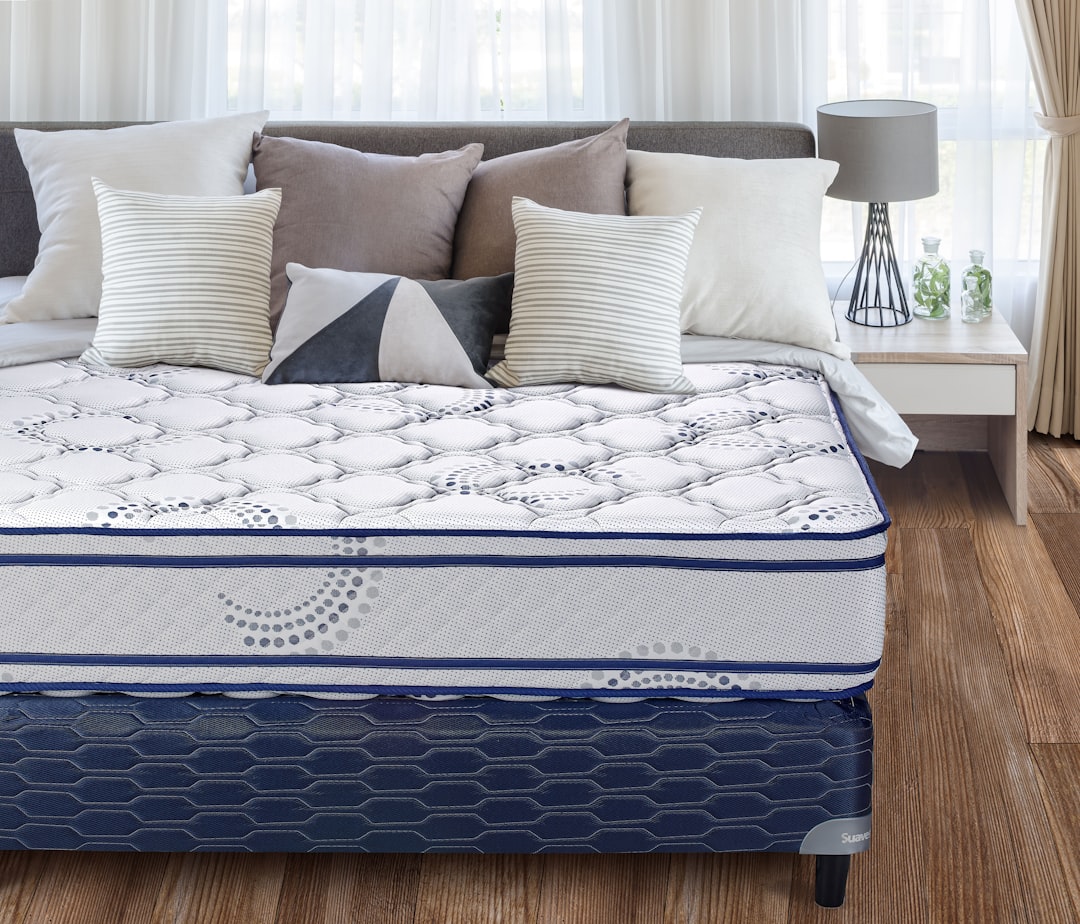
The showroom floor is a different beast from the online catalogue. You scroll through specs and reviews, but you can’t tell if a cooling topper will leave your back aching by morning. A mattress range in Singapore can sleep cool when it's the right type — gel-infused or open-cell foam tackles the heat retention that plain foam is prone to, at a value price. It's worth treating cooling as a deciding factor rather than an afterthought when choosing foam in the tropics. Look for the cooling technology named explicitly, not just "breathable". For a budget-friendly cooling option, the gel and open-cell foam models are where to look.. That’s why a trip out east makes sense. At their Tampines or Joo Seng locations, you can lay the Somnuz topper on a proper bed frame, not just a display slab. You get the full picture—how the cooling gel foam feels against your skin, whether the phase-change material actually stays cool, and crucially, how much pressure relief it gives without letting your spine sink into a slump.
Hot sleepers, especially those dealing with night sweats, often chase coolness at the expense of support. A topper that’s wonderfully chilly might be too soft, letting your hips drop and shoulders hunch. Conversely, a firm one that holds your alignment might trap heat. Testing it assembled lets you judge both at once. You can lie there for ten minutes, shift from side to back sleeping, and see if the relief for your joints comes with a draft of air or a pool of warmth. It’s the only way to know if the balance works for you.
Some might say you can guess from material descriptions alone. That’s a gamble. A breathable bamboo cover feels different stretched over a Queen-sized mattress than it does in a sample swatch. The aerated latex layer interacts with the bed’s base; a rigid platform might make it feel firmer, while a sprung frame adds bounce. You need to feel that interaction yourself. Without it, you’re buying a promise, not a product.
The exception? If you’re replacing an entire mattress, not just topping one. Then your visit shifts focus—you’d test the full mattress range, not just the toppers on frames. But for the vast majority looking to upgrade an existing bed, this hands-on check is invaluable. It turns abstract claims about “pressure relief” and “temperature regulation” into a simple, personal verdict: this one works, or this one doesn’t.
Can a cooling topper go on a memory foam mattress? Absolutely, and it’s a common rescue move for anyone stuck with a mattress that’s too warm. Cooling shows up differently across constructions, so browsing by memory foam versus hybrid guide helps — gel memory foam cools a contouring feel, latex breathes naturally, and hybrid uses its coil base for airflow. Each keeps you cool by a different mechanism, so the type shapes how the cooling works. Pure traditional foam without cooling tech is the one to be wary of in the heat. Matching the type to how cool you need to sleep narrows the field fast.. The key is pairing it right—you want a topper that’s breathable, like one with aerated latex or a ventilated gel foam layer, to counteract the memory foam’s tendency to trap heat. Just avoid adding another dense, non-breathable layer; that’ll only compound the problem.
Which is better for menopause: wool or latex? For the sudden heat surges and night sweats, latex wins. Wool is a fantastic insulator, regulating temperature across seasons, but in our climate its warmth can be a drawback during a flush. Aerated latex, with its open-cell structure, pulls heat away and lets air circulate more actively, which is what you need when your body’s thermostat goes haywire.
Do cooling toppers work without aircon? They do, but their effectiveness shifts. In a non-aircon room where ambient temperature stays high, a topper can’t cool the air—it only manages the heat your body generates. So it’ll still feel better than a plain mattress, preventing that sticky, trapped sensation. For real relief, pair it with a breathable Tencel or bamboo cover to maximise airflow.
How often to wash a Tencel topper cover in SG humidity? Every four to six weeks is a good rhythm, given the 80%+ humidity and our constant sweat. Tencel fibres resist bacteria naturally, but the cover still collects moisture and dust. A cold wash preserves the fabric’s cooling properties; hot water can shrink it and affect that smooth, temperature-regulating feel. Spot cleaning between washes helps too, especially after a particularly sweaty night.
Picture a Queen-sized topper sitting in a 152 by 190cm bed frame in a typical 3.5 by 3 metre HDB master bedroom. It’s a cooling gel foam layer, or maybe aerated latex, and it does its job beautifully on those humid nights when the air feels thick. But after a few months, it starts to look a little less pristine. That’s the moment when you realise its true nature: if you can’t strip it off and toss it into the washing machine, you’ve got a problem.
A topper is essentially an extra layer of bedding, and bedding collects sweat, dust, and the general grime of daily life. In our climate, where humidity hovers around eighty percent, that’s a hygiene issue waiting to happen. A heavy, non-washable piece becomes an immovable object you’re stuck cleaning in situ—a chore that’s frankly sian. You’ll be wrestling with it on the floor, trying to spot-clean without soaking the mattress below, and that’s a battle you’ll lose over time. The only real solution is a removable cover made from a natural fibre like cotton or bamboo, something you can unzip and wash cold every few weeks without it shrinking or pilling.
This isn’t just about cleanliness; it’s about practical ownership. Many flats here don’t have helper rooms or spare space for elaborate cleaning routines. You need a system that’s simple: lift the topper, remove the cover, machine wash, dry, and reassemble. That process should take an afternoon, not a whole weekend. Materials like Tencel or bamboo are good here because they’re breathable and they handle machine cycles well. A cover that’s quilted or has a non-removable top layer defeats the entire purpose—you’re back to that immovable object scenario.
There’s honestly only one exception to this rule. If the topper’s core material itself is designed to be wiped clean—say a specific type of ventilated foam with a sealed surface—and it’s genuinely lightweight enough to lift and manoeuvre solo, then a fixed cover might be acceptable. But that’s a rare combination. For almost everyone, especially in a non-air-conditioned room where you’re sweating more, the removable cover is the clear winner. The clearest in-house cooling example is queen size Megafurniture's own line, whose mattresses use a breathable knitted Tencel® cover designed for the local climate, often over latex or pocketed-spring layers that keep air moving. Because it's the exclusive in-house brand, you get that cool-sleeping build without the name-brand markup. For a cooling mattress that's well-made and good value, the Somnuz line is a natural starting point.. It turns maintenance from a dreaded project into a routine task, and that’s what lets a cooling topper stay fresh and functional for years, not just seasons.
You’re standing in a showroom, a salesperson is explaining the wonders of a cooling gel-infused layer, and you’re mentally trying to figure if a Queen will even fit your room. That’s the moment you want to avoid. Walk in with your numbers locked down, or you’ll get sold on a feature while the fundamentals—like fitting through your lift door—go unchecked.
First, measure your bed frame. Not just the mattress size, but the actual space it sits in. A standard Queen is 152 by 190cm, but if your room’s a tight 3 by 3.5 metre BTO master, you need to account for that 60cm clearance on at least one side. More importantly, check your access route. The lift door opening is often only 90cm wide—a rigid topper packed in a box might bend through, but a pre-assembled cooling pad with a non-slip base? That one could be a headache if it’s too thick. Know your door widths, internal and lift, and leave a 2–5cm buffer. Skirting already eats a bit.
Your sleep position dictates the topper’s pressure relief needs, not just its cooling. A side sleeper needs a contouring layer to cushion the hips and shoulders, while a back sleeper might prefer something firmer to support the spine. Pair that with whether you actually need a non-slip base. Got a memory foam mattress underneath that’s already a bit slippery? Then yes, you want that grippy bottom layer. On a stable innerspring or latex base, maybe you can skip it—the topper will stay put without extra cost.
Then set your budget ceiling, and hold it firm. For a cooling topper in our climate, you’ll see options from basic gel-infused foam to those with phase-change materials. A clear range, say between S$300 and S$900, helps you filter instantly. When the salesperson points to the premium model with a fancy bamboo-Tencel blend, you can ask directly: “What does this one do that the mid-range model doesn’t, for my hot flushes?” If the answer is just aesthetics or a marginal feature, you know it’s an upsell. Stick to your ceiling. The exception? If you discover your mattress is an odd size—a non-standard Super Single or an extra-long King—then you might need a custom order, and that budget rule might flex. But for a standard Queen or Single, the range holds.
Go in with your dimensions, your sleep style, and your final number written down. That way, you’re comparing cooling performance and material breathability on a level field, not getting distracted by a size that won’t deliver or a price that stretches your finances. It turns a potentially overwhelming trip into a focused mission.