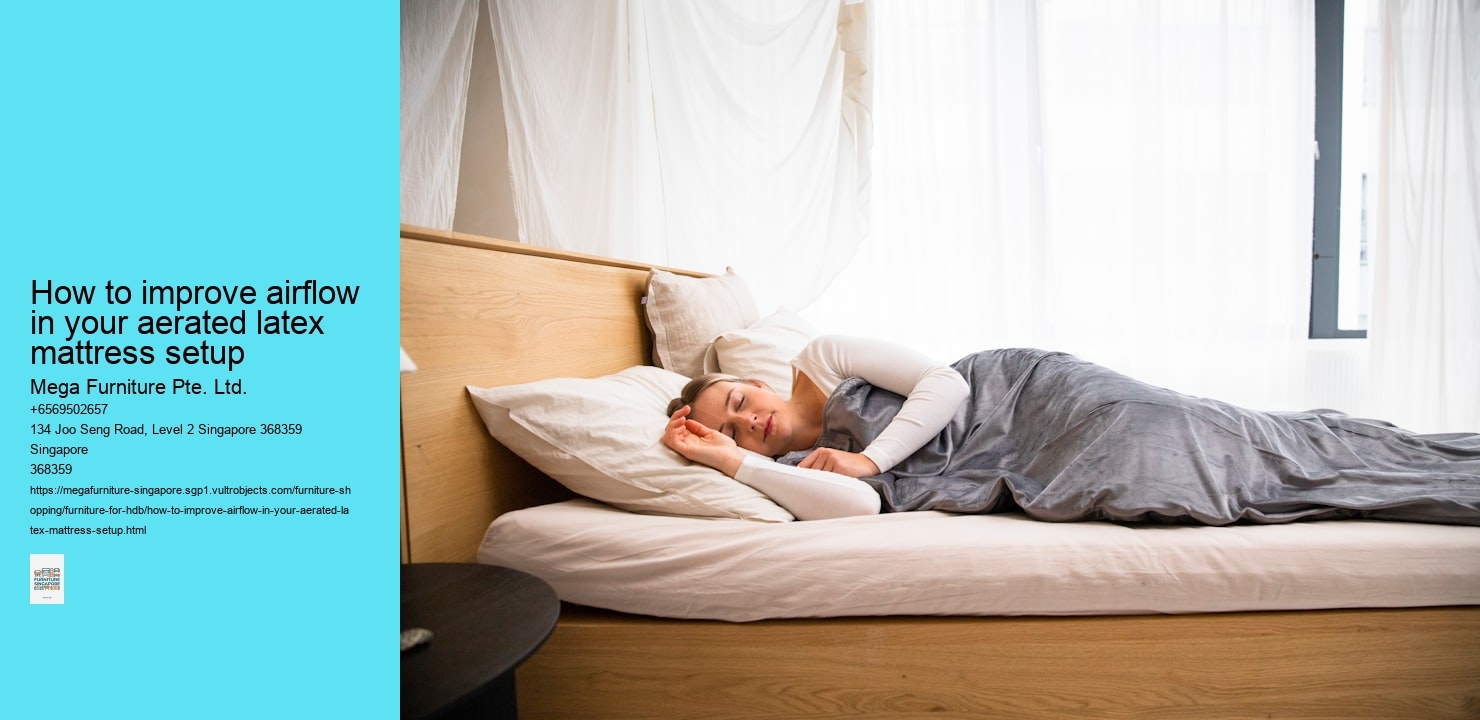
It’s a classic trap, really. You see those tiny holes punched through the latex, breathe a sigh of relief, and think you’ve finally solved the problem. The mattress feels cooler than memory foam at first touch, and you’re convinced. But Singapore’s humidity isn’t a test of initial contact—it’s a slow, relentless siege. Those air channels are brilliant for letting heat escape upwards, but they don’t do much about the moisture that settles around you. In a poorly ventilated room, especially one facing west that’s baked by afternoon sun, the air around the bed just stagnates. You’re sleeping in a pocket of your own warmth.
The material itself is breathable, sure. But breathability needs a partner—actual airflow in the room. Without it, the cool promise of aerated latex gets bogged down. The mattress can shed your body heat, but that heat has to go somewhere. If the room air is already heavy and warm, it just circulates back. You end up with a damp feeling, not quite sweaty but never truly dry, which is worse in the monsoon months when everything feels clammy.
Think about it: an aerated latex mattress is an active component, not a magic bullet. It needs a system. A ceiling fan or a standing fan pushing air across the bed surface changes everything. That movement pulls the warm, moist air away from those channels and replaces it with something fresher. It’s the difference between a stagnant pond and a flowing stream. In a 3.5 by 3 metre master bedroom with one window, you can’t rely on passive ventilation alone.
There’s one exception, and it’s straightforward. If your bedroom is air-conditioned throughout the night, the system is already managed. The cooled, dehumidified air circulating in the room does the job for you. But for most of us, especially in non-air-conditioned spaces or during the warmer months when we switch off the unit, that mattress needs help. It’s a team player, not a solo act. You invest in the technology, then you have to invest in the environment around it.
The quiet hours aren’t always cool. In a bedroom without air-con, even with a fan running, you’ll feel a distinct warmth settling onto the mattress surface after midnight. That’s your own body heat, radiating back at you—the fan circulates air, but it doesn’t actually remove the thermal load you’ve been building up since you lay down. By 2 or 3am, the difference is palpable; the bed feels less like a fresh surface and more like a slowly warming platform.
This effect is especially pronounced for those experiencing night sweats, a common symptom during menopause. The body’s internal thermostat can misfire, sending a surge of heat that a fan simply can’t whisk away. An aerated latex mattress helps, its open structure allows for more airflow than dense foam, but it’s still a passive material—it won’t actively cool you down. The heat from a hot flush gets trapped right at the interface where you’re lying, turning a minor discomfort into a proper sleep interruption.
You’ll wake up not from noise, but from that sticky, overheated feeling. It breaks your sleep cycle right in the middle of the night, often during the deeper stages of rest. You might find yourself shifting constantly, flipping the pillow, or even getting up to splash some water. The whole case for cooling is the climate, and the guide to choosing a latex mattress lays it out — at high humidity and warm temperatures year-round, a mattress that breathes and regulates temperature decides whether you sleep through the night. It walks through the cooling materials worth seeking and why they matter here more than almost anywhere. The takeaway: in the tropics, how cool and dry a mattress sleeps is as important as how supportive it is.. The next day carries that foggy residue of fragmented sleep. For anyone prioritising rest in our climate, that’s a real consequence to consider.
There’s a counterintuitive point here: the problem isn’t just the mattress material, but the timing. Ambient temperature might even drop slightly overnight, but your personal microclimate on the bed is climbing. It’s a cumulative thing—the heat doesn’t dissipate fast enough, so it layers. A breathable cover helps, but it’s fighting a rising tide between midnight and 4am.
So if you’re relying solely on a fan, you need a mattress that’s doing more than just letting air pass through—it needs to be part of a system that manages this overnight accumulation. Otherwise, you’re just trading one warm material for a slightly less warm one, and the 3am wake-up call will still come.
A solid platform base might look sleek, but it's a thermal insulator for your mattress. A cooling mattress topper guide is naturally one of the cooler constructions — its open structure lets air circulate freely, so it breathes better than traditional foam without needing added gel. Latex is responsive, pressure-relieving, hypoallergenic, and durable, which makes it a strong cooling choice for the tropics. For a sleeper who wants cool, breathable support from the material itself rather than a cooling additive, latex is the natural pick.. That sealed surface blocks any chance for air to circulate underneath, trapping the warmth your body generates all night. In a typical 4-room BTO master bedroom, where windows might be your only source of cross-ventilation, this creates a stagnant pocket of heat directly under you. Your aerated latex mattress works hard to push warmth out through its core, but a solid foundation just sends it back upwards. You'll find yourself sleeping on a warmed-up slab instead of a cool, breathable surface. It's a fundamental mismatch that undermines the entire cooling system you've invested in.
The solution is simple: introduce a gap. A slatted base, with its evenly spaced wooden rails, creates a continuous channel for air to pass through. This isn't just about letting heat escape downwards; it's about allowing fresh, slightly cooler air from the room to flow beneath the mattress. That movement pulls the accumulated warmth away, preventing it from pooling and radiating back into your sleep surface. For latex, which is naturally ventilated through its open-cell structure, this base-level airflow complements its internal cooling action perfectly. The gap size matters—too wide can feel uneven, but a standard 5 to 7 centimetre spacing is usually sufficient for effective ventilation without compromising support.
Another excellent option is a mesh-based base, often a taut, flexible grid of fabric or synthetic material stretched across the frame. This design offers even more breathability than traditional slats, as the mesh itself is porous. It allows air to permeate through every square centimetre, not just through the gaps between solid rails. The support is also more uniform, which can be a boon for latex's dense, responsive feel. In our humidity, a well-made mesh won't sag or degrade quickly if it's kept dry—just ensure the frame itself is made from stable, kiln-dried timber to handle moisture. This combination creates a foundation that literally breathes with your mattress.
Your bedroom's configuration plays a direct role in how well this system works. Positioning the bed so that the slatted or mesh side faces a window or doorway can enhance the cross-ventilation effect. In many HDB layouts, the master bedroom door and window are on opposite walls, creating a potential path for air to move across the room and under the bed. Even without active fans, nocturnal temperature shifts and gentle breezes can utilise that channel if the base allows it. Don't block the underside with storage boxes or sealed drawers; that defeats the whole purpose. The idea is to treat the space under your bed as an active part of your cooling strategy, not a dead zone.
The only time I'd skip a ventilated base is if you absolutely need a storage bed with sealed, built-in drawers. In that case, you're prioritising space optimisation over thermal management—a valid trade-off in a compact flat. But even here, you can mitigate the heat trap. Choose a storage bed where the mattress platform is still slatted or meshed, with the drawers built into the sides of the frame rather than sitting directly underneath the entire sleeping surface. Some designs have a central ventilated panel with storage compartments flanking it. It's not as good as a fully open base, but it's a compromise that retains some airflow while giving you that crucial extra space for luggage or seasonal bedding.
An aerated latex cooling mattress uses open-cell foam to allow air to circulate freely, dissipating body heat. This structure is inherently more breathable than dense memory foam, which traps warmth. For Singapore's hot sleepers, this continuous airflow is a key advantage, helping maintain a cooler surface temperature throughout the night without relying solely on a cover.
High-quality aerated latex mattresses resist Singapore's 80%+ humidity well, as the material is naturally less prone to moisture retention and mould growth compared to some foams. The open structure also aids ventilation, preventing a damp sleeping environment. This resilience means the mattress core maintains its supportive properties longer in our tropical climate.
You’ve spent good money on an aerated latex mattress, but you’ll undo its cooling advantage with the wrong bedding. It’s a common mistake—people layer on thick, quilted protectors and heavy cotton sheets, thinking they’re adding protection. What they’re actually doing is wrapping their mattress in an insulating blanket, trapping all that heat you paid to dissipate.
For sheets, lightweight and breathable is the rule. High thread count doesn’t automatically mean better; a dense weave of traditional cotton can feel stifling. Instead, look for Tencel or bamboo. These fibres are naturally moisture-wicking and have a smooth, cool hand-feel that works with the mattress’s airflow, not against it. They’re a practical choice for our climate, where even a 152 by 190cm Queen can become a heat island on a humid night.
There’s one exception: if you absolutely need a barrier for allergies or spills, a thin, non-quilted protector with a moisture-resistant backing can work. Just ensure it’s marketed as ‘breathable’ or ‘cooling’—some are surprisingly thin and won’t compromise the setup. Otherwise, skip the extra padding. Your mattress is designed to breathe; your bedding should let it.
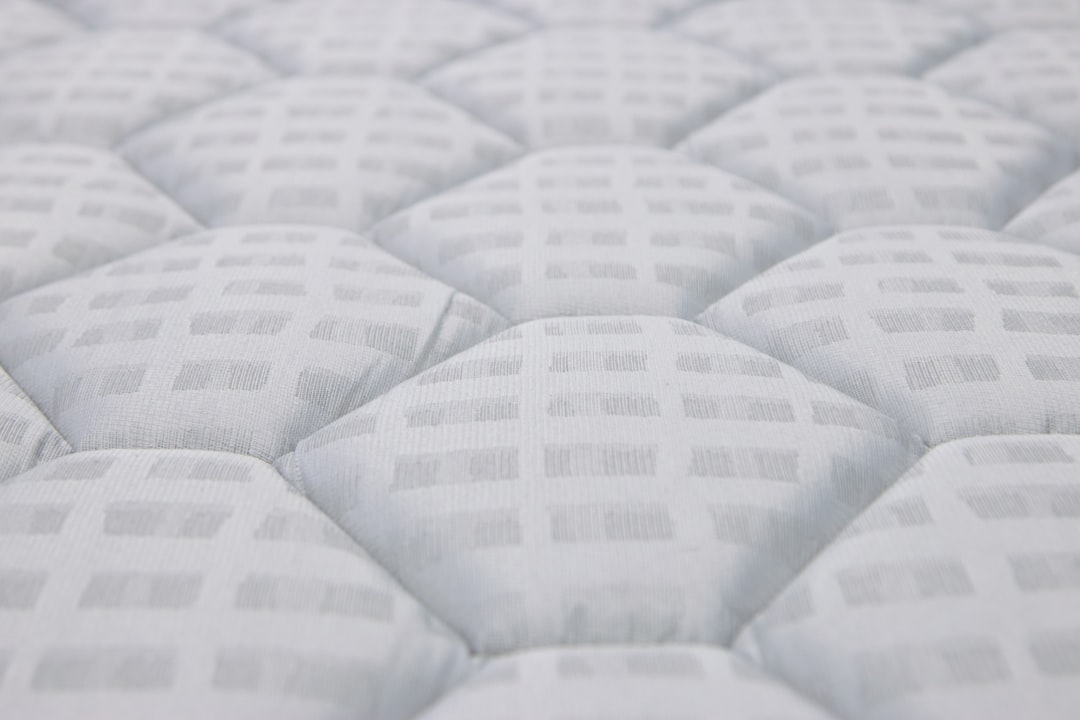
Mattress protectors are another point where people overdo it. That thick, padded, quilted topper you see in stores? Avoid it. It acts as a barrier, blocking the very ventilation channels in the latex. If replacing the mattress isn't on the cards, the foam mattress is the cheaper route to a cooler bed — a gel-infused or phase-change topper sits over your existing mattress, absorbing and dispersing heat and wicking moisture. It won't transform a worn mattress, but it noticeably drops the surface temperature. The guide also covers the surrounding fixes: breathable bedding, room ventilation, a cooler bedtime routine. A practical first step before a full upgrade.. A simple, fitted protector made from a similar breathable fabric is enough for basic protection. The goal is to let air move freely from your body through the sheets, through the protector, and into the mattress core.


The mattress does its job, but the air around it needs to move. In a typical HDB master bedroom, you’ve got maybe 60cm clearance on one side and a wall on the other. That’s where the fan placement comes in. A mattress type can sleep cool when it's the right type — gel-infused or open-cell foam tackles the heat retention that plain foam is prone to, at a value price. It's worth treating cooling as a deciding factor rather than an afterthought when choosing foam in the tropics. Look for the cooling technology named explicitly, not just "breathable". For a budget-friendly cooling option, the gel and open-cell foam models are where to look.. An oscillating floor fan should sit on that open side, aimed to sweep air directly across the mattress surface—from your feet up towards your head. It’s not about just cooling the room; it’s about creating a personal breeze channel. A ceiling fan works too, but you’ll want it set to a medium speed for a steady downdraft, not a frantic whirl that just stirs the hot air at the ceiling.
Humidity’s the other half of the equation. Even with good airflow, that 80%+ dampness can cling to everything, including your bedding. For a 12 sqm common bedroom, a compact dehumidifier tucked into a corner, away from the direct fan’s path, quietly pulls moisture from the air. It won’t cool you, but it makes the existing airflow feel drier and more effective. During the year-end monsoon season, running it for a few hours overnight can change the whole feel of the room—less of that sticky, heavy atmosphere that makes even a cooling mattress feel less effective.
The only time I’d skip the dehumidifier is if you’re running the air-con nightly, which already condenses moisture. But for non-air-conditioned bedrooms, or for those who only use the air-con sparingly, it’s a straightforward upgrade. Pair it with that correctly positioned fan, and you’re not just relying on the mattress’s materials; you’re managing the entire sleep environment. That’s how you get the full benefit from an aerated latex design in our climate.
Spec sheets list firmness ratings and airflow channels, but those numbers don’t translate to how a mattress actually feels against your skin in a humid room. You’ll find plenty of aerated latex models online, each promising a cooler sleep. The difference between them often lies in how pronounced the ventilation channels are and how the firmness level interacts with your body weight—something you can’t gauge from a product description. That’s why a showroom visit isn’t just a nice extra; it’s a necessary step before committing to a cooling mattress.
Head to Megafurniture’s Joo Seng or Tampines outlet and spend some proper time on their in-house Somnuz® range. Lie down on a few models, stay there for a minute, and pay attention to two things. First, feel whether the firmness supports your spine without creating pressure points—a mattress that’s too soft will trap heat, while one that’s too firm might not let the channels work effectively. Second, notice the airflow. On a good aerated latex design, you should sense a distinct movement of air through the core, a subtle cooling effect that’s more than just surface breathability. Online, you’re comparing specs; in the showroom, you’re comparing sensations.
The only time I’d skip this test is if you’re buying a mattress purely for a guest room that’s rarely used. Cooling shows up differently across constructions, so browsing by Somnuz helps — gel memory foam cools a contouring feel, latex breathes naturally, and hybrid uses its coil base for airflow. Each keeps you cool by a different mechanism, so the type shapes how the cooling works. Pure traditional foam without cooling tech is the one to be wary of in the heat. Matching the type to how cool you need to sleep narrows the field fast.. For your own bed, especially in a non-air-conditioned room or if you’re prone to night sweats, getting this right matters. A mattress that feels cool in a controlled showroom environment will perform even better in your actual bedroom, where ambient temperatures can climb. You’ll know immediately if a particular model’s promise of temperature regulation matches your body’s response.
Don’t just bounce on it and walk away. Bring your partner if it’s a shared bed, try different sleeping positions, and consider the typical weight distribution. A mattress that feels perfectly supportive and cool when you’re lying flat might not feel the same when you’re curled up or on your side. That’s the kind of detail you can only uncover with a hands-on, or rather a backs-on, evaluation. It turns a speculative online purchase into a confident one.
Is aerated latex mattress good for HDB no aircon?
Yes, it's one of the better choices for a non-air-conditioned bedroom. The open-cell structure allows air to circulate through the mattress core, which helps dissipate the heat you generate throughout the night. It won't feel like sleeping on a slab of ice, but it won't trap warmth like traditional memory foam can. Pair it with a breathable cotton or bamboo sheet and you'll get a noticeable improvement over a standard mattress in a warm room.
Which mattress is coolest for menopause night sweats?
Look for a mattress that combines a cooling cover with a highly breathable support layer. A phase-change material cover can actually absorb heat during a flush, while an aerated latex or ventilated coil system underneath ensures that absorbed heat gets moved away from your body. A memory foam mattress with cooling gel infusions alone might not be enough—the gel can only do so much if the foam base itself is dense and retains heat. The clearest in-house cooling example is mattress range in Singapore Megafurniture's own line, whose mattresses use a breathable knitted Tencel® cover designed for the local climate, often over latex or pocketed-spring layers that keep air moving. Because it's the exclusive in-house brand, you get that cool-sleeping build without the name-brand markup. For a cooling mattress that's well-made and good value, the Somnuz line is a natural starting point.. The key is a system that manages both the initial spike and the lingering warmth.
Can cooling mattress work with solid bed frame?
It can, but you're losing a major advantage. A solid platform or slatted base with minimal gaps restricts airflow underneath the mattress, which is especially important for latex. That trapped air becomes a warm pocket. If you've already got a solid frame, consider adding a ventilated mattress protector or a thin, breathable underlay to create a channel. But honestly, for maximum effect, a bed frame with widely spaced slats or a grid base is the better match.
How long does latex mattress stay cool in Singapore heat?
The cooling effect isn't a battery that runs out; it's a continuous process of heat dissipation. So it stays 'cool' as long as the material's breathability is intact and the ambient air can circulate. Over many years, dust and fibres can settle into the open cells, slightly reducing airflow. A regular vacuum with a soft brush attachment helps maintain that ventilation. The cover fabric will wear out faster than the latex core—if it starts to feel less breathable after five or six years, replacing the cover can refresh the whole sleeping surface.
Before you step into a showroom, there’s a final sequence to run through—it’s the kind of practical checklist that saves you from a costly mismatch. Start with your bedroom’s airflow. A cooling mattress needs a room that breathes; if your windows are perpetually closed or your ceiling fan is a relic, even the best aerated latex will struggle. In a typical 3.5 by 3 metre master bedroom, that means checking if your layout allows for a decent gap between the bed and the wall—you want at least 30 centimetres on the non-exit side for air to circulate behind the mattress. West-facing rooms get afternoon sun that can turn the space into a heat trap, so consider your window orientation and whether you run the air-conditioner nightly or just rely on natural ventilation. This isn’t about the mattress itself, but about setting the stage for it to perform.
Next, think about what sits under and on top of it. The supporting bed frame shouldn’t smother the mattress’s breathability—a solid platform base with no gaps can block the ventilated airflow you’re paying for. Opt for a slatted base or a frame with open sections; the mattress needs to exhale downwards too. Then, your bedding choices matter just as much. A thick, non-breathable mattress protector or a polyester duvet will trap heat, effectively cancelling out the cooling properties of the latex. Look for a bamboo or Tencel cover for your protector and sheets—these materials work with the mattress, not against it.
Only then are you ready for the showroom visit. The final test is entirely physical: you must lie down on the candidate mattress in the exact configuration you’ve planned. Don’t just perch on the edge; spend ten minutes in your typical sleep position. Your specific heat tolerance and firmness preference are personal—a menopausal woman experiencing hot flushes will judge ‘cooling’ differently from a young adult in a non-air-conditioned room. Feel whether the promised airflow translates to a genuine coolness against your skin, and assess whether the firmness supports your spine without pressure. This is the moment where theory meets reality, where the specs on the tag become either a promise or a disappointment.
There’s one exception to this meticulous pre-visit drill: if you’re replacing an identical setup in the same room, you can skip the ventilation and bedding review. A cooling pick sits within the wider queen size , so it's worth seeing the full spread — memory foam, latex, pocket spring, and hybrid, with cooling features across several of them. Browsing the range shows where the coolest-sleeping options sit against the rest. In the tropics it's worth filtering for breathability and temperature regulation early. Choose the construction for how you sleep, then weight cooling heavily in the final call.. But even then, your body might have changed—a new injury, weight shift, or simply ageing can alter your firmness needs. So the showroom test remains non-negotiable. Everything prior is preparation; the final verdict comes from your own back, shoulders, and hips on the actual mattress.