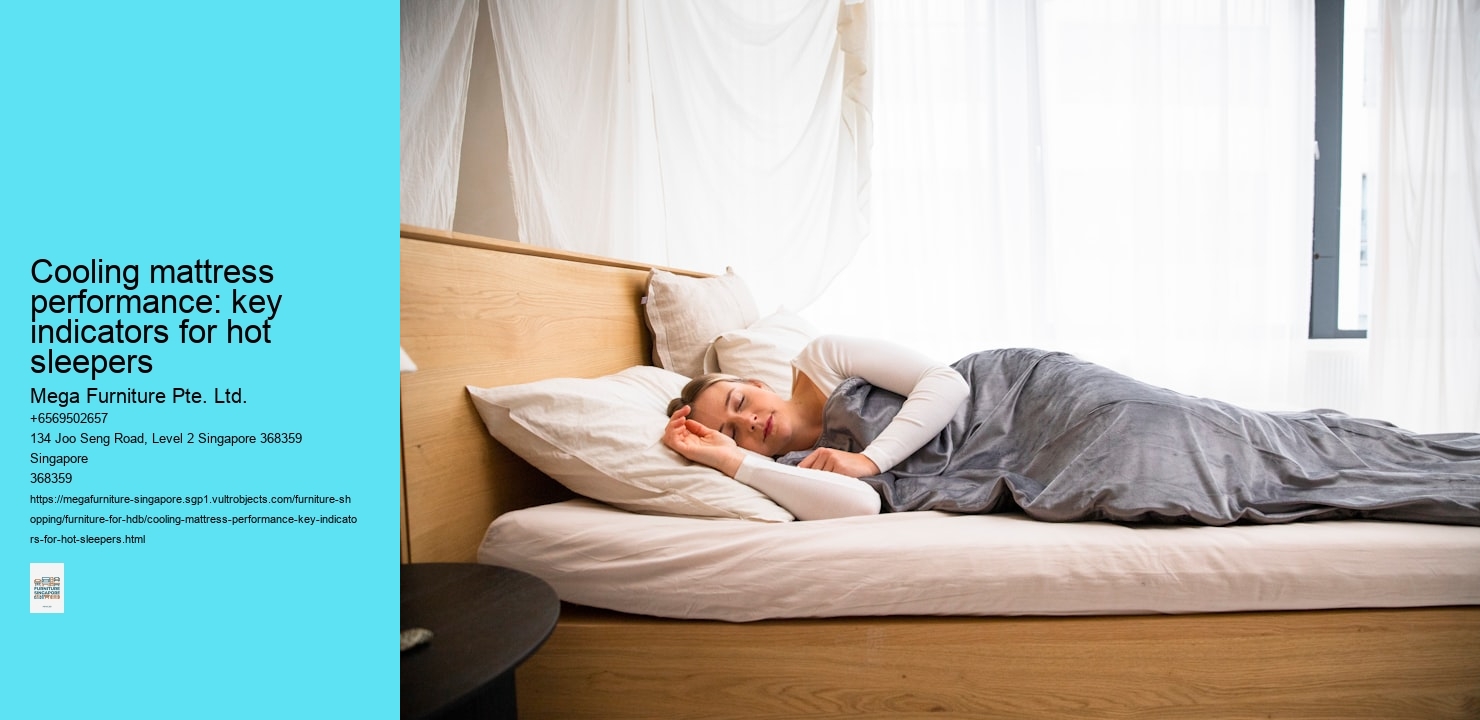
Memory foam’s reputation for comfort is undeniable—that slow-motion sink-in feeling can be blissful in a cool room. But in a Singapore bedroom where the ambient temperature sits at twenty-eight degrees, that same material becomes a different beast entirely. It’s not just about feeling warm; it’s about the foam actively holding onto your body heat, creating a sauna-like microclimate right beneath you. The problem is inherent to the material’s structure: dense, conforming cells that trap air and prevent it from circulating away from your skin. On a typical night here, without the help of air-conditioning, that heat has nowhere to go.
You’ll notice it most around three or four in the morning. The initial coolness of the sheets has vanished, and you’re lying on a surface that now feels actively warm, even slightly damp. It’s a particular misery for anyone who naturally sleeps hot, or for women experiencing menopausal hot flushes. Their bodies are already working overtime to regulate temperature; placing them on a material that resists that process is a recipe for broken sleep. The foam doesn’t cool down until you get off it, which means you’re essentially reheating the same spot every time you return to bed.
Some might suggest just cranking the air-con, but that’s not a universal solution. Many flats, especially older ones or those with careful energy budgets, rely on fans alone through the night. In that scenario, a traditional memory foam mattress is honestly a poor fit. It’s a mismatch between a material engineered for heat retention and an environment that provides zero assistance for heat dissipation. You’re fighting physics.
There’s one exception, of course: if your bedroom is consistently climate-controlled to a temperate, dry twenty-two degrees, the memory foam heat trap might not bother you. But for the vast majority sleeping in our natural tropical air, that dense foam becomes a barrier to rest, not a conduit to it. The search for comfort then has to start with a different question—not which foam feels plushest, but which one will let you breathe.
Phase-change materials sound fancy, but they’re just clever heat sponges. They absorb your body’s warmth when you lie down, holding it until the temperature drops later—that’s the “phase change.” It’s a neat trick for smoothing out those heat spikes, but it’s a finite resource. Once the material’s absorbed its quota, it can’t take more until it releases what it’s got. In a humid 4-room flat where the air doesn’t move much, that release can stall, leaving you on a warm plate by midnight.
Cooling gel infusions work differently, but they’re not a permanent fix either. The gel beads are mixed into the foam to provide an initial chill, like a cool towel on a fever. Problem is, that effect wears off as the gel itself warms up, and it doesn’t regenerate. You’ll feel the cool touch for the first hour or so, maybe longer if your room’s air-conditioned, but in a non-aircon bedroom where ambient temps stick above 28°C, the gel just becomes part of the warm foam by the second hour.
For sustained breathability, you want structure over infusion. Latex’s open-cell design is the key—it’s like a sponge with thousands of tiny air channels. Heat and moisture don’t get trapped; they pass through. Combine that with a truly breathable cover, like bamboo, which wicks moisture away instead of just feeling cool to the touch. That combination handles our climate better because it’s constantly working, not just storing heat until it’s full.
So which one should you pick? If your sleep is broken by sudden heat surges—like from night sweats—a PCM layer can help blunt those peaks. But if you’re just a consistently warm sleeper in a humid room, you need constant ventilation. Latex with a bamboo cover will serve you better through the whole night. The only time I’d consider a gel-infused foam is if you’re pairing it with strong air-conditioning; the AC keeps the gel cool longer, extending its effect. Without that, it’s a short-lived comfort.
Your body generates heat all night, and a mattress needs somewhere to put it. Solid foam slabs, even the gel-infused ones, basically act like a sponge for that warmth—they absorb it slowly. In a compact 12 sqm bedroom, especially one without good cross-ventilation, that heat has nowhere to escape. It just pools beneath you, turning the bed into a thermal battery. A ventilated coil system, by contrast, creates a network of air channels. That structure actively pulls heat away from your body and lets it dissipate downwards, which is far more effective in our climate.
Think of those pocketed coils not just as springs, but as a built-in ventilation shaft. Each little column is surrounded by empty space, creating a continuous pathway for air movement. This isn't just about the top layer feeling cool to the touch for a minute. It's about sustained, overnight airflow that prevents heat from building up in the first place. A solid foam block, no matter how many cooling gels they mix in, fundamentally blocks that air movement. For a west-facing room that bakes all afternoon, that internal airflow is your best defence against a mattress that radiates stored heat back at you.
Foam's density is its own enemy when it comes to cooling. High-density memory foam is prized for support, but that very structure traps warm air in its millions of tiny cells. You're essentially sleeping on a thermally insulating pad. Gel pods or phase-change materials try to combat this, but they only manage the surface temperature for a limited time. Once that initial cooling effect is spent, you're back to the insulating properties of the dense slab below. Coils, being mostly open space wrapped in steel, simply don't have that same thermal mass to overcome.
The real battle happens in the microclimate between your body and the mattress surface. A solid foam top conforms so closely it can create a near-perfect seal, which is terrible for vapour and heat transfer. Your perspiration has nowhere to go. A coil system with a breathable comfort layer, like natural latex or a perforated foam, breaks that seal. It allows for constant air exchange, wicking moisture away and keeping that sleeping interface drier. That difference is the gap between waking up damp and sticky versus merely warm.
Room layout in our typical HDB flats often works against you. A common bedroom barely fits a Queen bed, leaving little room for air to circulate around the sides. Placing the bed against a wall on two or even three sides kills any chance of cross-breezes reaching the mattress from below. In that scenario, internal mattress ventilation isn't just a bonus—it's the only ventilation you've got. A solid foam base in that dead-air corner becomes a heat trap. The one exception might be if you're a very light sleeper who finds even minimal coil movement distracting, but for pure heat dissipation, airflow through the core wins every time.
It’s a classic case of buying a high-performance cooling mattress only to wrap it in a plastic bag. Many budget mattress protectors are made from synthetic, non-breathable fabrics that create a vapour barrier. You’ll wake up feeling damp because your sweat has nowhere to go—it just pools on the surface or gets trapped against that fancy cooling gel foam you paid for. In a non-air-conditioned resale flat bedroom, where the air is already thick with humidity, that’s a recipe for a sticky, uncomfortable night.
That’s why the cover material isn’t just a finishing touch; it’s a critical component of the cooling system. Natural fibres like Tencel or bamboo are excellent here because they wick moisture away from the body efficiently. They pull the dampness through the fabric where it can evaporate, rather than letting it sit against your skin. This continuous wicking action is what keeps you feeling dry and cool, not just at the start of the night, but throughout those long, humid hours.
So when you’re evaluating a cooling mattress, run your hand over the cover. Ask specifically if it’s a Tencel or bamboo blend, and feel the difference in texture compared to a slick polyester. That top layer is your first line of defence against the heat, and getting it wrong can undo everything good underneath.
A cooling mattress relies on specific materials to regulate sleep temperature in Singapore's heat. Key components include cooling gel-infused memory foam, breathable natural latex, and phase-change fabric covers. These materials work by drawing heat away from the body or providing a consistently cool surface contact, which is essential when bedroom temperatures stay high overnight.
The science is straightforward. Cooling technology works by allowing heat to dissipate and moisture to evaporate. A cover that doesn’t breathe actively works against that core function. It doesn’t matter how many phase-change materials or ventilated coils are inside; if the first layer you touch is a moisture trap, you’ve negated the entire investment. For sleepers who already run hot—maybe you’re facing menopause or you’ve always found memory foam too warm—this mismatch is particularly punishing.
There’s really only one scenario where a non-breathable protector makes sense: if you’re dealing with a serious incontinence issue where absolute liquid barrier is the non-negotiable priority. For everyone else, especially in our climate, it’s a compromise that sacrifices comfort for a perceived practicality. A good, breathable protector will still guard against spills and dust mites, but it does so without turning your bed into a sauna.

A too-soft mattress is a heat trap, plain and simple. You sink in, the surface envelops you, and that lovely breathable bamboo cover you paid for becomes irrelevant—your body’s now buried in a pocket of still, warm air. For hot sleepers, especially in our non-air-conditioned BTO master bedrooms, that initial plush comfort is a long-term trade-off for sleepless, sticky nights. The cooling tech can’t work if you’re not on top of it.
Think about the airflow. A firmer support keeps your body more on the mattress, not in it. That slight separation allows whatever ventilation is built into the core—be it aerated latex or a ventilated coil system—to actually do its job of pulling heat away. In a typical 3.5 by 3 metre room where ambient air already hovers near 30, you need every bit of that circulation. A sink-in feel might seem luxurious during a five-minute showroom test, but it’s a commitment to reduced air movement for the next eight hours.
There’s a common misstep here. People equate cooling solely with materials—cooling gel, phase-change fabrics—and overlook the foundational role of firmness. A soft, heat-trapping memory foam topped with a cooling cover is fighting a losing battle. The material might feel cool to the touch, but once you’ve settled into that deep cradle, the heat your body generates has nowhere to go. It gets trapped right against you.
Now, this doesn’t mean you need a rock. The exception is for strict side sleepers with pronounced pressure points; they might need a softer comfort layer to align the spine, but even then, the support core underneath must be firm enough to prevent that deep sink. For back and stomach sleepers, or anyone who just runs hot, erring towards medium-firm is almost always the wiser play. It gives you that stable, on-top sleeping position where the cooling surface can perform as intended.
So when you’re testing, resist the seductive sink. Lie still for more than a minute. Pay attention to whether your hips and shoulders are dipping down, collapsing your airways and sealing in heat. In Singapore’s climate, the right firmness level isn’t just about support—it’s your first and most crucial defence against overheating.
You’ll find the same five questions pop up when you’re lying there at two in the morning, sweating into your sheets. Let’s settle them.
Does a cooling mattress work without aircon? It helps, but it won’t make your room feel like a chiller. A cooling mattress is designed to pull heat away from your body, not cool the air around you. In a non-aircon room that’s 28°C and humid, the best you can hope for is a surface that doesn’t trap your own warmth. A breathable bamboo cover and ventilated coils will stop that sticky, heat-soaked feeling—you’ll sleep on it, not in it.
How long do cooling gels last? The gels infused into foam don’t evaporate; they’re meant to be permanent. The real issue is the foam around them. Over years, that foam can compress and lose its ability to circulate air, which dulls the overall cooling effect. You’re looking at a performance lifespan that generally matches a decent mattress warranty—around eight to ten years before you might notice it’s not as effective.
Is latex cooler than memory foam? Almost always, yes. Natural latex is aerated by its production process, creating a structure full of tiny air channels that let heat escape. Traditional memory foam, on the other hand, tends to cradle you in a heat-retaining hug. Newer memory foams with cooling gels try to bridge the gap, but if staying cool is your top priority, latex is the steadier bet.
Which mattress is best for hot flashes in Singapore humidity? You need a mattress that reacts quickly. Phase-change material covers are the standout here—they absorb a burst of heat almost instantly, giving you that critical relief during a flush. Pair that with a highly breathable, moisture-wicking cover like Tencel. Avoid dense, slow-responding memory foams; they’ll hold the heat just as the flash is passing.
Can I feel the cooling effect immediately? On a good one, you should. The immediate touch of a cool-to-the-hand cover or a phase-change layer is a real sensation. Don’t just press your palm on it in the showroom for two seconds. Lie down on your side for a full five minutes—that’s when you’ll know if it’s just a surface trick or if it can actually handle your body heat over time.
You can’t judge a cooling mattress from a website photo. The real test happens when you’re standing there in your shorts, pressing your palm into the foam for a good ten seconds. At a proper showroom, you get to do that side-by-side comparison—the kind that actually matters when our nights rarely dip below twenty-eight degrees. Forget trying to remember if the one you felt last weekend was firmer than the one you saw today; lay them out together and the differences become obvious almost immediately.
Take the in-house Somnuz® line as an example. They’ve got models with different cooling implementations all in one place. You can feel the slick, almost cool-to-the-touch finish of a phase-change material cover versus the drier, breathable weave of a premium Tencel. One might use a gel-infused foam that feels distinctly cooler under pressure, while another relies on a ventilated coil system for airflow. Seeing them together stops you from confusing marketing with material reality. You’ll know which cooling sensation works for you—whether it’s that initial chill or a sustained breathability that matters more through the night.
Assess the support system while you’re at it. A mattress can promise coolness, but if the pocketed coils feel weak or the foam base is too soft, you’ll be sinking into a heat trap by month three. Push down along the edges and the centre. Listen for the sound of the coils—a consistent, quiet response is what you want. Check the border reinforcement; a flimsy edge means you’ll roll off when sitting down to put on your shoes. These are things a spec sheet won’t tell you, but your hands and your weight will.
The only time I’d skip this hands-on step is if you’re buying an exact replacement for a mattress you already love. Even then, models change. So make the trip. Put in the time. A mattress is a five-to-ten-year commitment, and in our climate, getting the cooling wrong is a special kind of nightly discomfort. Your body’s the best reviewer you’ve got—let it do the work.
" width="100%" height="480">Cooling mattress performance: key indicators for hot sleepers
Skip the polite five-minute sit. You need to commit to your actual sleep posture for a solid quarter-hour on that showroom floor. That’s the only way you’ll know if the cooling promise holds up when your full body weight is concentrated on those key pressure points. Lie exactly as you do at home—side sleepers, pay particular attention to where your shoulder and hip dig in. After ten minutes, you’ll start to feel if heat is pooling there, a slow cooker effect that turns a tropical night into a misery.
Consider your own bedroom’s microclimate. Is it a west-facing room that holds the day’s heat, or a common bedroom in a 4-room BTO with one small window? The mattress might feel perfectly fine in a spacious, air-conditioned showroom, but that’s a world away from a real HDB room where the ambient temperature barely dips below 28°C even at night. The cooling effect has to work with whatever ventilation you’ve got, not against it.
This test separates marketing from genuine performance. A mattress that relies solely on a fancy phase-change cover might feel cool for five minutes, but the underlying foam could still trap your body heat once the material saturates. You’re checking for sustained breathability—whether the whole system, from the ventilated coils or aerated latex core up through the Tencel cover, manages to keep pushing that warmth away.
The one time you might skip this extended lie-down? If you’re absolutely certain your bedroom air-con runs all night, every night. For everyone else—especially those in non-air-conditioned rooms or anyone experiencing night sweats—this final check is non-negotiable. Don’t just bounce on the edge and call it a day; your future sleep depends on those fifteen minutes of stillness.