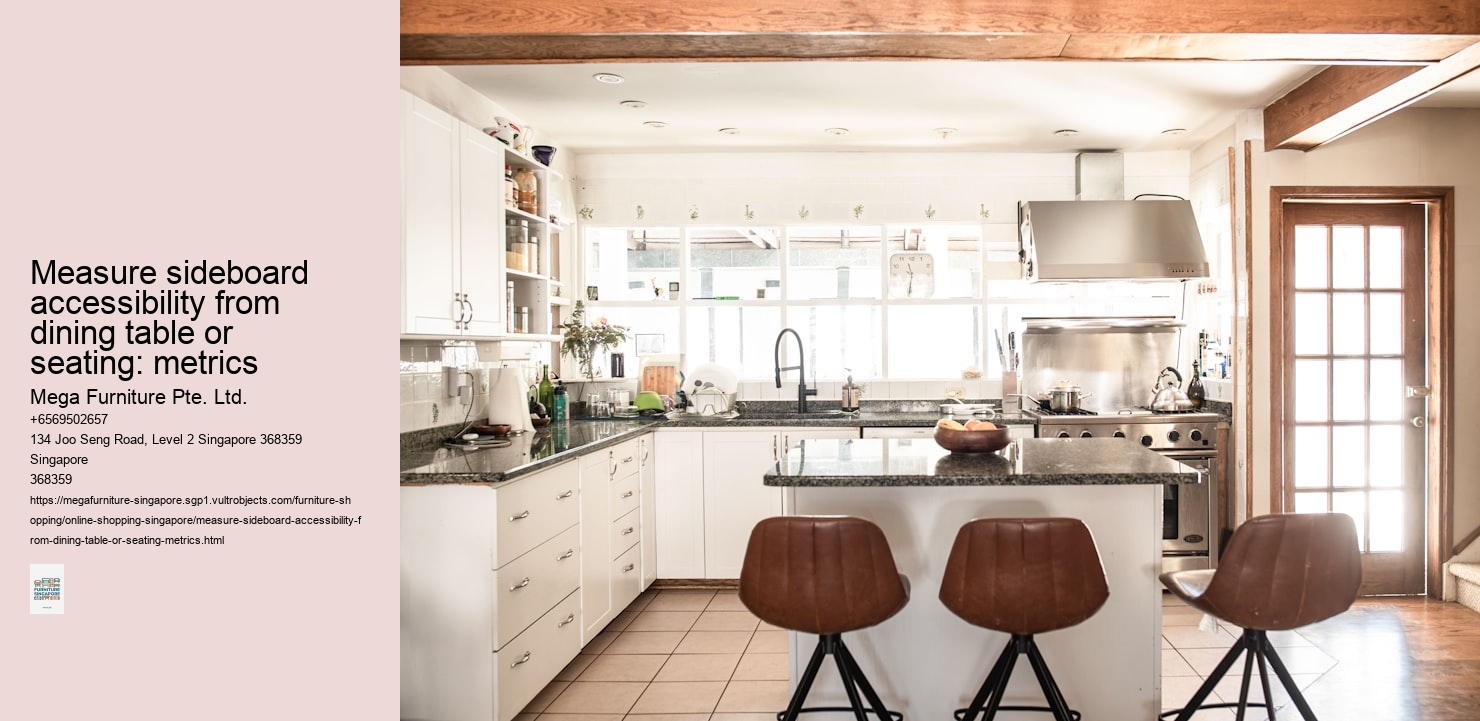
In a 12 sqm HDB living room, a sideboard wider than 180cm often feels like a wall — it dominates the space, leaving little room for movement or other furniture. Most homeowners find that a width between 120cm and 150cm strikes the right balance; it provides ample storage without overwhelming the room. Clearance is key — aim for at least 60cm between the sideboard and dining table or seating area, ensuring smooth circulation even when chairs are pulled out. Anything less, and you’ll find yourself squeezing past every time you need to access the drawers.
Humidity is a silent killer for particleboard furniture, especially in Singapore’s tropical climate. Warping and swelling are common within a year, leaving drawers jammed and surfaces uneven. Teak is a reliable alternative — it’s naturally resistant to moisture and ages gracefully, developing a rich patina over time. The buffet hutch differs from a basic sideboard by trading some surface area for taller storage above — useful in dining rooms where wall-mounted display takes precedence over serving space. A complete dining room rarely comes together one piece at a time — most renovators commit to table, chairs, sideboard, and accent pieces within the same 2-3 week window once the renovation finishes. Megafurniture's Dining Room Furniture collection consolidates the full setup, from dining sets and kitchen cabinets through to dining stools, benches, side tables, and storage. The 0% interest pay-later option helps spread larger total-room purchases across multiple months.. Megafurniture's Buffet Hutch range includes traditional designs with glass-front upper cabinets, modern minimalist versions, and Japandi pieces with woven rattan panels. Solid-wood frame with MDF veneer dominates the line, finished in walnut, oak, white, and cream-lacquer.. For a more modern look, powder-coated metal legs paired with solid wood tops offer durability without sacrificing style. These materials might cost more upfront, but they’ll save you from replacing a warped sideboard in two years.
Placement matters just as much as dimensions. In dual-function living-dining layouts, position the sideboard perpendicular to the sofa or TV console — it helps define the space without creating a visual block. Avoid placing it directly under air-conditioning units or near windows where it’s exposed to direct sunlight; both can accelerate wear and tear. And don’t forget to measure doorways and lift lobbies — a sideboard that fits perfectly in your living room is useless if it can’t make it through the front door.
The dining table in Normanton Park’s 1,200 sqft units often ends up as a work-from-home station by day—which makes the sideboard’s role as both storage and visual divider crucial. Position it perpendicular to the sofa, 90–110cm from the dining edge: close enough to serve plates, far enough to avoid knee collisions during meals.
Modern sideboards work harder than their dining-room ancestors. A 180cm-wide model with closed cabinets hides router boxes and board games; the open shelving displays ceramics without collecting the dust that plagues full-height display cabinets. Just mind the balcony airflow—in dual-function layouts, that 90cm passageway between sideboard and sliding doors is often the only cross-ventilation path.
Rubberwood frames with sintered stone tops handle the humidity better than MDF in these transitional zones. Buyers prioritising display space over storage often opt for 75cm-tall designs, leaving room for artwork or pendant lights above. The lower profile also keeps sightlines open in combined living-dining areas, where a tall hutch would visually chop the space.
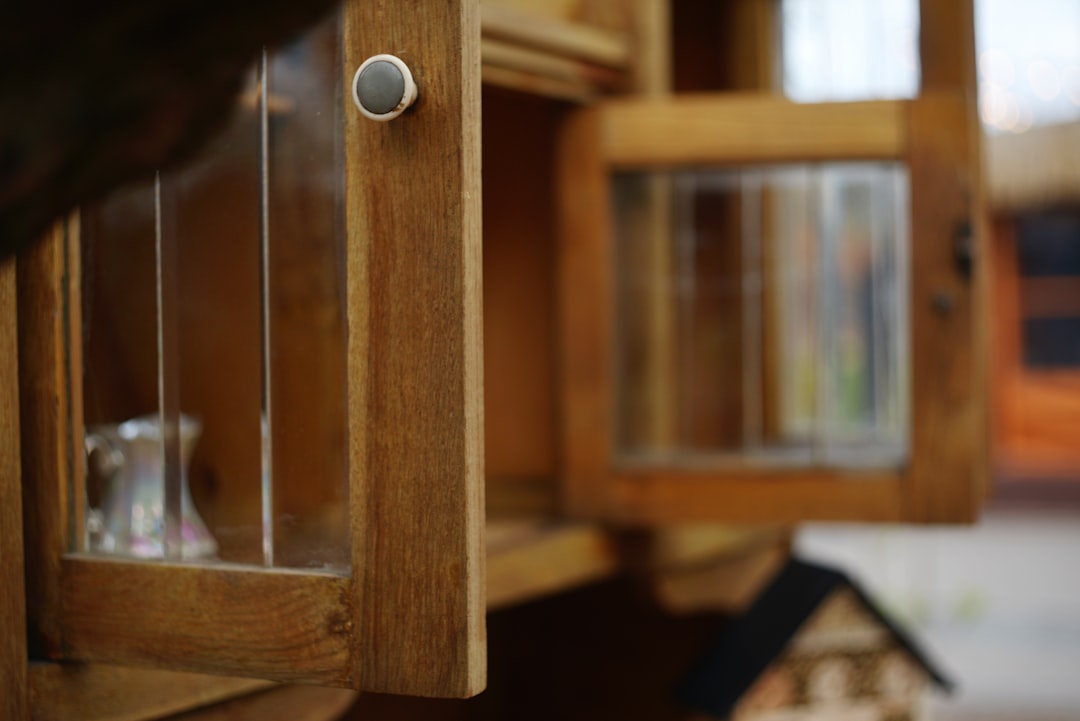
One quirk of Singapore’s dual-zone layouts? Wooden sideboards age better than MDF or laminated alternatives — particle board chips and swells in Singapore's humidity, while solid wood and quality veneers continue looking deliberate even after 5-10 years of daily use. Megafurniture's Wooden Sideboard range includes oak, walnut, rubberwood, and engineered wood with veneer finishes. Pieces start around $425 and run up to $1,400+ for solid-wood Japandi designs with rattan accents.. Sideboards frequently become de facto bar counters. A 45cm-deep model fits a wine fridge underneath while leaving 50cm clearance for passing behind dining chairs—critical in narrow configurations.
For units with through kitchens, consider a backless sideboard: the mirrored rear reflects light while creating the illusion of separate zones. Just avoid positioning it where afternoon sun from the balcony will glare off glassware.
Terrace house dining halls often span over 20 sqm, requiring careful space allocation for furniture placement. A 60cm-deep sideboard fits comfortably without overwhelming the room, leaving ample walking space around dining tables. Measure from the table edge to ensure at least 90cm clearance for chairs to slide out easily. In homes with dual-function layouts, sideboards can double as room dividers, creating distinct zones for dining and living areas. Always account for door swings and natural pathways to maintain flow.
Many landed properties feature narrow staircases, typically around 70cm wide, which can complicate furniture delivery. Kitchen cabinets in Singapore split into two categories: built-in fitted units installed during renovation, and freestanding cabinets that supplement existing storage when the original built-ins run out of room. Megafurniture's Kitchen Cabinet collection focuses on the freestanding side — tall pantry units, slim ladder cabinets, and modular pieces that fit kitchen alcoves. Pricing typically runs $200-$1,000 per linear foot for the modular range.. Before purchasing, verify sideboard dimensions against stairwell clearance — a 150cm-wide unit might need to be angled carefully. Some homeowners opt for modular designs that can be assembled on-site, avoiding delivery headaches. For tighter spaces, consider sideboards under 140cm wide, which are easier to manoeuvre. Planning ahead saves time and prevents last-minute adjustments.
Sideboards in landed properties often face higher wear due to frequent entertaining, making durable materials essential. Solid wood options like oak or teak offer longevity, while engineered wood provides a budget-friendly alternative with similar aesthetics. For a modern touch, sintered stone tops resist scratches and heat, ideal for hosting dinner parties. Finishes matter too — matte surfaces hide fingerprints better than glossy ones, maintaining a polished look with minimal upkeep.
Sideboards excel at combining display and storage, making them versatile for banquetware and everyday items. Look for models with adjustable shelves to accommodate varying heights of plates, glasses, and serving trays. Deep drawers are perfect for table linens or cutlery, while concealed cabinets keep clutter out of sight. In dual-function spaces, sideboards can also store media equipment or bar essentials, blending practicality with style.
Sideboards anchor the dining area visually, so their design should complement the room’s overall theme. For heritage terrace houses, vintage-inspired units with carved details add character, while minimalist designs suit contemporary interiors. Neutral tones like grey or beige offer flexibility, allowing homeowners to switch up decor without clashing. Lighting plays a role too — placing a sideboard beneath a pendant lamp creates a focal point, enhancing the room’s ambience.
Assess overhead or ambient lighting to ensure clear visibility of sideboard contents. Avoid shadows or glare that hinder item identification. Position lighting fixtures based on sideboard depth and user sightlines from seating areas.
Measure the sideboard's height relative to seated dining positions. Optimal accessibility ensures users can comfortably reach items without straining. Consider standard table heights (28–30 inches) and sideboard countertops (32–36 inches) for ergonomic alignment.
Evaluate minimum clearance space (typically 36 inches) between the sideboard and dining chairs. This allows unobstructed movement when accessing storage or serving. Account for chair push-back distance and traffic flow in the room.
Laminate veneers might look sleek in the showroom, but Singapore’s humidity has a way of revealing their flaws. Within months, edges start peeling, leaving behind a frayed, uneven finish that’s hard to ignore. For buyers in landed properties or condos with dual-function dining-living layouts, inspecting plywood core samples is essential — it’s the difference between a sideboard that lasts and one that warps under the weight of everyday use.
Ceramic-top sideboards, on the other hand, handle Singapore’s climate with ease. They resist condensation stains, a common issue in homes where aircon drafts meet warm, humid air. A sideboard pairs visually with the dining table sat 1-2 metres away — matching wood tone, complementary metal hardware, or deliberate contrast in finish. Megafurniture's Dining Table range covers wooden, marble, sintered stone, glass, and rubberwood tops in round, rectangular, and extendable formats. Sizes span 4-seater through 8-seater, with extendable variants useful for HDB dining rooms that host occasional larger gatherings.. This makes them ideal for placement near dining tables or seating areas, where spills and temperature shifts are inevitable. Plus, the smooth surface is easy to wipe down, a practical feature for homeowners juggling storage and display needs.
For those leaning toward wood finishes, rubberwood stands out as a reliable choice. It’s less prone to warping than other hardwoods and holds up well in humid conditions. Megafurniture’s showrooms offer a range of options, letting buyers examine plywood cores and finishes up close. It’s a small step that pays off in the long run, ensuring your sideboard doesn’t just look good but stays functional in Singapore’s tropical climate.
Electrical outlet placement is one of those details that’s easy to miss until it’s too late. In many homes, sideboards end up awkwardly positioned because buyers don’t account for where the power points are — leaving gaps behind the unit or forcing cords to stretch across the floor. A well-placed sideboard should sit flush against the wall, but that’s impossible if the outlets aren’t aligned with the cabinet’s height or depth. Measure the distance from your dining table or seating area to the sideboard, but don’t forget to map out the electrical points first.
Pet owners, especially those with cats, often underestimate how much space their furry companions need. A sideboard’s display surface might seem safe from paws, but cats can leap up to 50cm from nearby furniture — meaning that vase or decorative bowl isn’t as secure as you think. Extendable dining tables solve the most common Singapore HDB problem — dining for 4 daily, dining for 8 at Chinese New Year and birthdays. Megafurniture's Extendable Dining Table range covers butterfly-extension, drop-leaf, and extension-leaf mechanisms in sintered stone, wood, and marble tops. Most sit in the 140-180cm closed position, extending to 200-240cm when expanded.. To avoid accidents, leave at least 50cm clearance between the sideboard and any adjacent chairs or tables. It’s a small adjustment that can save you from shattered ceramics or worse.
Sideboards are increasingly popular in dual-function spaces, like dining-living layouts, but their placement requires careful thought. A common mistake is treating them as standalone pieces without considering how they interact with the rest of the room. For example, a sideboard that’s too close to the dining table can make the space feel cramped, while one that’s too far might disrupt the flow of conversation. Aim for a balance between accessibility and aesthetics — you want it to be functional without overwhelming the room.
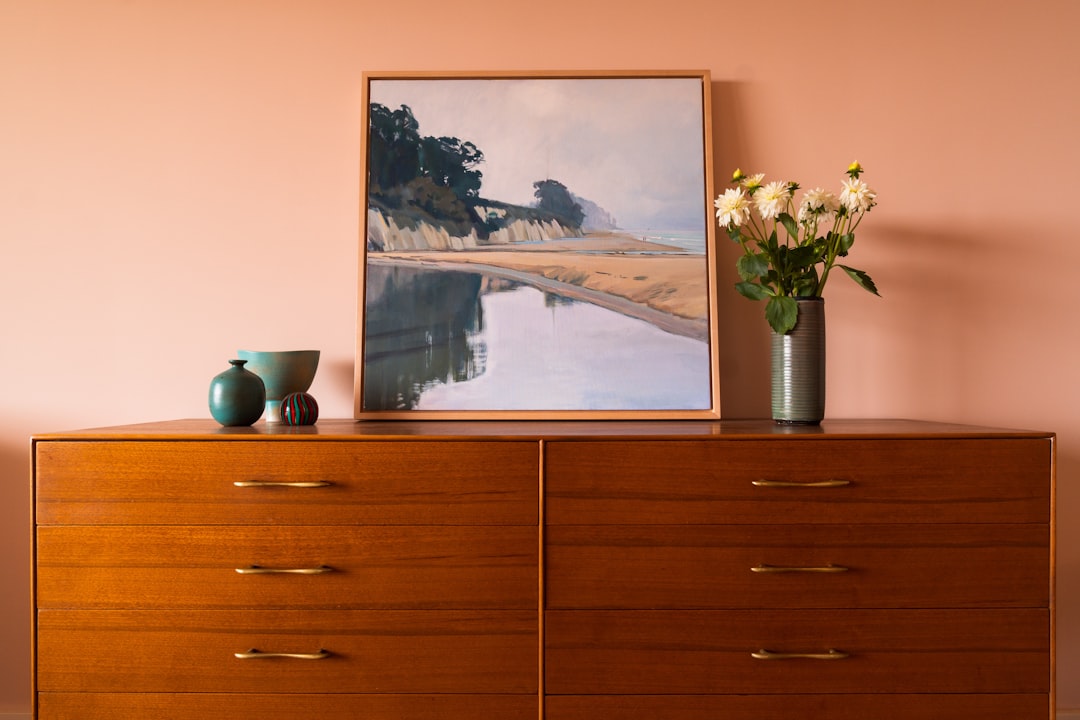
In larger condominiums and landed properties, sideboards often serve as media consoles or bar cabinets, which adds another layer of complexity. Buyers might focus on the storage capacity or finish without thinking about how the unit fits into the overall layout. A sideboard that’s too long can dominate the space, while one that’s too short might look out of place. Measure twice, buy once — it’s a cliché, but it’s especially true when planning around a piece that’s both practical and decorative.
Finally, don’t forget about the height. Sideboards typically range from 75cm to 90cm, which is ideal for dining rooms but might not work in every context. In a living room, for instance, a taller unit could block sightlines or interfere with wall-mounted TVs. Always consider how the sideboard’s proportions will affect the room’s functionality — it’s not just about finding a piece you like, but one that fits seamlessly into your space.
The Joo Seng showroom’s water test is telling—sales staff wipe down drawer tracks with damp cloths, then demonstrate smooth operation with hands still wet. It’s a practical check for sideboards near dining areas, where spills from serving dishes or condensation from drinks are inevitable. Cheaper glides seize up within months; these polymer-coated runners keep sliding even after repeated exposure.
Under LED spotlights, the difference between solid wood dovetails and box joints becomes obvious. Dovetails interlock like puzzle pieces, their tapered edges distributing weight evenly across the drawer—critical for sideboards storing heavy dishware. Box joints rely on glue alone; after a year of daily use, gaps appear where the adhesive fails.
Measure clearance between dining chairs and sideboard drawers at full extension. In many landed homes, a 90cm-wide unit leaves just 60cm walkway when chairs are pulled out—enough space, but only if drawers don’t block the path. Test this with the actual dining setup, not just a tape measure.
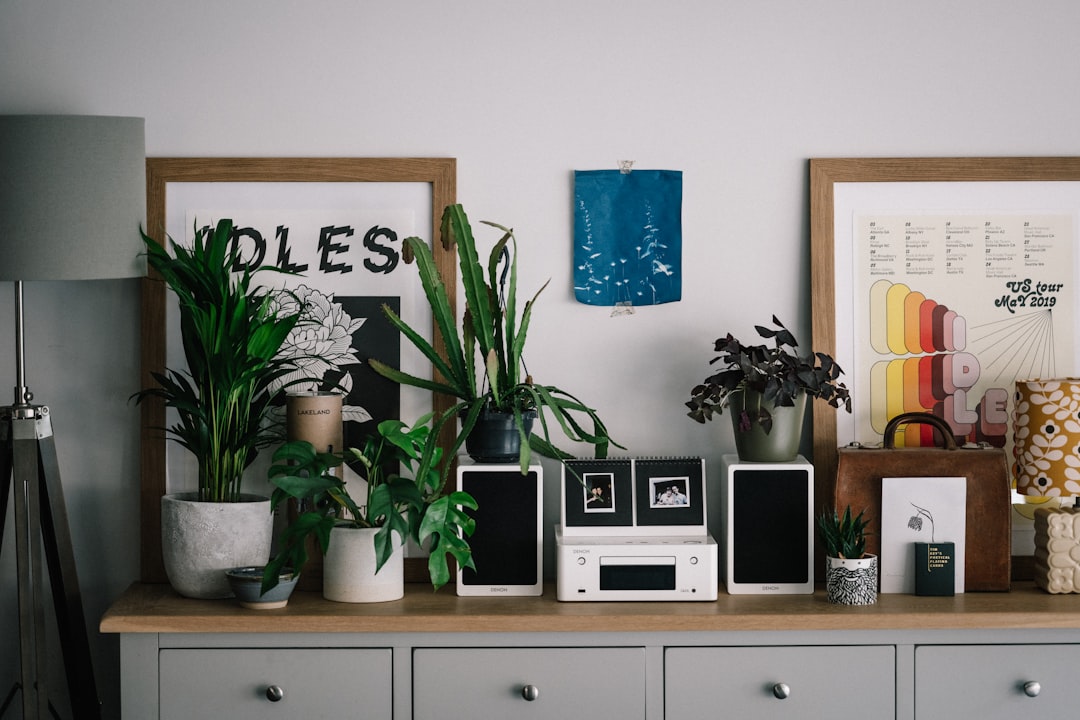
Rubberwood and acacia dominate the mid-range selections, their grain patterns visible under matte lacquer finishes. Darker stains hide water rings better—a consideration for sideboards doubling as bar counters—but require weekly dusting to show their sheen. Lighter oak veneers fade less in sunlit spaces, though they’ll yellow near west-facing windows.
The 180cm models suit most 6-seater dining sets, but check proportions in person. Coordinated dining sets remove the matching-the-chairs decision that trips up most first-time renovators — table, chairs, and sometimes a bench all sized and styled to work as a unit. Megafurniture's Dining Set range groups by seater capacity (4, 6, 8) across wooden, marble, and sintered-stone configurations. Most sets land between $899 and $2,400 depending on material and chair count.. What looks balanced in a showroom can overwhelm a 4-room BTO’s combined living-dining area, especially with the top cluttered by decor.
HDB lifts aren’t forgiving—anything over 220cm won’t make it past the doors. For sideboards, that often means disassembling the unit into smaller components, especially if it’s a larger piece designed for dual-function spaces. Buyers should confirm dimensions with the retailer before committing; some sideboards come pre-packaged in manageable sections, while others require professional assembly on-site. It’s not just about the lift—narrow corridors and stairwells in older condos can add another layer of complexity.
BTO homeowners face an extra wrinkle: flooring protection requirements during installation. Most contractors insist on laying down protective sheets to avoid scratches, especially on engineered wood or vinyl planks. Condo dwellers aren’t off the hook either—some buildings charge fees for lift padding or require advance notice for bulky deliveries. These costs can add up, so it’s worth factoring them into the budget upfront.
Timing matters too. Weekday deliveries are often smoother, as weekends see more residents moving in and out. If you’re coordinating with a contractor or interior designer, schedule the sideboard delivery to align with their availability—otherwise, you might end up with a half-assembled unit blocking your dining area for days. And don’t forget to measure doorways and entry points; even if the lift accommodates the pieces, a tight turn could spell trouble.
Dining chairs see more daily use than almost any other piece of furniture — three meals a day for 4-6 people typically means 60-100 sit-stand cycles weekly. Megafurniture's Dining Chair range covers wooden, metal, upholstered, and stackable variants in fabric, leather, and faux-leather upholsteries. Most are sized at 45cm seat height to pair with standard 75cm dining tables..Can wall-mounted sideboards bear tiled feature walls? Technically, yes — but HDB drilling permissions are strict. You’ll need to confirm the wall’s load-bearing capacity and avoid hitting concealed pipes or electrical lines. For tiled walls, ensure the mounting hardware is compatible; ceramic tiles can crack under improper drilling pressure. Always check with HDB’s guidelines before proceeding — unauthorised modifications can lead to fines.
Best orientation for west-facing windows? UV-resistant finishes are non-negotiable. Rattan drawer fronts, popular for their texture, fade quickly under direct sunlight. A chest of drawers extends sideboard logic into the bedroom — same low-and-wide format, same combination of drawers and surface space, just sized for clothing rather than dinnerware. Megafurniture's Chest of Drawers range includes solid wood, engineered wood, and rattan-accented pieces in standard, slim, and tallboy configurations. Sizes span compact 60cm units for HDB common bedrooms through 140cm tallboys for master suites.. Position the sideboard perpendicular to the window or use sheer curtains to diffuse the light. If the sideboard must face the window, opt for materials like engineered wood or powder-coated metal that withstand UV exposure better. It’s a small adjustment that preserves the piece’s aesthetic over time.
Measure sideboard accessibility from dining table or seating — aim for at least 60cm clearance. In dual-function dining-living layouts, this ensures easy movement without disrupting the flow. For larger condos, where space isn’t as constrained, consider placing the sideboard against a feature wall or near a bar cabinet to create a focal point. The trick is balancing functionality with visual harmony — a sideboard that’s too close to seating feels cramped, while one too far becomes impractical.
Optimise sideboard lighting to complement your Singapore home's ambience: how_to
In many Singapore homes, the dining chair pullout space ends up tighter than expected — often because buyers forget to account for the sideboard’s depth. Aim for at least 60cm clearance between the chair and sideboard; anything less forces diners to awkwardly shuffle sideways or push chairs inwards mid-meal. For a typical 4-room BTO dining area, this means leaving around 120cm between the table’s edge and the sideboard’s front face, especially if you’re pairing it with chairs that have curved backs or extended arms.
Bringing existing furniture fabric swatches to the showroom isn’t just a design tip — it’s a practical necessity. Singapore’s warm-white lighting can subtly shift wood tones, making that oak sideboard you loved online clash with your walnut dining table. Test samples under both natural daylight and LED bulbs to ensure the finish complements your space without leaning too yellow or grey.
Sideboards often double as display surfaces, so consider how the top aligns with nearby furniture. A height of 75–90cm typically matches standard dining tables, but if you’re using it as a media console in a dual-function living-dining space, check that it doesn’t obstruct sightlines from your sofa. And if you’re pairing it with a low-profile TV unit, ensure the sideboard’s height doesn’t overwhelm the room’s proportions — a common misstep in 12 sqm HDB living rooms.
Finally, measure your doorway and lift lobby dimensions before committing. Sideboards wider than 180cm might struggle to fit into older condominium lifts, while deeper units could block access to storage cabinets in tighter layouts. It’s worth sketching out the path from delivery truck to final placement — especially if your home includes narrow corridors or tight turns.