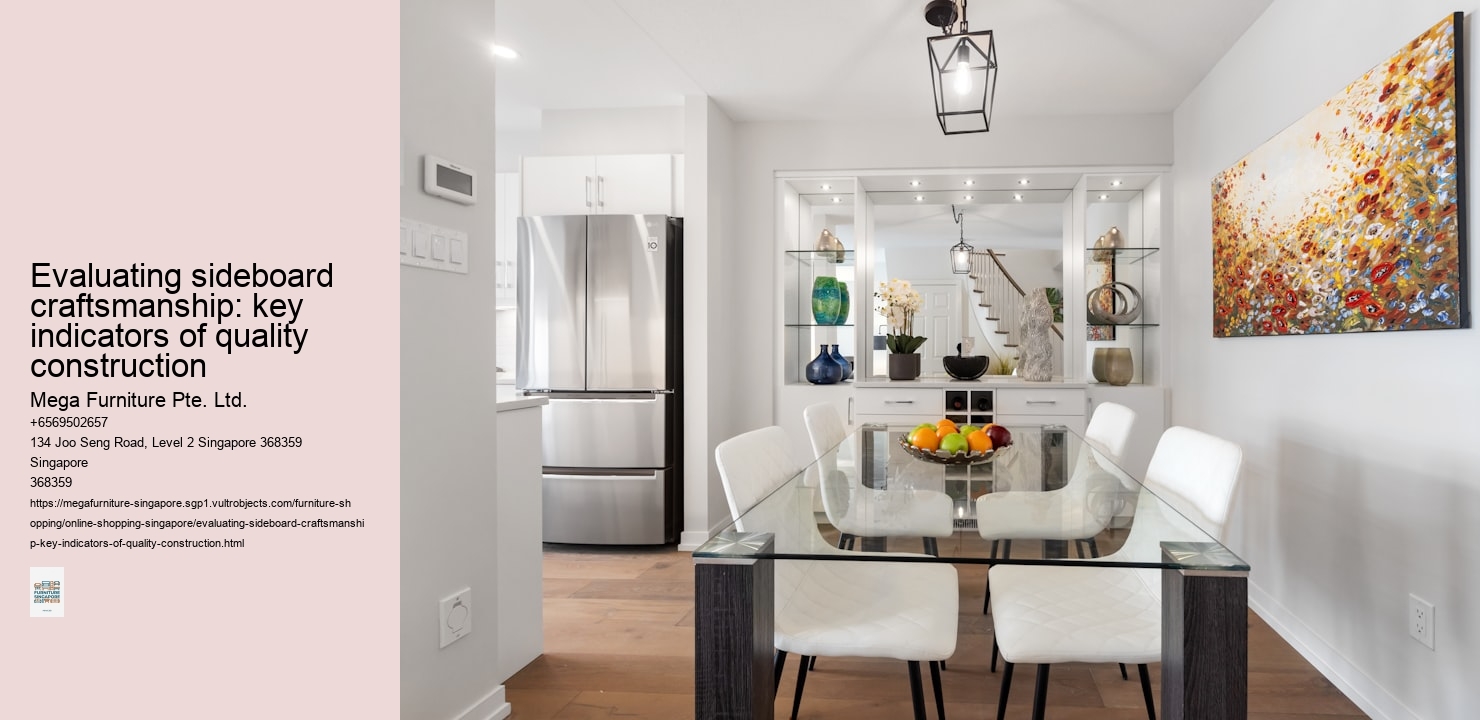
The sideboard in a 12 sqm HDB master bedroom often ends up wedged between wardrobe and bed—just deep enough for folded bedsheets, but too shallow for proper display. That’s why most BTO buyers opt for slimmer profiles under 45cm depth, sacrificing drawer space for walkway clearance. Yet in a 20 sqm condo dining-living layout, the same piece stretches to 180cm or longer, its surface cluttered with cocktail shakers and serving platters by weekend.
Landed homes demand more from storage. A semi-detached in Serangoon Gardens might use a sideboard as both bar cabinet and console—glass-fronted upper shelves for whisky bottles, lower drawers for table linens. These dual-function pieces typically run 90cm tall, high enough to divide open-plan spaces without blocking sightlines. Rubberwood frames with sintered stone tops handle the wear of daily use; cheaper engineered wood warps under Singapore’s humidity within two years.
What surprises first-time landed buyers isn’t the need for storage, but the need to hide it. A sideboard in a terrace house corridor might store shoes while displaying ceramics—function dictates form when square footage costs $1,800 psf. The best designs use recessed handles or push-latch mechanisms; anything protruding snags sleeves in tight walkways.
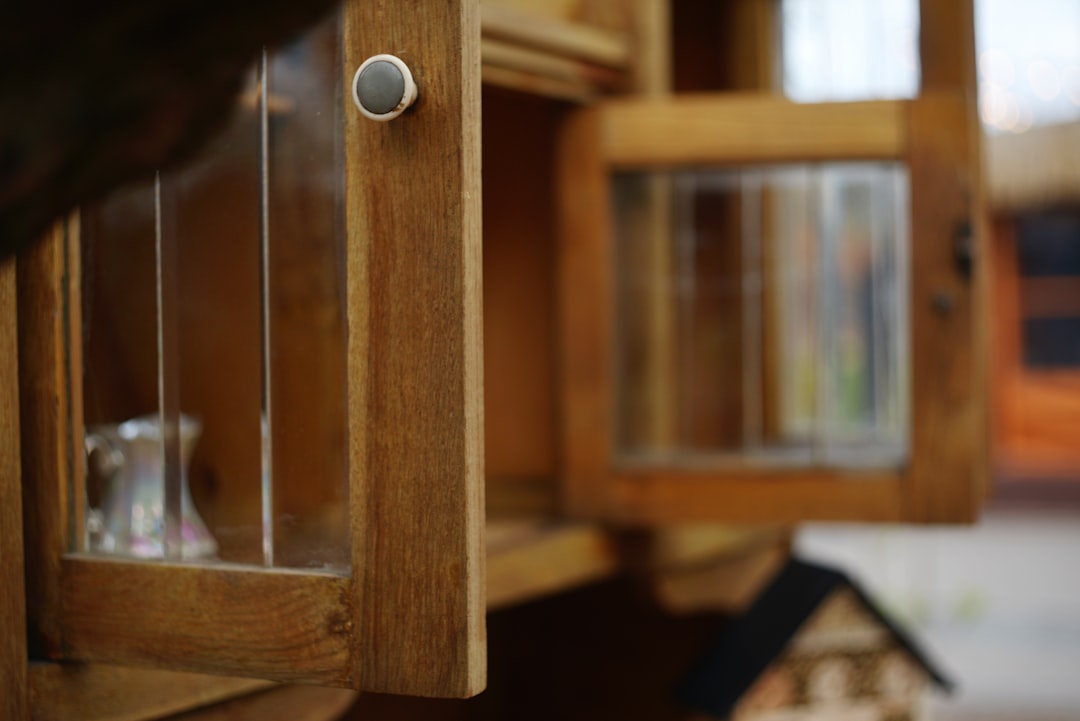
Megafurniture’s collection leans toward modular units for HDB buyers, but their solid teak options suit landed homes where weightier furniture anchors the space. Budget $1,200 to $2,400 for pieces that’ll survive rearrangements—condo downsizers often repurpose them as media consoles later.
The real test comes during Lunar New Year visits, when every relative’s handbag gets dumped on top. That’s when you’ll notice whose sideboard sags in the middle.
Singapore’s humidity doesn’t just frizz hair — it warps furniture. A sideboard in a landed property along Siglap or Bukit Timah might look pristine at first, but give it a year, and particle board starts to swell at the edges. That’s why buyers favour moisture-resistant materials like teak or walnut; they’re dense enough to handle the damp without buckling. Engineered wood with UV coatings is another practical choice — it’s less prone to cracking or discolouration under constant exposure to moisture-laden air.
In many homes, the sideboard doubles as a bar cabinet or media console, placed near windows or air-conditioning units. These spots are humidity hotspots, and materials that can’t handle the moisture will warp or peel. Teak, with its natural oils, resists water absorption, making it a reliable pick for Singapore’s climate. Walnut, though less common, offers similar durability with a richer finish — ideal for homeowners aiming for a sophisticated look.
Avoid particle board at all costs. It’s affordable, sure, but in Singapore’s 80% humidity, it’s a ticking time bomb. Even with veneers, the core material absorbs moisture, leading to warping or mould growth over time. Engineered wood, on the other hand, is layered and treated to withstand humidity, making it a smarter long-term investment.
For those who prefer a modern aesthetic, UV-coated finishes are worth considering. They not only protect against moisture but also resist fading from sunlight — a double win for sideboards placed near windows. Just remember, the material choice isn’t just about looks; it’s about ensuring the piece lasts in Singapore’s relentless climate.
High-quality sideboards use solid hardwoods like oak or walnut, avoiding particleboard or veneers. Grain patterns should be consistent, with no visible defects or filler materials. Dovetail or mortise-and-tenon joints indicate superior craftsmanship over staples or glue.
Authentic craftsmanship shows in solid brass or bronze drawer pulls with precise engraving. Hinges should operate silently with full-range motion, and drawer glides must support weight without sagging. Avoid lightweight, stamped metal components.
Well-built sideboards maintain perfect alignment when doors/drawers are opened repeatedly. The base should support heavy loads without wobbling, and shelves must not bend under weight. Listen for hollow sounds that indicate inferior internal construction.
Premium sideboards feature hand-rubbed finishes that enhance natural wood grain without obscuring it. The surface should feel smooth, with no drips, bubbles, or uneven patches. Look for depth in the finish that develops richer patina over time.
Hidden costs of custom sideboards: budget planning for Singapore homes
Dovetail joints are a hallmark of quality craftsmanship, especially in sideboards. These interlocking joints provide superior strength and durability compared to simpler methods like butt joints or staples. In many homes, sideboards face daily use — drawers opened repeatedly, items stored and retrieved — which makes joint integrity crucial. Precision-cut dovetails ensure the drawer won’t wobble or loosen over time. For buyers in Singapore’s humid climate, tight joints also prevent warping and gaps caused by moisture absorption.
Smooth drawer glides are a subtle yet essential feature in a well-crafted sideboard. Cheap models often use plastic runners that stick or squeak after a few months. High-quality sideboards typically feature metal ball-bearing glides or soft-close mechanisms, ensuring drawers open effortlessly even when fully loaded. In dual-function spaces like open-plan dining-living areas, quiet operation becomes especially important. A smooth glide system also reduces wear on the drawer frame, extending the piece’s lifespan.
Uniform finishes signal attention to detail in sideboard construction. Uneven staining, visible brush marks, or patchy varnish are common issues in lower-quality pieces. A consistent finish not only enhances the sideboard’s aesthetic appeal but also protects the wood from scratches and spills. In Singapore’s warm climate, a well-applied finish resists humidity-induced swelling or cracking. Buyers should inspect corners and edges — areas where shortcuts often show — to assess craftsmanship.
Properly aligned cabinet doors are a key indicator of quality. Misaligned doors or uneven gaps suggest poor assembly or warped materials. In a sideboard, doors that don’t close flush can compromise storage security and aesthetic harmony. Tight seals prevent dust from entering enclosed spaces, which is particularly useful in urban environments like Tampines or Bedok. A well-aligned door also ensures smooth operation, avoiding the frustration of sticking or jamming hardware.
Even surfaces are a hallmark of meticulous craftsmanship in sideboards. Rough edges, uneven panels, or visible seams detract from both function and appearance. A smooth top surface is especially important for display purposes, whether it’s hosting decor or serving as a bar setup. In homes with dual-function layouts, the sideboard’s surface often doubles as a workspace or serving area. Smoothness also simplifies cleaning, making maintenance easier in busy households.
The sideboard that looked perfect in the showroom often becomes a spatial headache in Singapore homes — especially when buyers forget to measure their corridor width. A 210cm unit might fit along the living room wall, but good luck manoeuvring it past the 80cm doorway of a 1990s HDB flat.
Pet owners face another blind spot: they’ll prioritise aesthetics over practicality, then spend weekends scrubbing claw marks off lacquered MDF. Scratch-resistant finishes like melamine or powder-coated metal hold up better, though they typically add $200–$400 to the price. The trade-off’s worth it when your tabby decides the sideboard is a climbing gym.
Dual-purpose spaces complicate things further. That 180cm sideboard doubling as a TV console? Fine until you realise the depth blocks the balcony door in your 4-room BTO’s open-plan layout. Experienced buyers leave 60cm clearance for traffic flow — anything less turns dinner parties into an obstacle course.
Material choices reveal another gap between expectation and reality. Glass-fronted cabinets look airy in landed property showrooms but collect dust like magnets in Eunos or Bedok flats near construction sites. Solid wood withstands humidity better, though it’s prone to warping if placed directly under an aircon vent.
The smart money’s on modular designs under 190cm — easier to disassemble for moves, better suited to Singapore’s 12–16 sqm living rooms. Megafurniture’s collection includes slim-profile options with recessed handles, though you’ll sacrifice some storage capacity for that streamlined look.
Megafurniture’s Joo Seng showroom feels like stepping into a curated HDB flat — sideboards arranged in vignettes that mimic real-life layouts, from 4-room BTO living rooms to compact studio apartments. The Tampines location, meanwhile, leans into landed property setups; think sideboards paired with bar carts and statement lighting. Both spaces highlight humidity-resistant options, a must for Singapore’s climate — rubberwood and engineered wood finishes dominate, with sealed edges to prevent warping. Modern designs here skew toward clean lines and muted tones, avoiding the bulkier profiles that overwhelm smaller spaces. A standout is the slim 160cm sideboard with integrated LED lighting — it’s practical for a 12 sqm HDB living room, where every centimetre counts. Storage-wise, you’ll find a mix of concealed cupboards and open shelving, catering to buyers who want both display and clutter-free zones. Prices typically range from $1,200 to $2,400, positioning these pieces as mid-tier investments for design-conscious homeowners. While the finishes lean minimalist, details like fluted panels and brass handles add subtle sophistication — a nod to dual-function dining-living layouts where the sideboard doubles as a media console or bar cabinet. What’s refreshing is the focus on local practicality. Each piece feels tailored to Singapore’s spatial constraints, whether it’s a sideboard with adjustable shelves for awkward corners or one designed to fit snugly beneath a wall-mounted TV. For buyers navigating humid weather and compact layouts,
the collectionoffers solutions that balance form and function without compromising on style.
Flat-pack delivery is the norm for sideboards in Singapore — it’s practical for narrow HDB lifts and tight stairwells, especially in older estates like Ang Mo Kio or Queenstown. Most sellers offer islandwide delivery, but it’s worth confirming coverage for landed properties or condos further out, like Seletar or Pasir Ris. Assembly typically involves basic tools and a spare hour; instructions are straightforward, though some buyers prefer hiring a handyman for peace of mind.
Humidity damage is a real concern here, particularly for sideboards placed in open-concept layouts where air-conditioning isn’t always running. Look for warranties that explicitly cover warping, mould, or finish degradation due to moisture — these are common issues in Singapore’s tropical climate. Solid wood options, like rubberwood or oak, often come with better protection than engineered materials, though they’re pricier upfront.
For buyers in dual-function spaces, like those combining dining and living areas, consider how assembly and placement will affect daily use. A sideboard that’s too heavy or awkward to move can limit flexibility over time. And while warranties are reassuring, they’re no substitute for proper placement — keep sideboards away from direct sunlight or damp walls to extend their lifespan.
“Does it fit a 12 sqm HDB bedroom?” is the first question most buyers ask — and rightly so. Sideboards, typically 150–200cm wide, can dominate smaller spaces if not measured carefully. For compact layouts, opt for narrower designs around 120cm; they still offer ample storage without overwhelming the room.
Is it pet-friendly? Depends on the finish. Performance fabrics or scratch-resistant laminates are better for homes with cats or dogs. Avoid delicate materials like untreated wood or veneers that show wear easily — especially if your pet has a favourite corner to nap against.
Pairing a sideboard with a queen bed in a 4-room BTO? Keep proportions in mind. A 150cm sideboard works well as a bedside storage solution, but avoid anything taller than 75cm; it’ll feel out of scale. For dual-function spaces, consider models with closed cabinets — they’re less likely to collect dust or clutter.
What about maintenance in Singapore’s humidity? Engineered wood or moisture-resistant materials like sintered stone are practical choices. Solid wood can warp if not treated properly, especially in neighbourhoods like Bedok or Pasir Ris where coastal humidity is higher.
Sideboards aren’t just for dining rooms anymore. In many homes, they double as media consoles or bar cabinets — just ensure the top surface is sturdy enough for your TV or cocktail essentials.
" width="100%" height="480">Evaluating sideboard craftsmanship: key indicators of quality constructionBefore pulling the trigger on a sideboard, grab a tape measure—that sleek 180cm unit won’t fit past your Tampines flat’s lift doors if it’s even 5cm wider than spec’d. Humidity warps MDF within months in Singapore’s wet seasons; look for rubberwood frames with moisture-resistant lacquer or stainless steel drawer glides that won’t corrode.
Megafurniture’s Joo Seng showroom lets you test drawer weight capacity—essential if you’re stacking dinnerware or whisky collections. Their teak veneer options handle condensation better than cheaper acacia, though both need weekly wiping down in coastal neighbourhoods like Pasir Ris.
Watch for unfinished backs on display models; decent sideboards have full plywood backing to prevent wobbling when loaded. A proper unit should hold 40kg minimum—try pressing down on the display top to check for flex.
Sideboards often live near AC vents or windows—check for UV-resistant finishes if yours will face east-facing afternoon sun. The Somnuz® stain-resistant fabric options work for households with kids or cats, though leather-wrapped handles still show scratches faster than brushed nickel.
Budget $1,200–$2,400 for something that’ll survive a decade in Singapore’s climate. Skip the trendy hairpin legs if you’ve got marble floors—they concentrate weight on four tiny points that’ll crack tile grout over time.